Sabaton: History Lessons at Maximum Volume
How a band from Falun turned the twentieth century into stadium metal
Contents
There is a band from a small Swedish mining town that has probably taught more people about the First World War than most secondary schools manage. That band is Sabaton, and the fact that they did it while wearing camouflage cargo trousers and standing next to a tank should not count against them.
Sabaton come from Falun, a modest town in Dalarna better known for its copper mine and its red paint than for heavy metal. They formed in 1999 around bassist Pär Sundström and vocalist Joakim Brodén, and for their first few years they were an unremarkable power-metal outfit trying to work out what they were for. Then they found the theme that would define everything: history, specifically military history, written as anthemic, fist-in-the-air metal. Once they committed to it, they never looked back, and it turned them into one of the biggest live draws in European metal.
The gimmick that turned out to be a mission
Plenty of bands have a lyrical hook. Sabaton’s is total. Nearly every song they have released tells a real story from a real war — a battle, a regiment, a single soldier, a doomed stand. Primo Victoria, their 2005 breakthrough, opens with the Normandy landings. The Art of War runs through Sun Tzu. Carolus Rex, from 2012, tells the rise and fall of the Swedish Empire under Charles XII, and they released it in both English and Swedish, which turned it into something close to a national record at home.
It would be easy to sneer at this as a gimmick, and I will admit I did at first. The camo, the choruses you could march to, the sheer earnestness of it. What changed my mind was watching how seriously the band take the history itself. Brodén does the reading. The songs name real units and real dates, and when they get something wrong they hear about it from an audience that has done the reading too. Sabaton attract history obsessives the way doom attracts stoners, and the band feed that appetite deliberately, running a history channel and partnering with historians to unpack the events behind the songs.
The key move was 2019’s The Great War, a whole album about the First World War. It is the record where the mission clicked fully into place. A metal band putting the Battle of the Somme, the White Death sniper Simo Häyhä and the last stand at various forgotten fronts in front of an audience of teenagers — and those teenagers going home to look the events up. Say what you like about the choruses. That is a public service.
The songwriting formula behind all this is more disciplined than the camo lets on. A Sabaton song is built like a piece of engineering. There is almost always a single, towering chorus designed to be sung by tens of thousands of people who have never heard it before, a verse that carries the narrative, and a keyboard-driven grandeur underneath that owes a clear debt to the German power-metal tradition of bands like Manowar and Accept. Brodén’s voice is the signature — a gruff, gravelly baritone rather than the operatic shriek most power metal reaches for, which grounds the bombast and keeps the songs from floating off into fantasy. That earthbound quality suits the subject. These are songs about mud and machine guns, and a voice with grit in it sells them better than a soprano would.
The live machine
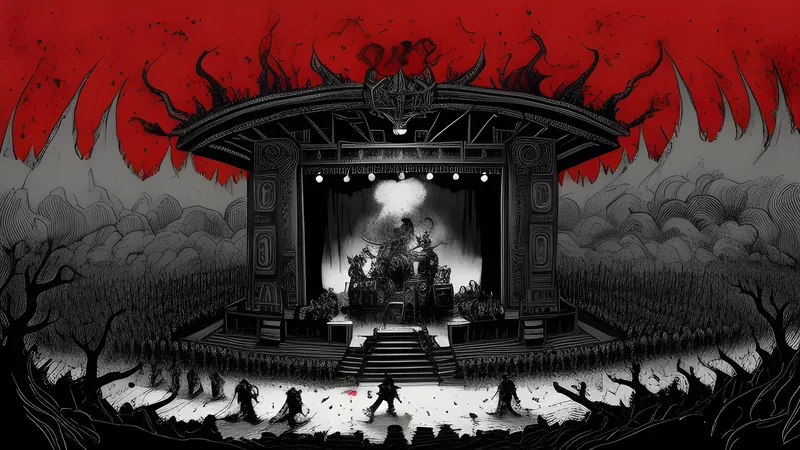
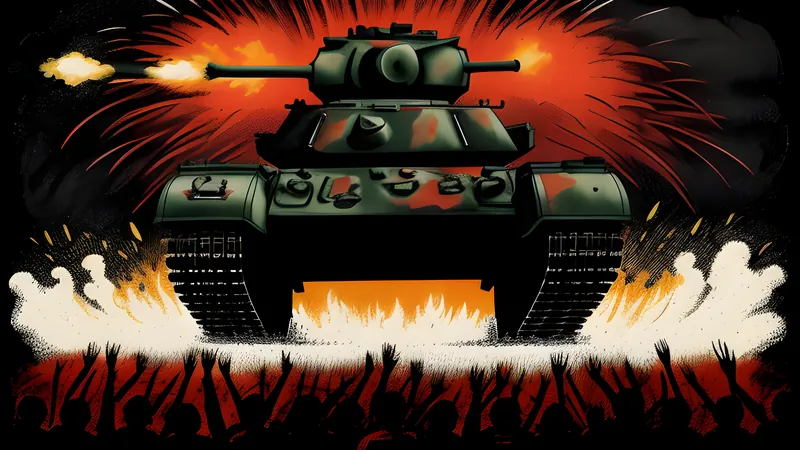
I have caught Sabaton across the European festival circuit, and they are one of the most efficient live acts in metal. Not the deepest, not the most dangerous — efficient, in the best sense. They know exactly what they are, they build the show around it, and they hit every mark. The stage set has featured a tank as a drum riser. The between-song patter from Brodén is genuinely funny, delivered in the relaxed English of a man who has told these jokes in forty countries. The songs are constructed for maximum crowd participation, all rising choruses and call-and-response, so that ten thousand strangers can sing a song about the Battle of Verdun as if it were a football chant.
That festival-headliner instinct is why they climbed the bills so fast. Sabaton became a natural top-of-the-poster act at the big German gatherings, and if you have ever stood in the field at Wacken you understand why: their music is built for exactly that scale, a whole valley of people with their arms up. A band that writes for the back row of an 85,000-capacity field is a band that will end up headlining 85,000-capacity fields. Sabaton wrote for that room before they had earned it, and then they earned it.
They also built their own. The Sabaton Open Air festival in Falun turned their unremarkable home town into an annual pilgrimage, which is a very Swedish thing to do — take the thing you love and simply organise it properly until it works. There is a line running from Falun’s copper mine to a metal festival that draws fans from across the continent, and Sabaton drew it.
The band’s relationship with their audience is unusually direct, and it feeds the live experience. Sabaton fans are participants, and the band treat them that way, running an active community around the history as much as the music. Show up to a Sabaton set and you will see homemade banners for specific songs, fans in period-accurate details, whole sections of the crowd who know which regiment a given track honours. That depth of investment is rare and it changes the room. Most bands play to a crowd; Sabaton play to a congregation of amateur historians who came to hear their subject done justice. Get a detail wrong and they notice. Get it right and the roar tells you they knew exactly what you were referencing.
The 2012 split and what it revealed
The band’s toughest moment came in 2012, when most of the line-up left at once, just as Carolus Rex was making them genuinely big. The departing members went on to form the band Civil War. It could have finished a lesser act. Sundström and Brodén simply recruited and carried on, because by then it was clear where the band’s identity actually lived: in the concept and the two men who ran it. The players were excellent and replaceable. The mission was not.
That is worth sitting with, because it is the same lesson that runs through a lot of Swedish metal’s success — the country’s bands tend to be run like well-organised small businesses with a very clear product. Sabaton knew their product cold. Wars, choruses, spectacle, and a genuine respect for the source material underneath the bombast.
Why it lasts
The cheap read on Sabaton is that they are a novelty: one joke about tanks, stretched across a career. I think that misreads them badly. The novelty would have worn off a decade ago if the songs were not good and the history were not real. What keeps them at the top of European bills is that they deliver two things at once — a genuinely rowdy, participatory metal show, and an actual education smuggled inside it. You leave sweaty and you leave knowing something about Gallipoli you did not know before.
There is a shared DNA here with the other big Swedish exporters, the sense of spectacle you find in Amon Amarth and the theatrical craft of Ghost — three bands that understood a metal show is a piece of theatre, and built accordingly. Sabaton’s theatre just happens to have a syllabus. War is a grim subject and the band handle it with more care than the camo suggests, honouring the soldiers rather than glorifying the slaughter. That balance is harder to strike than it looks, and the fact that they mostly manage it is why the whole thing works.
The care shows in how they choose their material. Sabaton tend to write about courage, sacrifice and the individual soldier caught in the machinery of a war he did not start, rather than about conquest or ideology. When they cover a subject as fraught as the Second World War, the songs sit with the defenders, the resistance, the doomed last stands — the human cost, framed as tragedy and endurance. Brodén has been careful in interviews to distance the band from any glorification of the politics behind the wars, and that instinct keeps a project that could easily curdle on the right side of the line. It is the difference between commemoration and cheerleading, and Sabaton, for the most part, land on commemoration.
That thoughtfulness is easy to miss under the pyro and the tank. The band invite the mockery — the camo trousers practically demand it — and they have made their peace with being underestimated. Underneath the surface, though, is a group that has thought hard about how to make history vivid to people who would never open a history book, and has succeeded on a scale no documentary maker could dream of. A teenager who learns about the Battle of the Bulge from a metal chorus has still learned about the Battle of the Bulge. Sabaton simply found the loudest possible classroom.
History lessons at maximum volume. It should be ridiculous. Somehow, in a field full of people singing about Verdun, it is one of the more genuinely moving spectacles the festival circuit has to offer.
Related Content