Royal Arena: What Copenhagen Gained (and Lost) With a Proper Big Room
The city finally got an arena the big tours would stop for — and paid for it in intimacy
Contents
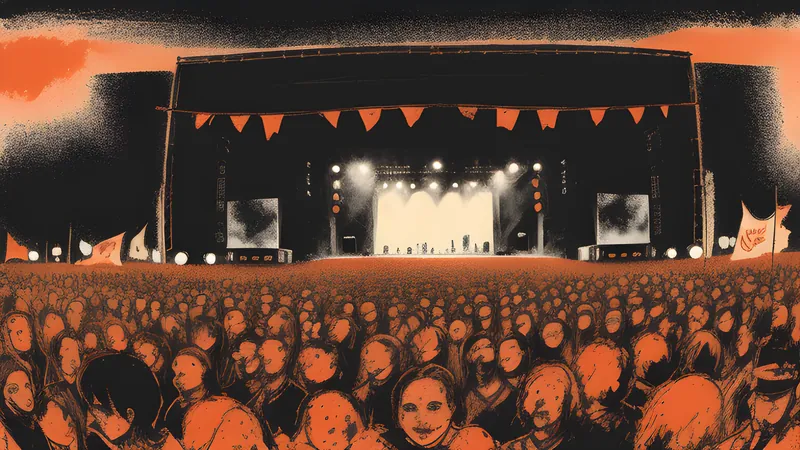
For years, if a band big enough to fill a proper arena wanted to play Copenhagen, the city had to improvise. You got shoved into the Forum, a lovely old exhibition hall never really built for a rock show, or you got a football pitch and forty thousand people and a stage the size of a stamp, or — most often — the tour just skipped Denmark entirely and you bought a cheap flight to Stockholm or Hamburg and made a weekend of it. Then in February 2017 Metallica played four sold-out nights in a curved timber box out on the southern edge of the Metro map, and the improvising stopped. Royal Arena had arrived, and Copenhagen finally had a room the machine could park itself in.
I want to be honest about this place, because the easy takes both miss. Call it a soulless hangar and you’re wrong; call it a triumph of intimate live music and you’re wrong the other way. It’s a well-made modern arena, which means it does exactly what arenas do — swallows a huge crowd, keeps them comfortable, gives the touring production a clean surface to work on — and asks you to give up, in exchange, most of the things that make a gig feel like it’s happening to you specifically. Whether that’s a fair trade depends entirely on who’s playing and where you’re standing. Here’s the ledger.
The building, and why it mattered
Royal Arena sits in Ørestad South, the planned district on Amager that grew up along the Metro in the 2000s — flat, new, faintly Ballardian, all glass blocks and canals and wind coming off the fields. The arena is the good-looking thing out there. Designed by the Danish firm 3XN with the American arena specialists HKS (Arup did the engineering), it’s wrapped in vertical timber slats that lean and twist as they run round the shell, so the façade reads as warm and moving rather than the usual concrete drum. At night, lit from within, it genuinely earns its keep as architecture. Capacity runs to around 13,000 for sport and up to roughly 16,000 for a concert, standing floor plus the seated bowl.
The reason it mattered goes back to that improvising. Copenhagen is a serious music city with a strange hole in its middle: brilliant small and mid-size rooms, world-class festivals, and then nothing at the top end that a global tour could route through without compromise. The Forum could take a few thousand and the acoustics were what they were. Parken, the national football stadium, worked for the true giants in summer but nothing else. So the twelve-thousand-capacity tours — the metal bands too big for a club and too small for a stadium, the pop productions that travel with their own roof — routinely wrote Denmark off the itinerary. Royal Arena closed that gap. That’s the gain, stated plainly: acts that used to cost you a flight now cost you a Metro ride.
The sound, with the honesty an arena deserves
Let’s not oversell it. No arena sounds like a good club, because physics doesn’t allow it — you’ve got a huge hard-shelled volume, thousands of soft bodies absorbing unevenly, and a reverberant bowl that wants to smear everything into mud. What a well-designed arena does is manage that, and Royal Arena manages it better than most rooms of its size I’ve stood in. The interior was built with acoustics in mind rather than as an afterthought, and it shows: with a competent touring PA and an engineer who knows the room, you get intelligible vocals, a kick you can feel in your sternum, and a top end that doesn’t turn to hiss by the time it reaches the back.
The variable, as ever in a room this big, is the mix at the desk and where the desk has decided you rank. A loud, dense band — the sort of thing that would flatten Den Grå Hal into glorious rubble — comes through here with a lot more separation, because there’s room for the sound to breathe and a system designed to throw it evenly. That’s the arena’s honest advantage over the sweatbox: clarity at volume. What you lose is the physical intimacy of sound, the sense that the noise is a weather system you’re inside. In an arena the sound is presented to you across a distance, professionally, at arm’s length. Some nights that’s exactly enough. Some nights you miss the fist in the chest.
Where to stand, where to sit, where you’ll regret
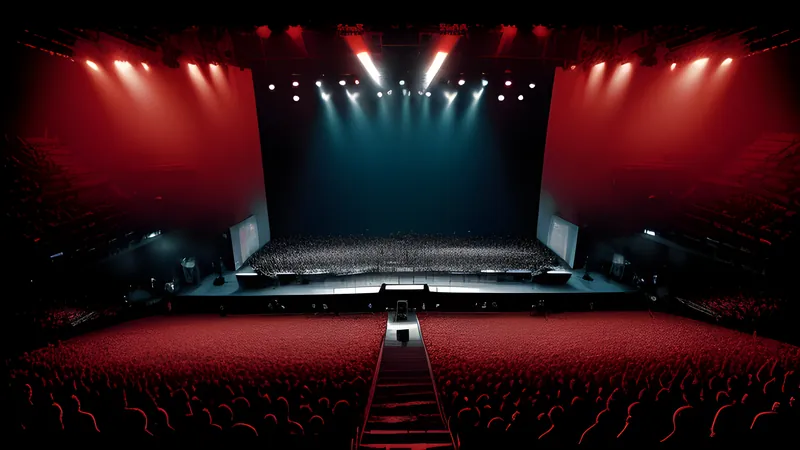
This is the decision that makes or breaks your night, so treat it seriously. Royal Arena is a floor-plus-bowl configuration: a flat standing (or seated) floor, then a continuous tier of raked seating wrapping the whole room and rising steeply at the back.
The floor is where the gig actually lives. Standing, front third, if you can get it and if the show warrants the sweat — that’s where an arena briefly stops being an arena and becomes a crowd again. The rake on the seated tiers is genuinely good; 3XN and HKS understood sightlines, and there are very few truly cursed seats where a pillar or an overhang eats the stage. Lower-tier sides give you a clean angle on the whole production and a place to put your drink, which after a certain age is not nothing. The trade is distance — from the upper bowl the band are expressive dots and you are watching the video screens, which is a perfectly valid way to experience a stadium-scale pop show and a slightly melancholy way to experience a rock one. If the artist is a performer — big staging, big screens, choreography — the seats are fine to great. If the artist is a band and the point is the sweat and the noise, get on the floor or don’t bother.
One structural truth about every arena, this one included: you are never as close as you were in the club. Standing at VEGA, the best-sounding mid-size room in the country, you’re maybe fifteen metres from a headliner and the sound is wrapped around you like a coat. Here, “close” starts further away and the room is doing more work. That’s the geometry of the gain — you got the band that skips small cities, and the price is measured in metres.
The crowd, and the corporate arm around it
The crowd here shifts completely with the booking, more than at any club, because the arena is a general-purpose machine. A metal night pulls the black-shirt faithful in from across Zealand and southern Sweden and turns the floor into something proper. A big pop production pulls families, teenagers, groups down from the whole Øresund region, and the mood is bright and communal and phone-lit. The building doesn’t have a scene the way a club does; it has whatever tonight’s tour brought with it.
What it does have, uniformly, is the arena experience, and that’s the part I’m least sentimental about. The bars are plentiful, efficient and expensive — arena-priced beer is its own genre of grievance, and you’ll pay handsomely for a plastic cup of lager you’d get for half the money at a bar in town. Food is the standard modern-arena spread, decent enough, priced for a captive audience. Everything is smooth, staffed, signposted, and slightly airless in the way that professionally-run venues are. You are a customer being processed pleasantly, and the machine is good at it. That efficiency is real value on a sold-out night with 16,000 bodies to move — you want the exits and the bars to work — but it is the opposite of character, and you feel the absence.
Getting out to Ørestad, and back
Here’s the practical bit that the ticket price hides. Royal Arena is out there — Ørestad South, on the Amager flats, a genuine trek from the middle of town. The saving grace, and it’s a big one, is the Metro. The M1 line runs straight to Ørestad station, a short walk from the arena, driverless and frequent and running late, and Ørestad also has a regional-train station for anyone coming from further afield. On a normal night getting there is painless — twelve minutes from the city centre and you’re at the door.
The catch is the crush after. Sixteen thousand people finish a show at the same moment and all want the same platform, and for twenty or thirty minutes the station becomes a slow-moving sea. It clears — the Metro’s frequency saves it — but factor it in, especially if you’ve a last train to somewhere to catch. The move, if you can bear it, is to hang back ten minutes in the concourse, let the first wave drain, then walk out into a station that’s merely busy rather than impassable. Cycling is very doable in daylight; less romantic on a cold wet Amager night when the wind’s up.
The verdict: what the ledger says
Royal Arena is the room Copenhagen needed and didn’t have, and I’m glad it exists — every year it keeps tours in the city that would otherwise have cost me a flight, and it does the hard job of being a big room competently, with better sound and sightlines than the size has any right to. When the booking is a genuine arena act — a production built for this scale, a band big enough that no club could ever hold them — this is where you go, and you go happy.
But be clear about what you’re buying. You’re buying access to the giants at the cost of everything that makes a night feel personal — the closeness, the sweat, the character of a room with a past, the beer that doesn’t cost a fortune. For that you go back into town, to the clubs the arena can’t replace and was never meant to. The city gained the big tours. It kept the soul in the small rooms. Know which one tonight’s show actually wants, and buy the ticket accordingly.
Related Content