Roskilde's Orange Stage: A Structure With a Personality
The second-hand canopy that became the most recognisable stage in Europe
Contents
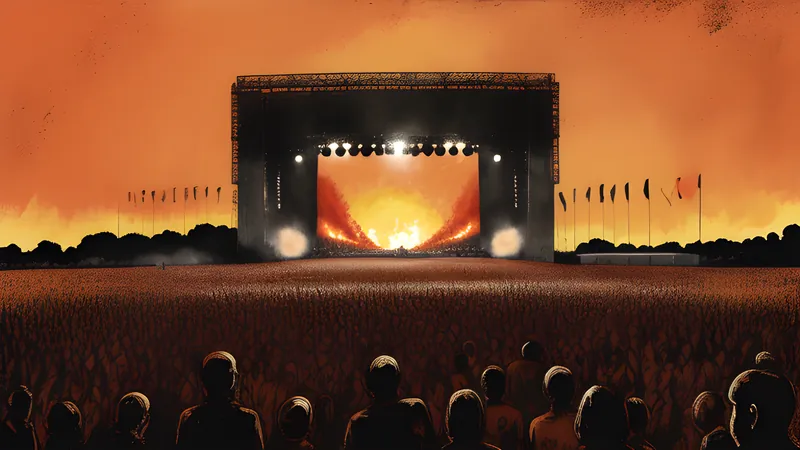
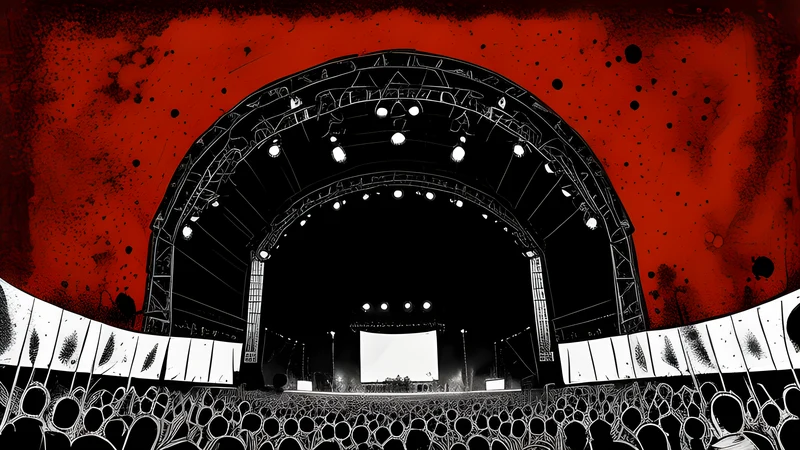
Most stages are furniture. You look at the band, not the rig they stand under, and the structure is a black rectangle you forget the moment the lights drop. Roskilde’s Orange Stage is the rare exception, a piece of architecture famous enough to be the festival’s logo, its silhouette instantly legible to Danes the way a cathedral spire is legible to the town it sits over. When you see that asymmetric orange canopy leaning out over a field, you know exactly where you are and roughly how you are about to feel.
I have stood under it in most of the summers I have managed to make Roskilde, and the thing genuinely has a personality, which is a strange thing to say about a tent. Part of that is history, part is scale, and part is the specific, hard-won relationship the stage has with the crowd it holds. This is a venue guide to a structure that is only assembled a few weeks a year, and that spends the rest of its life as a folded orange memory in a Danish warehouse.
A Rolling Stones hand-me-down
The canopy’s origin is the detail everyone should know and almost nobody outside Denmark does. That distinctive orange awning was built for the Rolling Stones’ European touring production in the early 1970s, with Roskilde nowhere in its design brief, a piece of rock-and-roll infrastructure from the biggest band on earth, and Roskilde acquired it second-hand in 1978. The festival, a scrappy Danish non-profit at the time, bought the used stage cover of a stadium behemoth and turned it into a permanent identity.
There is something perfect about that provenance. A festival that gives its entire surplus away to charity built its most iconic asset out of the Rolling Stones’ cast-off gear, and then made it more famous than most of the stages it was copied from. The canopy’s asymmetric lean, the way one side sweeps up higher than the other, was a practical touring design that Roskilde inherited and made permanent, and over four and a half decades it hardened from a rain cover into the single most recognisable stage structure in European festival culture. The whole ethos of the place, which I dug into over at Roskilde, the festival that gives all its money away, is written into that thrifty, second-hand beginning.
The scale of the thing
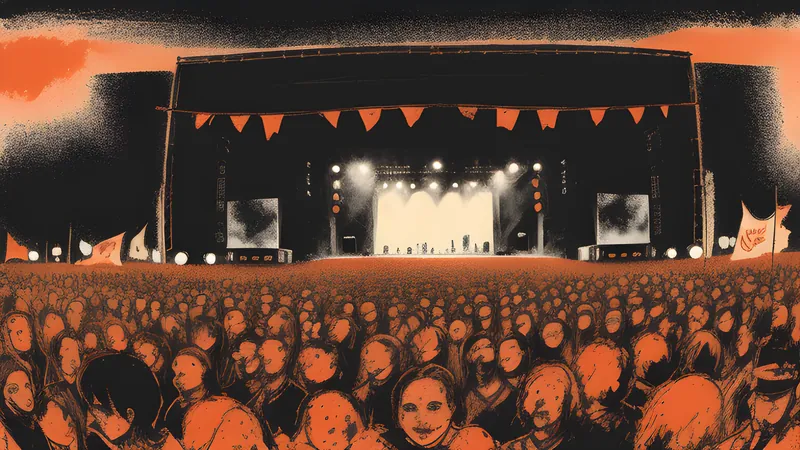
The Orange Stage is Roskilde’s main stage, and it is enormous. The field in front holds a crowd measured in the tens of thousands, and a headline set can pack sixty thousand or more people into a single sloping expanse of trampled grass. Standing at the back, the band is a distant flicker and the screens do the heavy lifting; standing near the front, you are one body in a mass so large it moves like weather, swaying and surging as a single organism.
That scale sets the terms of everything. Roskilde is a festival that books the biggest acts in the world for this stage, the artists who can hold a crowd that size, and the Orange Stage is where the festival stakes its claim to being one of the major events on the European circuit. The sound reinforcement has to carry across a distance that would defeat a smaller rig, and on a still night it does the job remarkably well, the delay towers keeping the back of the field roughly in time with the front. On a windy Danish evening, the exposed site can scatter the sound, and that is the trade you make for an open-air stage of this ambition.
Where to stand
A venue guide owes you practical advice, and the Orange Stage rewards a plan. The front pit is for the committed, and getting there means arriving early and accepting that you will be locked into a dense, hot, physical crowd for the duration, unable to move much and reliant on the people around you for water and air. It is the most intense way to experience a set and the least flexible.
The sweet spot for most people is the middle distance, far enough back that the crowd loosens and you can actually move, breathe and see the screens, close enough that the stage is more than a rumour. The natural slope of the field helps the sightlines from here. If you want the full spectacle rather than the physical crush, drift towards the back and the sides, where you can take in the whole canopy lit up against the northern summer dusk, a sight that at eleven at night in early July has a genuine grandeur. The Danish midsummer light means headline sets often start in daylight and end under a sky that never fully goes black, and the canopy glows against it.
The safety it was forced to learn
No honest account of the Orange Stage can skip the darkest day in Roskilde’s history. On 30 June 2000, during Pearl Jam’s performance, nine young men died in a crowd crush at the front of the Orange Stage when the dense mass of people surged and collapsed in on itself in the mud. It was one of the worst disasters in festival history, and it changed Roskilde permanently and changed festival crowd management across Europe.
The response reshaped how the stage operates. Roskilde overhauled its front-of-stage design and crowd-safety systems, introducing better barrier layouts, more trained crowd stewards, clearer sightlines for spotting trouble, and a whole philosophy of watching the crowd as carefully as the crowd watches the band. The festival talks openly about the tragedy and treats its safety culture as a permanent obligation rather than a box to tick. When you stand in that field now, in far greater comfort than crowds of an earlier era, you are standing in the results of lessons paid for in the worst possible way, and the Orange Stage carries that memory as part of its character.
The stage that holds the headliners
The Orange Stage’s booking history reads like a directory of the last half-century of popular music, because Roskilde reserves this stage for the acts that can command a field of sixty thousand. Bob Marley played here in 1978, the summer the canopy arrived, an early sign of the festival’s ambition. In the decades since, the roster has run through the biggest names in rock, metal, pop and hip-hop, and a headline Orange slot became one of the trophies a touring act measures itself by. For a Danish audience, seeing a globally huge band under that specific canopy carries a weight that the same band in a generic arena never would, because the setting is loaded with every previous summer’s memories.
What the stage does especially well is the sense of occasion. Roskilde builds its programme so the Orange Stage is the culmination, the place the week has been climbing towards, and the festival’s scheduling gives the closing headliners a genuine coronation. The metal and hard-rock bookings, in particular, translate brilliantly to the scale, where a wall of sound and a crowd that size amplify each other into something no club can match. It is the closest the loud-music world gets to a stadium moment while keeping the communal, non-corporate texture that makes Roskilde what it is.
The site around it
The Orange Stage does not exist in isolation, and understanding its place in the site helps you use it well. It sits at the heart of the festival’s concert area, the Dyrskuepladsen showground outside Roskilde city, surrounded by a constellation of smaller stages where most of the actual musical discovery happens. The festival’s logic is that the Orange Stage delivers the huge shared events while the Arena and the smaller tents deliver the surprises, and a smart attendee plays the whole board rather than parking in front of one stage all week.
Practicalities matter at this scale. The site is exposed Danish farmland, which means the weather is a genuine variable, gorgeous under a July sun and a mudbath after a hard rain, so footwear is a strategic decision. The distances are real, and getting from the far campsites to a good Orange Stage position takes planning and time. Water, sun protection and a meeting point with your group are not optional extras when the crowd runs into the tens of thousands. Treat the Orange Stage as the destination it is, arrive with a plan, and it repays the effort with the biggest communal music experience Denmark offers.
The Orange Feeling
Roskilde has a phrase for the intangible thing the place generates, the “Orange Feeling,” and it is the sort of marketing line that would be easy to sneer at if it were not, annoyingly, real. There is a specific communal warmth to a good Orange Stage crowd, a Danish summer-solstice generosity that softens even the biggest, most anonymous mass into something that feels collective rather than commercial. Part of it is the non-profit ethos, the knowledge that your ticket money is going somewhere decent, and part is simply the shared endurance of a week living in a field.
The Orange Stage anchors a festival site that sprawls far past it, from the smaller stages where the actual discoveries happen to the campsite rituals like the notorious naked run, and it has a year-round shadow in the city itself through venues like Gimle, Roskilde’s permanent room. The stage is the festival’s front door and its portrait, the image on every poster and the shape in every returning attendee’s memory. A second-hand orange awning from a Rolling Stones tour became the emotional centre of Danish summer, and after enough years standing under it, the sight of that lopsided canopy leaning over a crowd stops being architecture and starts being a feeling you have been waiting all year to have again.
Related Content