The Roskilde Naked Run: The Festival's Oldest, Barest Tradition
Every year, on the Saturday, a few dozen people sprint a lap of the Roskilde campsite wearing nothing but a smile and a running number
Contents
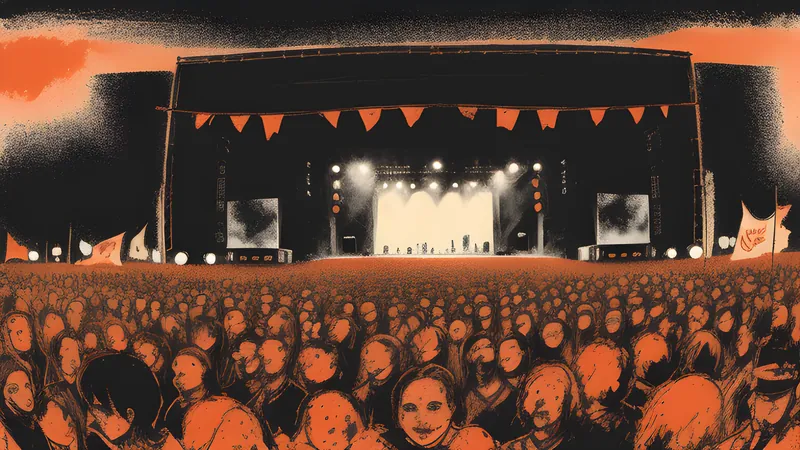
There is a moment on the Saturday of Roskilde Festival, somewhere in the sprawling chaos of the campsite, when a crowd thickens along a stretch of dirt track, a countdown goes up, and a few dozen entirely naked people take off running for a lap while thousands cheer them home. This is the Roskilde Naked Run, and it is the daftest, most good-humoured, most reliably Danish thing on the whole festival calendar. I have stood in that crowd more than once — Roskilde is home turf for me, the festival I keep coming back to — and I can tell you the run is exactly as silly and exactly as warm-hearted as its reputation promises. Here is where it came from and why it still, gloriously, happens.
What actually happens
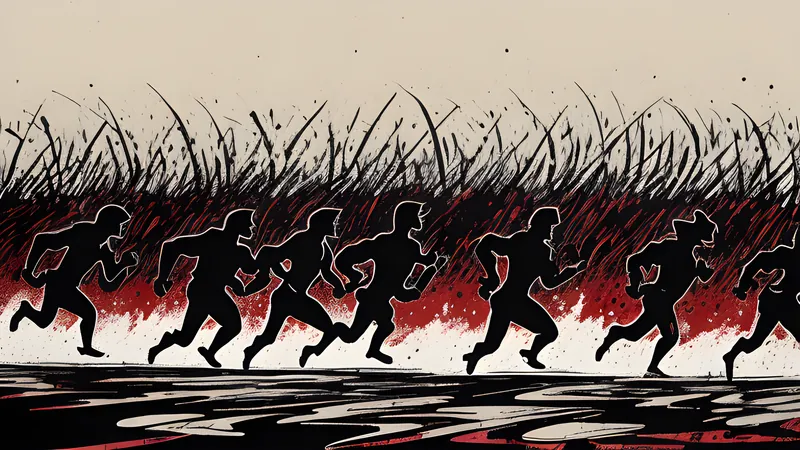
The mechanics are simple, which is part of the charm. On the Saturday of the festival week, the crowd gathers in the campsite — the run has moved around the grounds over the years, but it belongs to the campsite rather than the concert stages — and the entrants line up at a start line wearing nothing at all except, usually, a running number and whatever paint or accessory they have decided is essential to their dignity. A signal goes, and they sprint a lap of a marked-out course while the assembled thousands roar. At the end, judges pick one male and one female winner, and the prize is the single most coveted object at the whole festival: a ticket to next year’s Roskilde.
That prize is the joke that makes the whole thing perfect. Roskilde tickets are not cheap and they sell fast, and the notion that you can secure one by running naked past a screaming campsite has a beautiful Danish logic to it. The reward is proportionate to the absurdity. You bared everything; the festival owes you a way back in.
From hippie stunt to organised heat
The naked run has been going, in a recognisable form, since 1999 — young enough that plenty of the people cheering were not born when it started, old enough that it is now woven into the fabric of the week. It is organised by Roskilde Festival Radio, the festival’s own long-running campsite station, which lends it a semi-official, adult-supervised quality that keeps it firmly on the right side of fun.
Here is the detail that tells you how deep the thing has embedded itself: it got so popular that they had to introduce qualifying rounds. There are, in a given year, only so many slots at the start line, and more people want to run naked in front of a cheering crowd than the final can hold, so heats are run to whittle the field down. Somewhere out there is a person who trained, in a loose sense, to earn a place in a naked race. That is the point at which a stunt becomes a tradition — when demand for it outstrips supply and a bureaucracy of joy grows up around it.
The numbers stay modest by design. Roughly thirty runners make the final in a typical year, which is enough for a proper spectacle and few enough that each one gets their own wall of noise as they pass. The entrants go all in on presentation — body paint, animal faces, the occasional flourish of a cape that is somehow permitted under the “naked” rules — and the crowd rewards commitment over speed. Nobody is really watching the clock. They are watching for nerve.
There is a whole small economy of preparation that grows up around a thing like this. Regulars will tell you the smart entrants arrive with a plan — a paint job that reads well at distance, a route learned in advance, a group of friends stationed along the course to scream them on by name. Some run in pairs or teams, some solo. The festival being what it is, the entrants skew international, and part of the fun of a given year is the mix of accents at the start line, a Dane next to a Kentuckian next to a German next to somebody who signed up on a dare an hour ago and is now visibly regretting and thoroughly enjoying it in equal measure. The nerves at the start line are real and completely understandable, and the crowd, sensing them, only gets louder. By the time the signal goes, the noise alone would carry you round.
Why it works, and why it stays kind
I want to be careful here, because a naked run at a huge festival could be a grim thing in the wrong hands, and Roskilde’s simply is not. The reason it works — the reason it has stayed warm and funny for a quarter of a century — is the same reason the whole festival works, and I have written about that at length in the festival that gives all its money away. Roskilde is a non-profit, volunteer-run, built on a genuine communal ethos, and that ethos sets the temperature of everything that happens on the site, the daft bits included.
The naked run is a consensual absurdity among people who have already agreed, by being there, to look after each other. The runners choose it, the crowd celebrates rather than leers, the festival’s own radio station runs it with a light hand, and the whole thing lasts a few glorious minutes and dissolves back into the campsite. It is exhibitionism drained of its edge and refilled with goodwill — a group of strangers agreeing that a body sprinting past for a laugh is a thing to be cheered, not gawped at. Danes are good at this particular kind of unembarrassed communal silliness, and the run is one of its purest expressions.
It also sits in a long Nordic line of the body being unremarkable and outdoors and fine about it. The same culture that fills the harbour baths and the sauna benches and, come midsummer, gathers around the fires I wrote about in Sankt Hans, does not find a naked lap of a field especially scandalous. Startling, yes, and funny, and worth a mighty cheer — but not shameful. The run trades on a national comfort with skin that makes the whole event lighter than it would be almost anywhere else.
The crowd is the event
If you have read my stuff before you will know I think the crowd is usually the real story at any live event, and the naked run proves it better than most. The runners are the pretext. The event is the several thousand people packed along the course, howling encouragement, giving each entrant their moment — the collective, generous roar that turns a person’s mad decision into a shared triumph.
It is the same social engine that powers the mosh pit, just pointed at a different kind of nerve. The pit says: throw yourself in and we will catch you. The naked run says: bare everything and we will cheer you the whole way round. Both are a crowd agreeing, in advance, to hold a space where an individual can do something exposing and be met with support instead of judgement. That is what a good festival crowd is for, and Roskilde has one of the best in the world. The run is that crowd’s goofiest, most affectionate self-portrait.
The oldest kind of new
There is something fitting about Roskilde — a festival with genuine countercultural roots, born out of the early-seventies free-festival spirit — keeping a naked run as one of its signature campsite rituals. It is a small, deliberate refusal to grow up all the way, a piece of the old hippie DNA preserved in amber and re-run every Saturday. The festival has professionalised enormously over the decades, with a global lineup and a serious charitable operation behind it, and it would be easy for a thing this size to sand off its sillier edges in the name of order. Roskilde keeps the naked run precisely because it does not want to become that kind of festival.
If you go
The run happens on the Saturday of the festival week, in the campsite, and the surest way to find it is to ask around or listen to Roskilde Festival Radio in the days before — the exact time and spot shift year to year. Turn up early enough to get a decent view, because the crowd builds fast and packs in deep along the whole length of the course. If you fancy entering, know that you may have to get through a qualifying heat, that the prize is genuinely a ticket worth having, and that the crowd will love you far more for going all in than for going fast. And if you would rather watch, do the decent Roskilde thing: cheer like you mean it, keep the cameras respectful, and let the runners have the uncomplicated, sunlit, ridiculous moment of glory they have very much earned.
Related Content