Roskilde 2024: Another Orange Summer on Dyrskuepladsen
Foo Fighters, SZA, Doja Cat and 21 Savage over a field that still hands its money away
Contents
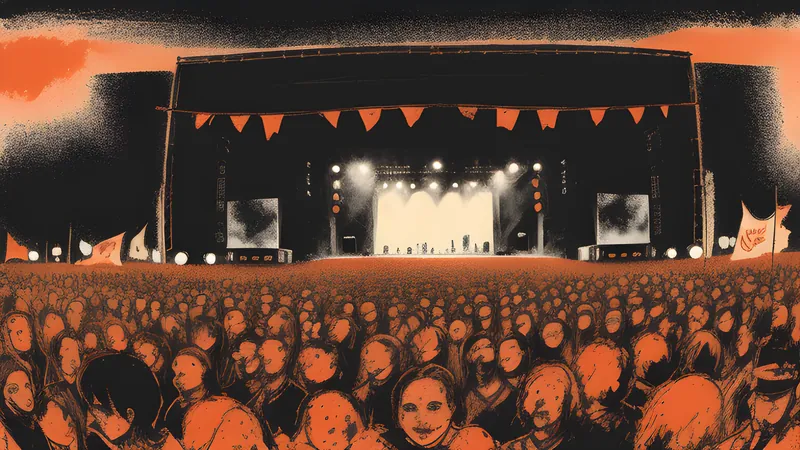
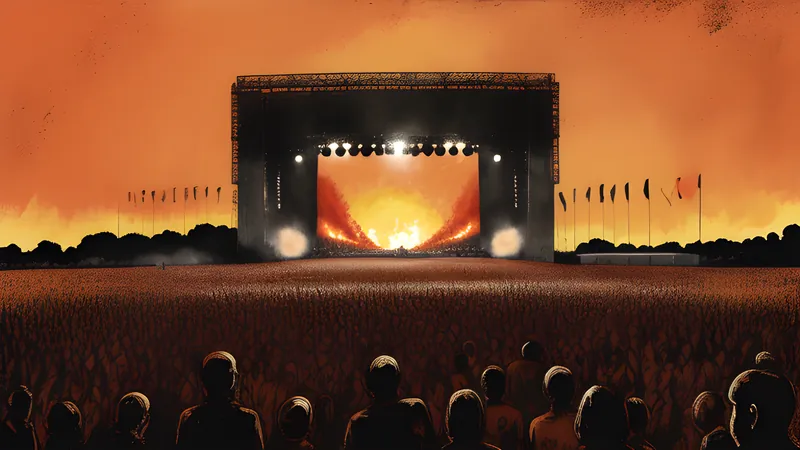
Roskilde 2024 ran 29 June to 6 July on Dyrskuepladsen, the showground west of Roskilde town where the temporary city goes up every summer and comes down again a week later, and by now the routine has the weight of liturgy. The train out of Copenhagen Central was the usual slow-moving cargo of tents, trolleys and stolen road signs. The platform at Roskilde station emptied its human river onto the shuttle buses and the long walk across the fields. And the orange canopy went back up over the biggest stage in Northern Europe for the fifty-third time, give or take the two summers the plague stole. The headline tier this year told you exactly where the culture had drifted: Foo Fighters, SZA, Doja Cat, 21 Savage and PJ Harvey, with Jane’s Addiction, Kali Uchis, Khruangbin, J Hus and a couple of hundred more spread across the seven stages underneath.
The bill has finished tilting
If you stood in front of the Orange Stage in 2023 and watched Kendrick Lamar and Blur and Lizzo and Lil Nas X share a headline week, 2024 was the same movement carried one step further. The centre of gravity has settled firmly into pop, hip-hop and R&B, and the rock contingent has thinned to a handful of load-bearing names. Foo Fighters were the big guitar act, the mass-singalong anchor, Grohl’s band doing the thing they have done reliably for thirty years — turn a field of eighty thousand people into a choir who all know the words. SZA and Doja Cat and 21 Savage were the acts the ticket-buyers under twenty-five had actually come for, and the daytime crowds they pulled were the largest and youngest on the site.
None of that is a decline. Roskilde topped its bill with Bob Marley in the 1970s and has spent half a century treating genre-hopping as the entire product, so a year that leans pop and rap is the festival being itself. What it does mean is that the loud, heavy audience — the tribe I usually run with — has to work a little harder here now, chasing the good stuff down the bill and onto the smaller stages rather than expecting it up top. That is fine. Chasing it down the bill is where Roskilde has always paid the discerning punter back.
PJ Harvey was the one I would walk furthest for. She came through on the I Inside the Old Year Dying run, which is one of the strangest and most uncompromising shows a major artist has taken on the road in years — hushed, spectral, half-spoken, the opposite of a festival crowd-pleaser — and watching an artist that severe hold a Roskilde evening is exactly the kind of pleasure this festival exists to hand you. Jane’s Addiction were the other pull for the older heads, a genuine piece of alt-rock history on a European run, Perry Farrell and Dave Navarro doing the songs that half the bands two stages over grew up copying.
What actually shifted since 2023
A festival read owes you honesty about the drift, so here it is. The corporate creep that has come for every large European festival kept advancing on this one through 2024. More premium camping tiers for people who want a locked gate and a real bed. More sponsor branding threaded through the site. Ticket prices that have climbed past the point where anyone can pretend this is a cheap week away — a full-week wristband is now a serious commitment of money, and the beer is Danish-priced, which is to say priced like the bar knows you are trapped on an island of its own making.
The rock thinning at the top is the other honest observation. There was a stretch of Roskilde years where the heavy audience could count on a proper metal or hard-rock headliner most editions, and that has become rarer as the festival follows the streaming-era culture toward pop and rap. If you came to Roskilde 2024 purely for guitars, Foo Fighters and Jane’s Addiction and PJ Harvey were carrying more of that weight than the bill’s size suggests they should have to. The counterweight, as ever, was over in the industrial shipyard across town: Copenhell 2024 is where the Danish loud tribe still gets its full ration, and it runs a fortnight before Roskilde every June for precisely this reason.
The thing that has not shifted — the thing that never shifts, the fact the whole enterprise is built on — is what happens to the money. Roskilde is a non-profit run by something like 32,000 unpaid volunteers, legally forbidden from keeping its surplus, handing the profit out to charity every single year. If you have read the full portrait of how the place actually works, you know the architecture. Every beer poured by a volunteer in 2024 funded a youth or cultural project somewhere in a real, traceable way. Doja Cat headlining did nothing to that engine. That is the single fact keeping Roskilde on the right side of a line most of its commercial peers crossed a decade ago, and it survives every drift in the lineup intact.
The smaller stages are still the festival
Here is what the headline discourse always gets wrong about Roskilde. The regulars do not spend their week in front of the Orange Stage. They spend it on Avalon, Arena, Apollo and Gloria, the smaller stages where the festival’s discovery mission actually lives, catching a West African band at four in the afternoon and a Danish noise act at midnight and a Balkan brass ensemble somewhere in between. In 2024 those stages were where I logged most of my hours, and they were where the week justified itself. Khruangbin turning a late-afternoon slot into a slow-motion groove that half the field drifted toward like it was a warm current. Kali Uchis pulling a devoted daytime crowd. A dozen acts I had never heard of before Wednesday and will now follow for years.
That is the machine Roskilde has run since the 1970s: book the biggest culturally alive names on the planet up top to sell the tickets, then use that revenue to stack the smaller stages with the acts nobody could sell on their own. The headliners are the reason people buy the wristband. The discovery stages are what those same people describe, misty-eyed, a decade later. Half the pleasure of a proper week here is watching a band you caught in a small tent two summers ago walk onto a stage five times the size, booked before they were inevitable on the strength of what the festival’s programmers could hear coming.
The camping city and the Orange Feeling
The part most people mean when they say “Roskilde” is not the fenced music site at all. It is the camping city that wraps around it, west of the town, spread across farmland that grows nothing but grass the other fifty-one weeks of the year. That city opens days before a single headliner plays, and for a huge share of the Danish crowd the warm-up days are the festival — building the camp, adopting the neighbours, flying an absurd flag so you can navigate home by it at three in the morning. At its peak the whole gathering pushes past 130,000 people, which briefly makes Dyrskuepladsen one of the larger towns in Denmark, and in 2024 you felt that number in your legs by day three.
The Orange Feeling — the Danes’ own unironic name for the specific communal warmth of this crowd — was running at full temperature again. Danes have a reputation for being reserved and a bit shut until they know you; put them in this field for a week and something loosens all the way to generosity. Strangers sharing food, camps adopting stragglers, the default assumption that everyone is having the same good time and it would be rude to spoil it. It is genuinely the warmest big crowd in Europe when it runs right, and in 2024 it ran right.
And it rained, because this is a Danish summer and it always does — gorgeous, then sideways, then gorgeous again, sometimes inside a single afternoon. Wellies you will end up burying. More sun cream than you expect and more water than you want to carry. The food inside has become genuinely good over the years, because Copenhagen’s obsessive food culture leaks across the fields, though it costs festival prices, so the veterans still cook breakfast at their own camps and save the money for the evenings.
Who 2024 was for
Roskilde 2024 was for anyone who has made peace with the fact that this festival will follow the culture wherever it goes and does not owe the rock audience a fixed quota of guitars. It was pop-topped and rap-topped and it was still the most generous, most genuinely purposeful big festival in Europe, and those two facts sit together with no friction once you understand the model underneath the till.
If your appetite runs entirely to volume and darkness, do Copenhell across town and take the heavier week. If you want an indoor room to nurse your ringing ears afterwards, VEGA is where Copenhagen sends its serious gig-goers. But if you can stand a week without a shower and you want to come out sunburnt, underslept and slightly rearranged, with the quiet knowledge that your wristband funded something decent, Roskilde is still the one to do. Fifty-odd years in, on the same field, it is still giving it away, and that remains the most important thing about it.
Related Content