Roskilde 2023: Back to Full Strength
The year the orange canopy stopped apologising for the pandemic and simply ran at full size again
Contents
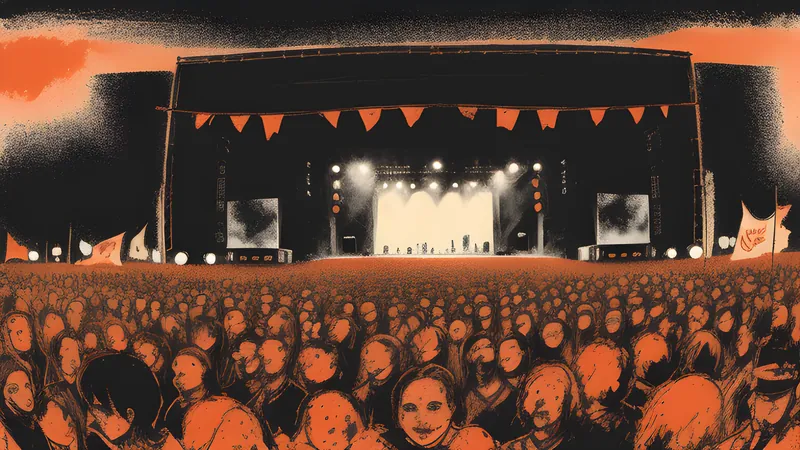
Roskilde 2023 was the year the orange canopy stopped flinching. Two summers of the festival being cancelled outright, 2020 and 2021, then a 2022 that came back but came back a little tender — smaller in feeling if not in headcount, everybody relearning how to live in a field with a hundred thousand strangers. By the summer of 2023 that hesitation was gone. The train from Copenhagen Central was packed again, the platform at Roskilde station was the same slow river of tents and stolen road signs it had always been, and the walk west across the fields felt like muscle memory switching back on. The festival ran 24 June to 1 July, the full eight days, and for the first time since the plague it felt like the machine had all its parts again.
What “full strength” actually means here
Roskilde does not measure a good year by its headliners, whatever the posters suggest. It measures it by whether the temporary city knits itself together the way it is supposed to — whether the warm-up days fill, whether the camps adopt their neighbours, whether the volunteer army turns up in the numbers the whole thing depends on. If you have read the full portrait of how this place works, you know the model: a non-profit run by around 32,000 unpaid volunteers, legally forbidden from keeping its surplus, handing the money out to charity every year. That architecture only functions if the people show up. In 2022 they showed up but you could feel the rust. In 2023 the rust was gone.
The bill ran to well over a hundred and eighty acts across the eight stages, which is the scale Roskilde books at when it is confident. The Orange Stage headline slots went to Kendrick Lamar, Blur, Lizzo and Lil Nas X — a spread that tells you everything about how this festival thinks. A generational American rapper touring one of the most ambitious records of the decade; a reunited British indie institution; a pop-soul juggernaut at the peak of her cultural moment; and Lil Nas X turning a main-stage slot into a piece of staged theatre. No two of those acts share an audience cleanly, and that is the entire point. Roskilde has treated genre-hopping as core business since the 1970s, and a strong year is one where the top of the bill actively refuses to cohere.
Kendrick, Blur, and the two ways to headline
Kendrick Lamar arrived on the Mr. Morale & the Big Steppers run, which was one of the most controlled and severe live shows on the road that year — choreographed, sparse, more performance-art than hip-hop spectacle. Watching an act that disciplined command the slope in front of the Orange Stage is a particular pleasure, because the crowd is enormous and loose and the show is tight and precise, and the tension between those two things is where the electricity lives. When 60,000 people go quiet at the same moment on a field in Zealand because a rapper from Compton has asked them to, the orange awning does its trick and the silence comes back off it like weather.
Blur were the other kind of headliner entirely: the reunion, the singalong, the crowd doing half the work. They had reformed for a run that summer around new material, and a field full of Danes who grew up on Britpop gave the old songs the full-throated treatment. I have written before about the séance economics of the reunion tour — the way a legacy act sells to the lifers and the never-got-to-see-them crowd at once — and Blur at Roskilde was a gentle, joyful version of exactly that. No cynicism required. Some reunions are cash grabs; some are just a band and an audience agreeing to be glad about the same thing for ninety minutes.
The real character of Roskilde, though, was never up top. It was Lizzo pulling a daytime crowd into something closer to a mass celebration than a concert, and it was the smaller stages — Avalon, Arena, Apollo, Gloria — where the regulars actually spend their week. That is where you catch a band from Mali at four in the afternoon and a Danish punk act nobody outside Copenhagen has heard of at midnight, and both of them feel like the reason you came. The headline names sell the tickets. The discovery stages are what people are describing when they get misty about the place afterwards.
The camping city, restored
The part of Roskilde that most people mean when they say “Roskilde” is not the fenced music site at all. It is the camping city that surrounds it, west of the actual town, spread across farmland that spends the other fifty-one weeks of the year growing nothing but grass. That city opens days before a single headliner plays, and for a lot of Danes the warm-up days are the festival — building the camp, meeting the neighbours, settling in.
In 2023 that pre-festival stretch felt properly alive again for the first time since 2019. The camping areas filled on schedule, the daft camp traditions came back, the flags went up so you could find your tent by navigating to whichever absurd banner your neighbours had flown. At its peak the whole gathering pushes past 130,000 people, which briefly makes it one of the larger towns in Denmark, and in 2023 you could feel that number in your legs. You walk further at Roskilde on less sleep than you believe is survivable, and the year the crowd is confident, the walking feels like a pilgrimage instead of a slog.
The Orange Feeling — the Danes’ own unironic name for the specific warmth of this crowd — came back at full temperature. Strangers sharing food, camps adopting stragglers, the general default that everyone is having the same good time and it would be rude to spoil it. Danes have a reputation for being reserved and a bit closed until they know you; put them in this field for a week and something loosens. That loosening was thinner in 2022. In 2023 it was back to full generosity, and it is genuinely the warmest big crowd in Europe when it is running right.
What shifted since 2022
Honesty about the drift, because a festival read owes you that. The corporate creep that has come for every large European festival kept coming for this one. More sponsor branding around the site, more premium camping tiers for people who want a real bed and a locked gate, ticket prices that keep climbing past the point where you can pretend this is a cheap week. A full-week ticket is a serious chunk of money now, and the beer is Danish-priced, which is to say priced like the bar knows you have nowhere else to buy it.
The difference between Roskilde and the fully commercial festivals is still the thing under the till. The surplus still goes out the door to charity rather than to shareholders. You are paying a lot, and you can see where it lands, and that single fact keeps the whole enterprise on the right side of a line that most of its peers crossed years ago. The 2023 edition tightened its sustainability push, too — the long campaign to cut waste and single-use gear across a city of 130,000 people, which is a genuinely hard engineering problem when your population is drunk and it is raining.
And it did rain, because this is a Danish summer and it always does. Gorgeous, then sideways rain, then gorgeous again, sometimes inside the same afternoon. Wellies you don’t mind burying. More sun cream than you think and more water than you want. The food inside has got genuinely good over the years, because Copenhagen’s obsessive food culture leaks into the festival, but it costs festival prices, so the veterans still cook breakfast at their own camps and save the money for the evenings.
Who 2023 was for
Roskilde rewards total commitment and mildly punishes the day-tripper, and 2023 was a pure distillation of that. The Orange Feeling is built over days; you cannot parachute in for Kendrick and out again and expect to have understood anything. The people who took the whole week — the warm-up days, the camping city, the eclectic bill dragging them out of their genre, the quiet satisfaction of a ticket that funds a youth theatre project somewhere — came out sunburnt, underslept, and slightly rearranged, which is the correct outcome.
For me it was the year the festival felt like itself again, all the way through, the pandemic finally behind it as a lived thing rather than a lingering caution. If you want the heavy counterweight across town — pure volume and darkness in an industrial shipyard — Copenhell is the Danish festival with the opposite centre of gravity, and 2023 was a big year for that one too. And if you want to come down off the Roskilde high with a proper indoor show, VEGA is where you take your ringing ears afterwards. But if you only do one festival in Denmark and you can stand a week without a shower, do this one. Full strength suits it.
Related Content