Roskilde 2017: The Year the Mud Won
Foo Fighters and Arcade Fire on the Orange Stage, a campsite turned to soup, and the Orange Feeling holding on anyway
Contents
Every Roskilde regular keeps a private ranking of the years, and 2017 is filed, in most of the ones I know, under the muddy one. The rain came on the Friday and the site never fully recovered its footing; the camping fields turned to the particular grey-brown churn that gets into your boots, your tent, your food and your soul, and by the back half of the week you were navigating a hundred thousand people’s worth of trodden mud on progressively less sleep. And yet — this is the thing about Roskilde — it was still, by common agreement of nearly everyone I spoke to, a magnificent week. The mud won the war of attrition. It did not win the festival.
The headliners, top-heavy and loud
The 2017 bill ran to something like 175 acts across nine stages, and the top of it leaned satisfyingly loud for a festival that usually spreads itself wider. Foo Fighters headlined — Dave Grohl doing the thing Dave Grohl does better than almost anyone, which is make an enormous field feel like a pub full of mates who happen to number in the tens of thousands. Arcade Fire brought the big communal Montreal art-rock. The Weeknd did the slick, enormous pop-R&B headline slot. The xx played their quiet, precise, weirdly massive minimalism. Solange turned in one of the sets people still talk about. A Tribe Called Quest, Nas, Ice Cube, Justice, Trentemøller — the Danish home hero — Lorde, Blink-182, The Jesus and Mary Chain, Future Islands, Moderat.
Foo Fighters were the one built for the weather. There is a specific value to a band like that on a wet, tired Saturday: they are relentlessly, professionally up, and Grohl has a genuine gift for making a huge crowd forget it is standing in a bog. That is not nothing when the site has been grinding people down for three days. Arcade Fire were the emotional one, the sort of set where a wet field full of strangers ends up bellowing along to songs about death and the suburbs and somehow feeling better for it.
Solange was the year’s quiet surprise for a lot of people — a set of poised, choreographed, meticulous soul from the A Seat at the Table material that turned a big outdoor stage into something closer to a piece of theatre. The xx did their trick of making minimalism enormous, three people and a lot of silence somehow filling a field. A Tribe Called Quest carried the weight of a legacy and the freshness of a final record, and Nas and Ice Cube reminded everyone that hip-hop has its own elder statesmen now, worthy of a headline field. The point of listing them is the point of Roskilde itself: no two of those sets belonged to the same festival, and all of them belonged to this one.
As ever, I spent a good share of the week off the Orange Stage entirely, in the smaller tents where Roskilde does its actual soul-work — the discovery slots, the loud unsigned stuff, the bands you catch by accident and then evangelise about for a year. The headliners are the postcard. The rummaging is the holiday. That split is baked into the whole design of the place, which I have written up properly in the festival that gives all its money away.
The mud, honestly
Let me be plain about it, because it is the defining fact of the year. Roskilde 2017 took a real soaking — the site absorbed something in the order of a month’s rain in a couple of days, and the campsite, which is farmland the other fifty-one weeks of the year, did exactly what churned farmland does under a hundred thousand pairs of feet. It became soup. The paths between camps turned treacherous, the low-lying pitches flooded, and the whole enterprise took on the grey, gluey, slightly heroic quality that British festivalgoers will recognise from a bad Glastonbury.
There is a technique to surviving a mud year, and it is mostly about surrender. Wellies you are prepared to bury. A pitch on the highest ground you can find. The acceptance, arrived at somewhere around the second day, that you will be dirty until you get home and there is nothing to be done about it. And then a strange thing happens, which happens at Roskilde specifically and not everywhere: the shared misery becomes a bonding agent. When everyone is equally filthy, a peculiar democracy sets in. The mud is a leveller. You help a stranger drag a collapsed tent to higher ground, they hand you a beer, and you have a friend for the week. The Orange Feeling — the deliberate, communal warmth this festival cultivates — turns out to be waterproof. It was built for exactly this.
What had shifted since 2015
If 2015 was the year of enormous breadth — a Beatle, a Compton rapper and a British art-rock band all headlining the same field — 2017 felt a touch more front-loaded and a touch louder at the top, which suited me fine. The bill still cast Roskilde’s traditional wide net across dozens of countries and genres; the difference was in the emphasis, with more heft in the headline slots.
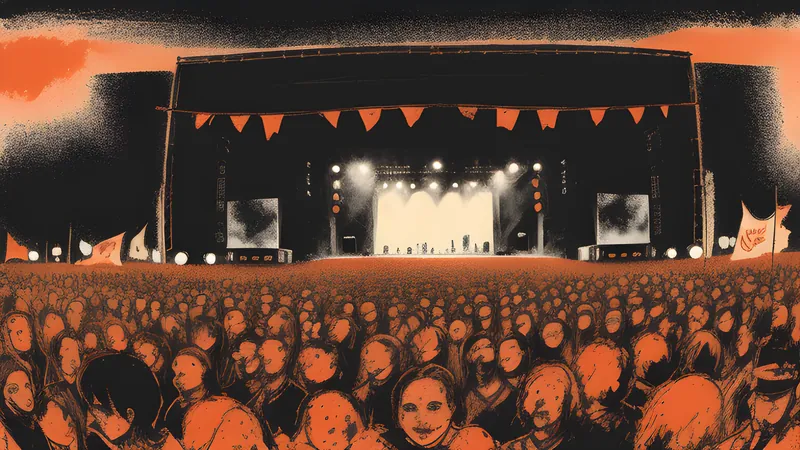
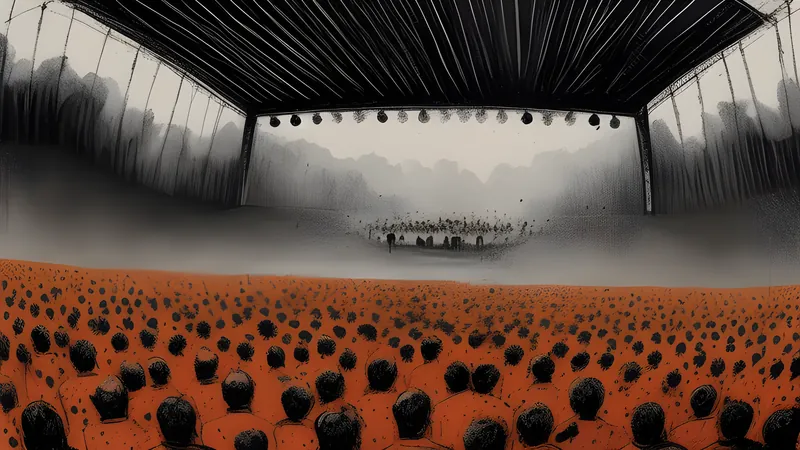
The rhythm of the week never changes, mud or no mud. Roskilde runs eight days: four warm-up days while the campsite fills and the smaller stages tick over, then the four main days from Wednesday to Saturday when the Orange Stage and the full programme come alive and the population swells past 130,000. All of it happens under the same awning it always has. The Orange Stage canopy is a second-hand Rolling Stones stage roof, bought and first raised at Roskilde in 1978, and it remains the most recognisable object in Northern European festival culture — a great orange sail that in 2017 spent the week shedding rainwater in sheets off its edges while the crowd underneath refused to leave.
The creep continued its slow advance, as it did at every big festival that decade. More premium camping. More sponsor presence in your eyeline. Ticket and beer prices that kept climbing past the point of pretending this was anyone’s budget option. I keep flagging this because it is true and because pretending otherwise would be dishonest — but I keep flagging the counterweight too, because it is also true: Roskilde is a non-profit, the surplus goes out the door to humanitarian and cultural causes, and 32,000 unpaid volunteers still run the whole improvised city. You pay a lot. You can see where it lands. That defence held in the mud as firmly as it held in the sun.
The food kept getting better, which is the trend that has run for years now — Copenhagen’s restaurant obsession leaking onto the site, so that even in a swamp you could eat genuinely well if you queued and paid. The veterans still cooked breakfast at camp. Some things do not change no matter how good the food trucks get.
The daft business as usual
The Saturday naked run went ahead, mud and all, which if anything made it more impressive — sprinting a lap of a churned campsite in the altogether for a ticket to next year’s festival takes a specific commitment when the ground is that treacherous. Roskilde Festival Radio ran the countdown, the crowd roared the runners home, and the whole daft, warm, quarter-century-old tradition carried on exactly as it should. I have written it up on its own in the Roskilde naked run, and 2017 was a fine advertisement for the fact that the festival’s sillier rituals are weatherproof too.
Why the mud year is a good year
Here is the thing I would tell anyone who wasn’t there and has only heard 2017 described as the wet one. The rough years are the ones the regulars end up loving most. A perfect-weather Roskilde is a lovely holiday and it slides out of the memory within a couple of summers. A mud year embeds itself. You earned it. You survived it. You have a story about the tent that flooded and the stranger who helped and the specific way Foo Fighters sounded when you had given up on staying clean and decided to simply be there instead.
That is the deeper logic of this festival, and it is why the model matters. A commercial festival treats bad weather as a liability to be managed and apologised for. Roskilde, run by volunteers who chose to be standing in the same mud as you, treats it as just another thing the week threw at everyone equally. The care you feel in the crowd — rebuilt deliberately after the tragedy of 2000, which no honest account of this festival can skip — does not switch off when it rains. It arguably switches on harder. 2017 was the year the mud won every logistical argument it picked and lost the only one that mattered.
For the full portrait of how this place works, start with the festival that gives all its money away. For where the story went next, Roskilde 2019 turned out to be the last ordinary summer before two years of silence nobody saw coming. But 2017 gets its own place in the ranking, high up, filed forever under the muddy one — and that is a compliment.
Related Content