Roskilde 2015: Orange Feeling in the Rain
McCartney closed it, Muse and Kendrick carried it, and the rain never quite managed to spoil it
Contents
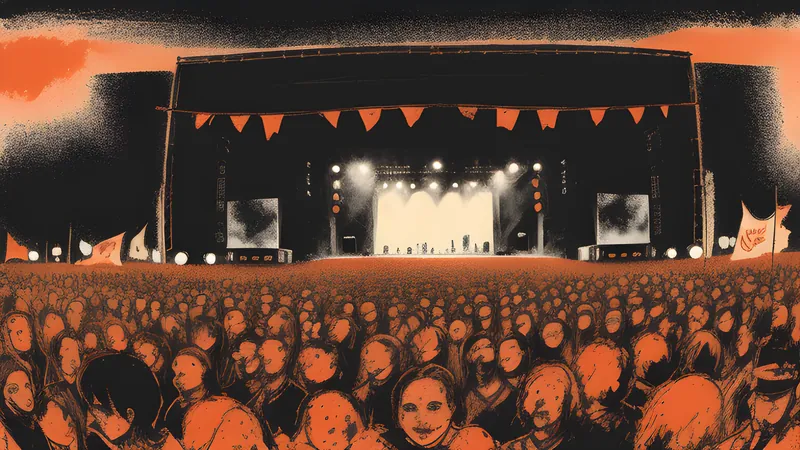
The 2015 edition is the one where a Beatle closed the Orange Stage and the sky spent a week deciding whether it liked us. Paul McCartney headlined the final Saturday, 4 July, and the whole festival bent itself around that fact for days beforehand — an actual member of the band that half your parents’ record collections were built on, standing under the orange canopy that his old rivals the Rolling Stones commissioned in the seventies. If you want a single image for how strange and how big Roskilde gets, it is a 72-year-old Liverpudlian playing to a field in Zealand under a Stones-era awning while a hundred thousand Danes lose their minds in the drizzle.
The bill, and why it never sat still
Roskilde has always booked wide, and 2015 was a clean demonstration of the method. McCartney on the Saturday, Muse detonating the main stage earlier in the week, Kendrick Lamar tearing through the material from To Pimp a Butterfly just months after it landed, Florence + The Machine turning the Orange Stage into a tent revival, Pharrell Williams doing the crowd-pleaser, Disclosure making the whole field bounce, Nicki Minaj, Mew flying the home flag. That is five or six completely different festivals stacked on top of each other and sold as one ticket.
I spent most of my Roskildes drifting away from the headline slots and into the smaller tents, which is where regulars end up, because the Orange Stage names are the bit you can read about anywhere. The eclecticism is the actual product here. You watch Kendrick own a stage the size of an airport one evening and then spend the next afternoon in Gloria or Apollo watching something loud and unsigned from a country you would struggle to find on a map, and both count as Roskilde working properly. The festival has treated discovery as its core business since the seventies, which is why I have described the whole model at length in the festival that gives all its money away — the booking policy is downstream of the non-profit ethos.
Muse were the loud highlight for me, and they are a band built for exactly this kind of enormous outdoor slot: three men, a lighting rig you could see from Copenhagen, and songs engineered to be sung back by sixty thousand people at once. Kendrick was the intense one — a hip-hop set that demanded you pay attention rather than just nod along, which is a harder thing to pull off at a festival where half the crowd wandered in curious. He pulled it off.
Living in the field
The music is a few days at the centre of a much longer week. The camp opens well before the fenced part does, and for a lot of Danes the warm-up days are the real festival — the stretch where you build your camp, meet your neighbours, and settle into being a temporary resident of one of the larger towns in the country. By the peak the whole gathering pushes past 130,000 people, and 2015 felt every bit that size. You navigate by flags. You lose your tent. You walk further in a day, on less sleep, than you would ever choose to.
The shape of the week is worth spelling out for anyone who has only done the buttoned-up British festivals. Roskilde runs eight days. The first four are warm-up days, when the campsite opens and a handful of smaller stages tick over while the site slowly fills; the last four, Wednesday to Saturday, are the main days when the Orange Stage and the full programme come alive. By that Wednesday the population had swollen to the 130,000 figure, which makes the festival, for one week a year, one of the largest gatherings in Northern Europe and briefly one of the bigger towns in Denmark. It is an enormous logistical feat, and it is worth remembering, when you are queuing for a toilet, that the whole improvised city is deliberately over-engineered for safety. The careful crowd management you feel here was rebuilt from the ground up after nine people died in a crush during Pearl Jam’s set in 2000, and every Roskilde since has carried that lesson in its stewarding.
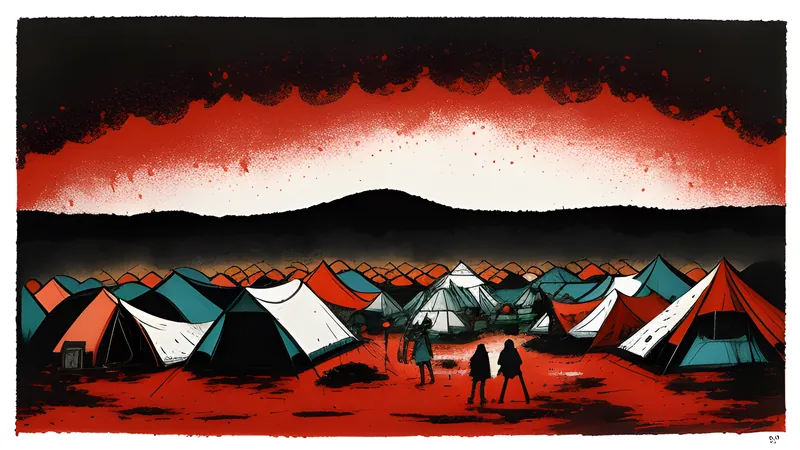
The weather was the running theme. This is a Danish summer, so it was gorgeous and then it rained sideways and then it was gorgeous again, sometimes inside a single afternoon, and the campsite took on that particular churned quality that every Roskilde veteran knows in their knees. You learn to pack wellies you are prepared to abandon. You learn that the rain is part of the deal and that the Orange Feeling — the specific, slightly evangelical warmth that Danes name without embarrassment — actually survives it. There is a strange bonding that happens when a hundred thousand people get rained on together and collectively decide it does not matter. That is the whole festival in miniature: reserved, careful Danes turned generous and daft by a week in a wet field.
The Saturday naked run happened, as it does every year, off in the campsite while Roskilde Festival Radio ran the countdown — a few dozen entrants sprinting a lap in the altogether for the single most coveted prize on site, a ticket to next year. I have written that daft, warm-hearted tradition up on its own in the Roskilde naked run, because it deserves it, and because it tells you more about the temperature of this crowd than any headliner does.
The food, the money, and the creep
Two things had shifted noticeably by 2015, and honesty demands both.
The first is a good change. The food had got genuinely good. Copenhagen’s obsessive restaurant culture had started leaking out onto the festival site, and you could eat far better than the old burger-van baseline if you were willing to queue and pay. That is a real upgrade on the Roskildes of a decade earlier, when the food was fuel and nothing more. The veterans still cooked breakfast at their own camps to save money — always will — but the evening options had become a genuine reason to stay inside the fence.
The second change is the one everybody at every big European festival was starting to mutter about: the creep. More sponsor branding around the site. More premium camping for people who wanted a bed, a locked gate, and a shower that was not a communal act of faith. Ticket prices that had climbed past the point where you could pretend Roskilde was the cheap option. None of this is unique to Roskilde — it came for all of them — but it is worth naming, because Roskilde is the festival with the strongest possible defence against the accusation of selling out. The whole apparatus is run by the non-profit Roskilde Festival Charity Society and staffed by some 32,000 unpaid volunteers who pour the beer, work the gates and steward the crowds in exchange for the week itself, and every krone of surplus is given away to humanitarian and cultural work. The surplus still goes to charity. You are paying more, and there is more branding in your eyeline, and the money you hand over the bar still ends up funding youth and cultural projects rather than a shareholder’s second boat. That fact does a lot of heavy lifting, and it held in 2015.
McCartney, and the problem of a legend
The closing set is the one everyone remembers, so it is worth being honest about it. A McCartney headline is a strange beast at a festival like this. Half the crowd was there for a genuine, once-in-a-lifetime brush with a living Beatle, and the other half were twenty-two and mostly wanted to hear the two or three songs they could name before drifting off to a DJ tent. Both crowds are legitimate. Both were catered to.
What he actually delivered was a long, generous, professional greatest-hits run — Beatles material, Wings material, the solo stuff, the whole arc of one of the most consequential careers in popular music, played by the man who wrote it. There is a specific magic in hearing songs that predate the festival itself, that predate most of the people watching, land on a field in Denmark and get sung back word-perfect by three generations at once. It is not the wildest set Roskilde has ever hosted. It was never going to be. It was the one with the deepest roots, and the Orange Stage is the right size and the right shape for exactly that kind of communal, slightly tearful singalong. The awning caught the sound and dropped it back on us like weather, which is the thing the canopy has done since 1978 and the reason it is the most recognisable object in Northern European festival culture.
What 2015 was
Every Roskilde has a character, and 2015’s was breadth. A Beatle and a Compton rapper and a British art-rock band and a Danish home favourite all headlining the same week, in the same field, for the same crowd, under the same orange awning — that is the festival’s whole argument for itself, made loudly. It rained, the camp turned to soup, the food got better, the prices got worse, the naked run ran, and the Orange Feeling held. If you want the full portrait of how and why this place works the way it does, start with the festival that gives all its money away, and if you want to see how the following years moved the furniture around, Roskilde 2017 was the muddy one and Roskilde 2019 turned out to be the last normal summer before the silence. 2015 was the one that reminded you how absurdly wide this festival is prepared to cast its net — and how good the net still is.
Related Content