Rock am Ring: A Racetrack, a Storm, and the German Masses
Forty years of rock on a Formula One circuit in the Eifel hills
Contents
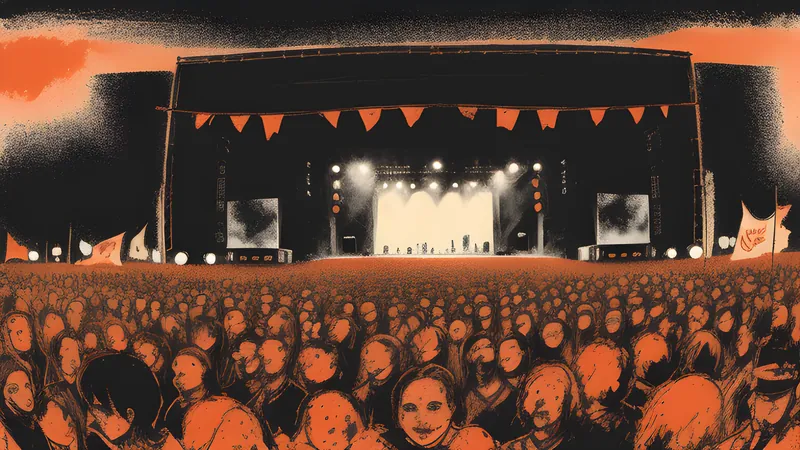
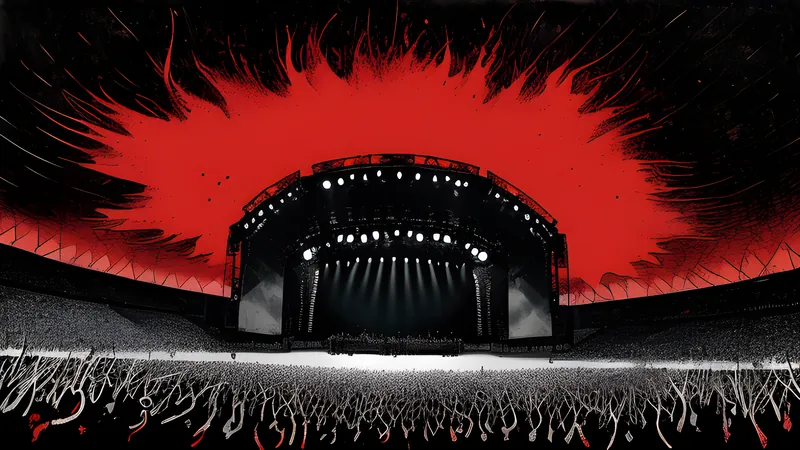
Picture a Formula One racetrack in the middle of a German forest, and instead of engines you get 90,000 people and a wall of amplifiers. That is Rock am Ring, staged in the paddock of the Nürburgring since 1985, and it is one of the largest music festivals on the planet. It has survived exile, lightning that put dozens in hospital and forty years of shifting taste, and every early June it still fills a motorsport complex in the Eifel hills with the German rock masses.
A festival born from a race that never came
The origin is a good piece of trivia. In the mid-1980s the Nürburgring had just built its new Grand Prix circuit, and the venue needed events to justify the investment. The promoter Marek Lieberberg — a giant of the German concert business — proposed a rock festival to fill the paddock, and the first Rock am Ring ran in 1985. The name simply means “rock at the ring”, the ring being the racetrack itself.
It worked immediately, and it worked so well that within a few years the concept was cloned. A twin festival, Rock im Park, was spun off to serve the south of the country, and today it runs simultaneously at the Zeppelinfeld in Nuremberg roughly 300 kilometres away, sharing the same headline bills. The two festivals run the same lineup on the same weekend, artists shuttling between them, so that Germany effectively holds one enormous festival split across two sites. Combined, they are the biggest music event in the country and one of the biggest anywhere, with a joint attendance well over 150,000 in their peak years.
The Nürburgring setting gives Rock am Ring a character no green field can match. This is functioning motorsport infrastructure — grandstands, pit lanes, the tarmac of a world-famous circuit — repurposed for a weekend into a rock city. The Eifel is a range of low, wooded volcanic hills, beautiful and notoriously wet, and the weather is a permanent character in the festival’s story. Which brings us to the lightning.
The years the sky attacked
Rock am Ring’s most dramatic chapter is meteorological. In 2015 the festival was interrupted and partly cancelled by severe thunderstorms. The following year was worse: on the Friday of the 2016 edition, a lightning strike on the site injured dozens of people, with the toll eventually reaching around 80 hurt and many taken to hospital, and after further storms the organisers cancelled the remaining performances. It was a genuinely frightening weekend, and it exposed the fundamental vulnerability of an open-air festival on high ground in a storm-prone range.
What makes the 2015 and 2016 storms even more pointed is where they happened. Those two editions were not at the Nürburgring at all. After 29 years at the racetrack, a dispute with the circuit’s new private owners over the contract pushed the festival out, and for 2015 and 2016 Rock am Ring decamped to a former military airfield at Mendig, some distance away in the Vulkaneifel. The exile was not a happy one — the weather punished both editions, and the economics of the new site proved difficult — and in 2017 the festival returned home to the Nürburgring.
The homecoming had its own drama. On the Friday of the 2017 edition, with the site sold out at around 85,000 people, the grounds were cleared during a performance over a security concern before storms rolled in again. Rock am Ring, it turns out, cannot catch a calm weekend. And yet the crowds keep coming back, year after year, which tells you something about the pull of the thing. A festival that has been evacuated this many times and still sells out in record time is a festival people genuinely need.
The size, and what size does
Rock am Ring is a mainstream monster, and it is honest about it. The bill each year is a cross-section of whatever is big in loud music at that moment — rock, metal, punk, alternative, and increasingly hip-hop and electronic acts booked to widen the tent. Headliners over the decades read like a who’s who of stadium-scale rock, and the festival makes no apology for chasing the acts that will move 90,000 tickets. This is the opposite pole from a curated boutique event; it is a broad-church, something-for-a-huge-crowd machine, and its scale is the entire point.
That scale produces a specific kind of experience. Multiple enormous stages run in sequence and in parallel, the walk between them takes real time, and the sound at the back of a crowd that size is a distant roar. You trade intimacy for spectacle: the sheer sight of tens of thousands of people moving as one under a stage the size of a building is its own reward, even if you are too far back to see a face. This is festival-as-cathedral-of-mass, the German cousin of what Wacken does for pure metal — though where Wacken is a tight-focus genre pilgrimage in a single village, Rock am Ring is a broad rock supermarket on a racetrack.
The camping culture is central to the German festival experience and Rock am Ring is one of its great arenas. Tens of thousands arrive days early, build elaborate campsite societies with flags and sound systems and questionable structural engineering, and treat the festival as much as a mass social gathering as a series of concerts. The music is the reason to be there; the campsite is where the weekend actually lives.
Four decades of shifting taste
A festival that has run since 1985 is a document of how popular loud music has changed, and Rock am Ring is a good one to read. In its early years it was a straight rock and hard-rock festival, a showcase for the arena bands of the era. Through the 1990s it absorbed the grunge and alternative wave, then the nu-metal boom around the turn of the millennium, when a generation of down-tuned, rap-inflected American bands owned the main stage. Punk and metalcore had their turns. In recent years the bookers have leaned harder into hip-hop, pop-punk revivals and electronic acts, widening the definition of what belongs on a “rock” bill to keep the ticket sales moving.
That evolution is both the festival’s survival mechanism and the source of its recurring identity crisis. Purists grumble every few years that Rock am Ring has drifted too far from rock, that the bill has become a general festival of whatever is streaming well rather than a rock festival with a spine. There is truth in the complaint, and it is the tax every long-running mega-festival pays: to keep filling 90,000 tickets across four decades, you have to follow the audience wherever its taste wanders, and the audience’s taste has wandered a long way since 1985. The festival that books only what its founders loved is the festival that slowly empties.
What is striking is how little the drift has hurt demand. Recent editions have sold their full allocation of around 90,000 tickets faster than ever, sometimes in a matter of hours, months before a single band is confirmed. That is the same blind-faith buying that drives the best curated festivals, except here it is faith in a brand and a place rather than a specific lineup. Germans buy Rock am Ring the way they buy a fixture in the calendar — the first weekend of June, at the ring, whoever happens to be playing. The event has become bigger than any bill it could print.
Why the ring endures
There is a fair criticism to make of an event this size, and it is the same criticism that dogs every mega-festival: as the bills chase the biggest available names and the sponsorship stacks up, the individual editions start to blur into one another, and the sense that you are somewhere specific can drain away. That homogenising pressure is real across the whole industry, something I have chewed over in why every festival now feels the same, and Rock am Ring is not immune to it.
What saves it is the place. The Nürburgring is a genuinely singular site — a working Formula One circuit in a range of wet volcanic hills, drenched in motorsport history, that transforms for one weekend a year into the loudest city in Germany. You cannot fake that, and no amount of corporate branding can flatten it entirely. The storms that keep interrupting the festival are, perversely, part of what makes it unrepeatable: this is a festival at the mercy of a specific and dramatic landscape, and everyone who has stood in that paddock while the Eifel sky turns black knows it.
Forty years on from Lieberberg’s bet that a new racetrack could double as a concert bowl, Rock am Ring is a German institution — the country’s biggest annual weekend of loud music, back home at the ring where it started, still selling out faster than almost anything else on the continent, still daring the sky to do its worst. It usually does. They come anyway.
Related Content