Roadburn: The Doom Pilgrimage Where the Lineup Is a Dare
How a stoner-rock blog became the heavy underground's most trusted curator
Contents
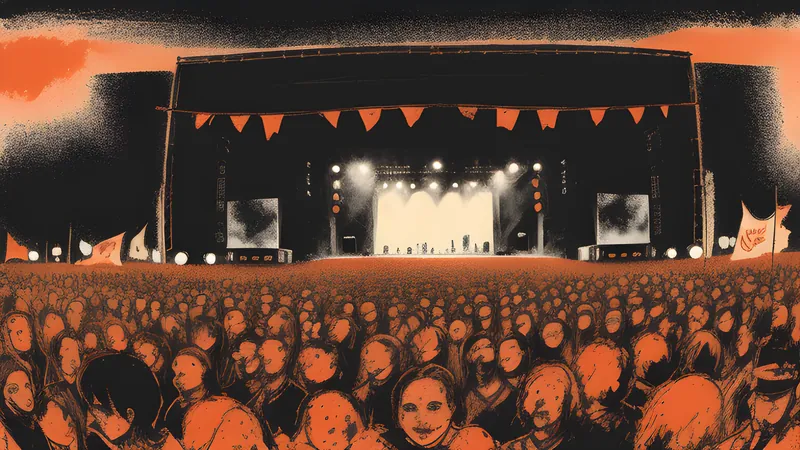
Every April a few thousand people fly into a mid-sized Dutch city to watch bands most of their friends have never heard of, playing music engineered to be slow, crushing and difficult, and they buy the tickets before a single name is announced. That is the strange miracle of Roadburn. In Tilburg, an unremarkable town an hour south of Amsterdam, the heavy underground has built the one festival where the audience trusts the people doing the booking more than they trust the headliners. You do not go to Roadburn to see a band you love. You go because Roadburn has spent twenty-five years earning the right to show you something you did not know existed, and you have learned to say yes.
A festival that grew backwards out of a blog
Roadburn started as a website. In 1998 two Dutch fans, Walter Hoeijmakers and Jurgen van den Brand, ran a stoner-rock and doom blog to share the heavy 70s-descended music nobody else was writing about. The blog threw its first shows in February 1999 — three tiny indoor gigs across Amsterdam, Tilburg and the small Frisian town of Sneek. For years it stayed nomadic, popping up in Nijmegen and Eindhoven, a passion project run by people with day jobs and a mailing list.
The turn came in 2005, when Roadburn settled into Tilburg’s 013 venue, a purpose-built concert hall with the kind of production spine an ambitious festival needs. From 2006 it became a proper multi-day event, and by 2008 it ran four days. Somewhere in there the thing tipped over from a fan gathering into an institution: tickets for the 2009 edition sold out in about forty-five minutes, and roughly three-quarters of the people buying them were flying in from outside the Netherlands. A blog had accidentally become the most respected curated event in its genre, and it never bothered to get bigger to prove it.
That restraint is the whole design. Roadburn caps at around 4,500 people a day — a scale it defends on purpose. It won the European Festival Awards’ Best Small Festival prize (the under-10,000 category) in 2023, and the organisers still describe the thing as boutique. Compare that to Wacken, where a Schleswig-Holstein village hosts eighty-odd thousand metalheads in a field, and you understand what Roadburn is opting out of. It has no interest in being enormous. It wants to be irreplaceable.
The lineup is a dare
Here is what makes Roadburn different from every other festival I have written about. Most festivals book bands. Roadburn commissions events, and a good chunk of what you see on any given weekend exists only because Roadburn asked for it and will never happen again.
The engine for this is the curator model. Each year the festival hands a chunk of the programming to a guest curator — a musician whose taste it trusts — and turns them loose. The list of people who have held that pen reads like a genealogy of heavy music: Sunn O))) in 2011, Voivod in 2012, Electric Wizard’s Jus Oborn running an evening he called “The Electric Acid Orgy” in 2013, Opeth’s Mikael Åkerfeldt in 2014, Enslaved’s Ivar Bjørnson and Einar Selvik in 2015. Lee Dorrian of Cathedral and Napalm Death took a turn, as did Baroness’s John Dyer Baizley, Converge’s Jacob Bannon, and At the Gates’ Tomas Lindberg. A curator does not just pick their favourite bands. They design a weekend, and Roadburn builds it.
Alongside the curator sits the artist-in-residence: a band invited to play several distinct sets across the festival rather than one show. Full of Hell and Slift each played four different sets in 2022. Earthless held the residency in 2018; the British psych band The Heads did it in 2015. The point is depth over billing — you get to watch a band explore itself over a weekend instead of catching forty-five minutes and moving on.
Then there are the commissions and the one-offs, which are the real currency. Roadburn is where bands are talked into doing the thing they would never otherwise do. Candlemass played their debut Epicus Doomicus Metallicus in full. Godflesh performed Streetcleaner start to finish. Triptykon debuted the unreleased Requiem that Celtic Frost’s Tom G Warrior had been carrying for decades. In 2024 Khanate — the punishing drone project featuring Stephen O’Malley and Alan Dubin — played their first show in nineteen years. Blood Incantation played two sets. Bands cover other bands, collaborate across projects, and premiere material written specifically for that room. If you want the ceremonial, cathedral-scaled version of this heaviness in France, Hellfest does spectacle at industrial volume; Roadburn does the intimate, once-only version, where the value is in the fact that you cannot see it anywhere else, ever.
That is why the crowd buys blind. When Roadburn announces a bare weekend with no lineup, thousands of people trust the curation enough to commit money to it. It is the single most impressive expression of institutional taste I know of in live music.
A festival with no field
The physical shape of Roadburn is its other quiet radical move. There is no campsite, no muddy field, no wristband-and-tent survival ordeal. The festival is urban and indoor, spread across venues threaded through the middle of Tilburg. The 013 is the anchor, a modern hall with several rooms of different sizes, and around it a constellation of other spaces has come and gone over the years — the Het Patronaat church hall, which served the festival until it closed after the 2019 edition, plus the Paradox jazz club, the cavernous Koepelhal, and other rooms scattered within walking distance.
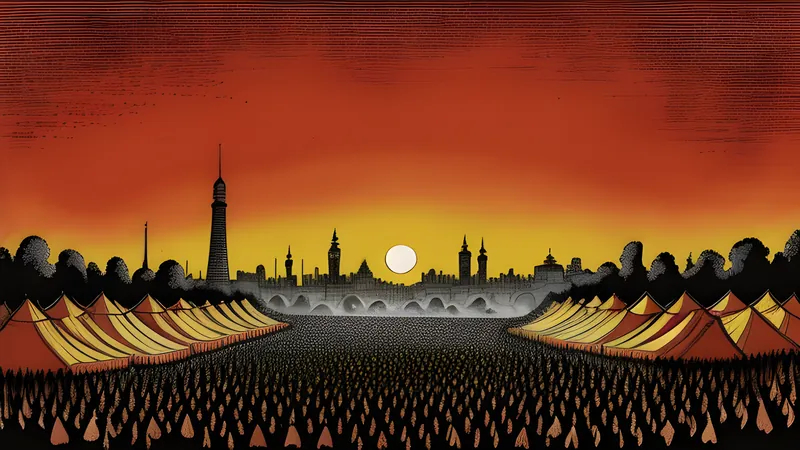
The effect is completely unlike a green-field festival. You move through a real town — cobbles, canals, actual restaurants, hotels with beds in them — walking between stages past the same faces you keep seeing all weekend. Local businesses lean into it; the town has learned to expect the annual influx of black-clad pilgrims and largely enjoys them. The nearest comparison in my own patch is the club-scale intensity of a place like Copenhagen’s Loppen, where the low ceiling and the sweat are the point — Roadburn takes that boxed, immersive heaviness and multiplies it across a whole city centre for four days.
The trade-off is real and worth naming. An indoor festival with 4,500 tickets and finite room capacities means you cannot see everything, and popular sets fill up and lock out. Roadburn is a festival of hard choices and missed bands. You will stand in a queue for something and miss something else brilliant two streets away, and that scarcity is baked in. It is the price of the intimacy, and most people decide it is worth paying.
The pilgrims
Roadburn’s crowd is the most self-selected audience in heavy music. Three-quarters fly in from abroad — Britain, Scandinavia, Germany, the States, further — which means the room is full of people who spent real money and real annual leave to be there, for music with no daytime-radio ambitions whatsoever. That changes the temperature completely. There is very little posturing and almost no phones-up-filming-everything detachment. People are attentive in a way that borders on reverent, because they came specifically to pay attention.
It skews adventurous and open-eared. A Roadburn regular will happily stand through a drone set, a black-metal set, a post-rock set and a free-jazz-adjacent set in one afternoon and treat all four as the same pursuit. The genre labels — doom, sludge, psych, drone, post-metal — matter less inside the building than the shared appetite for weight and risk. If Copenhell is a broad-church metal party on a Copenhagen harbour, Roadburn is the specialist seminar: smaller, stranger, and far more likely to change what you listen to on the flight home.
The community ethos runs deep enough that Roadburn has spun off record labels and a whole surrounding culture. Co-founder Jurgen van den Brand stepped back in 2016 to focus on the Roadburn Records and Burning World Records side of it, while Walter Hoeijmakers stayed on as the artistic director whose taste effectively is the brand. That continuity matters. You are trusting specific people’s ears, and those people have not changed.
Getting there, and what it costs you
Tilburg is easy in the boring, brilliant way that makes an urban festival painless. Fly into Amsterdam Schiphol or Eindhoven, take a train, and you are in the centre of town in around an hour with wheeled luggage and no mud. Book accommodation early — a town of Tilburg’s size does not have infinite hotel rooms, and 4,500 international visitors descend on the same weekend every April. Many regulars have their spot booked before the next edition is even announced.
The genuine cost of Roadburn is not the ticket, which stays reasonable for four days of programming. It is the commitment. This is a festival you plan a trip around, fly to, and surrender to for the better part of a week. It rewards people who arrive curious and willing to be led, and it punishes people who show up wanting to hear the hits, because there are no hits. The 2023 edition ran without a named curator at all, the organisers openly citing how hard the bookings had become to land — an honest admission that the once-only model is difficult by design, and getting harder as the bands it covets get busier and pricier.
The verdict
Roadburn is for the listener who has already fallen down the heavy-music rabbit hole and wants someone with better ears to keep pushing them deeper. If your idea of a great festival is singing every word back at a band you already love, this is the wrong trip — go to a big open-air and have the time of your life. If your idea of a great weekend is walking out of a dark room in Tilburg genuinely altered, having watched a reunion nineteen years in the making or a commission that will never be performed again, there is nothing else quite like it.
It is transcendent when you surrender to the curation and follow the festival somewhere you would never have chosen to go. It is frustrating when you fight the scarcity and try to see everything. Come with an open weekend, a booked hotel and no plan beyond trusting the people who built it. The lineup is a dare. Twenty-five years on, the smart money still takes it.
Related Content