Resurrection Fest: A Galician Village That Becomes Metal's Capital
How a small hardcore scene turned a fishing town in northern Spain into one of Europe's biggest metal festivals
Contents
Viveiro is a fishing town on the north coast of Galicia, up in the green, rainy, Atlantic corner of Spain that most people never associate with the country at all. It has a medieval old town, an estuary, a few thousand permanent residents, and for one week every summer it becomes one of the biggest metal cities in Europe. Resurrection Fest is the reason, and its rise from a small local hardcore gig to a festival pulling tens of thousands a day is one of the great modern festival stories.
I have not been — Galicia in July is a long way from my usual Nordic beat, and the far corner of Spain has never quite made it onto my one-big-trip-a-year budget. So this is a read from the record, from the numbers and the history, the way I cover the festivals outside my orbit. But Resurrection is worth the attention precisely because of how unlikely it is: a world-class metal festival grown out of a tiny scene in a remote town, by the sheer will of the local kids who started it.
From a hardcore gig to a Spanish institution
The origin is genuinely humble. The festival was first held in August 2006 under the name Viveiro Summer Fest, then reorganised and relaunched later that same year as Resurrection Fest. It came straight out of the local hardcore scene, organised by a crew connected to the band Twenty Fighters — local kids putting on a show for their own community, with a few thousand people through the door in that first year. That is the whole seed: a small-town hardcore scene deciding to throw a festival, in a place with no particular reason to have one.
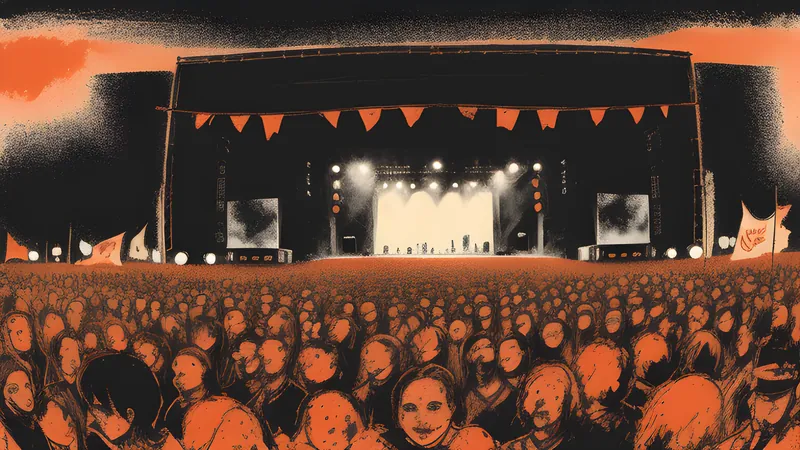
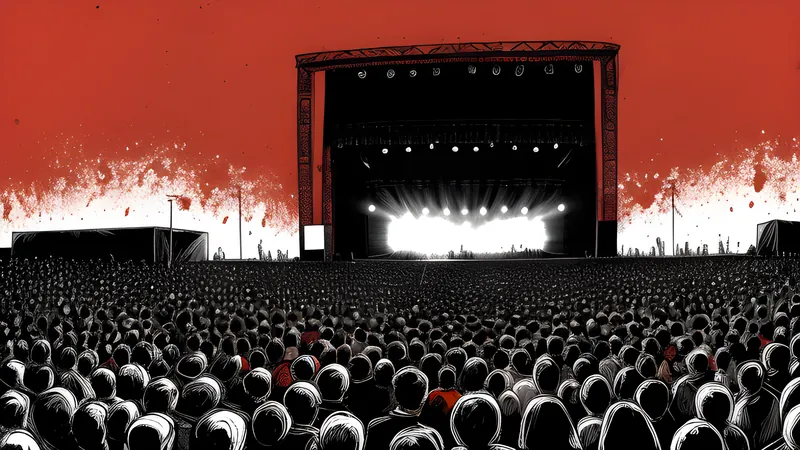
From there the growth was relentless. Resurrection climbed through the Spanish festival ranks year on year until it became the country’s premier heavy-music event by genre specialisation. By 2015 it was reporting a daily peak north of fifty thousand people — from three thousand in 2006. That is a fifteen-fold jump inside a decade, in a fishing town whose permanent population it now dwarfs many times over during festival week. The comparison writes itself: this is the Spanish equivalent of the story I told about Wacken swallowing its host village, a tiny place that becomes, for a few days a year, a temporary metal city many times its normal size.
The bands that a small town somehow books
The clearest measure of how far Resurrection travelled is the calibre of act it now lands. Over its history the festival has hosted more than two hundred bands, and the top-line names are genuinely enormous: Iron Maiden, KISS, Scorpions, Rammstein, Slipknot, Megadeth, Slayer, Anthrax, Motörhead, Lamb of God, In Flames and many more have all played this town on the Galician coast. Those are stadium-filling, festival-headlining acts of the very top rank, being booked into a festival that started as a hardcore all-dayer for a few thousand friends.
That trajectory — small scene, giant headliners — is the same corporate-scale festival economy I keep coming back to, where a handful of enormous touring acts rotate through every major field in Europe. Resurrection now plugs into that circuit, which is how a remote Spanish town ends up with Iron Maiden on the bill. Getting there took years of steady building, each edition a little bigger and a little bolder than the last, until the festival had the reputation and the budget to compete with the established European giants for the acts everyone wants. That patient climb is the part outsiders miss when they see a modern lineup and assume the money was always there. It was earned, one summer at a time, by people who kept betting on their own town, and it is the kind of story that makes the whole festival worth rooting for. It is worth being clear-eyed about the trade, the same one I have written about at length: the big names are shared across the continent, and there is a sameness that creeps into the top of every European festival bill once you are booking from the same short list of stadium acts as everyone else.
What keeps Resurrection from disappearing into that homogeneity is its hardcore and punk DNA. The festival never forgot where it came from — the underbill and the whole cultural texture of the event stay rooted in the hardcore and punk scene that started it, which gives the weekend a character distinct from a pure heavy-metal festival. NOFX, Refused and a long list of hardcore and punk acts have shared the bills with the metal titans, and that mix is the festival’s signature.
Why Galicia, and why it works
The setting is a genuine part of the appeal, and it upends the cliché of Spain. This is not the arid, sun-blasted, sangria-advert Spain. Galicia is Atlantic and Celtic-flavoured, green and wet and cool, more like Ireland or Brittany than Andalusia. Viveiro sits on an estuary with beaches nearby and a walled medieval centre, and for a lot of the foreign contingent the festival doubles as a holiday in a beautiful part of Spain that most tourists never reach. You get the heavy-music festival and a stretch of dramatic northern coastline in the same trip.
The town-and-festival relationship is the interesting mechanism, and it mirrors what happens at the other village-swallowing festivals. A place of a few thousand people cannot, on its ordinary infrastructure, absorb fifty thousand metalheads. It takes over campsites and beaches, fills every bed for miles, and turns the medieval streets into a temporary heavy-music quarter for a week. That kind of scale in a small town only survives if the town decides the invasion is worth it — the summer influx becomes the biggest economic event of Viveiro’s year, and the place has organised itself around welcoming it. It is the same economic armistice I described at Hellfest in its French wine town: a small conservative community works out that the loud weekend pays for a great deal of the rest of the year.
The logistics of a town under siege
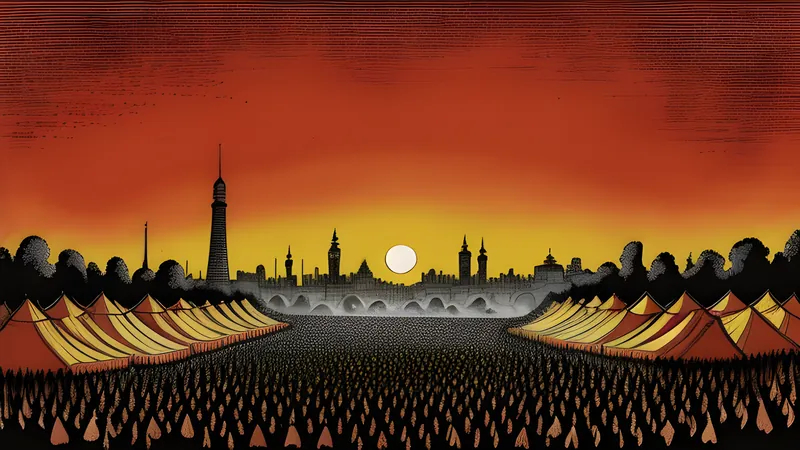
The practical machinery of Resurrection is a study in how a small place absorbs an enormous temporary population, and it is genuinely impressive from a distance. Viveiro sits on the FEVE narrow-gauge coastal railway and near the main roads down from the ferry ports and airports of northern Spain, and for festival week the town’s whole infrastructure reorganises itself around the influx. Campsites open on the beaches and the outskirts, every hotel and guesthouse for a wide radius books out, and the medieval old town fills with heavy-music tourists from across Europe and beyond.
That reorganisation is the same trick every village-swallowing festival has to pull, and the fact that Viveiro pulls it every year is a testament to how thoroughly the town has thrown in with the event. A place of a few thousand permanent residents does not accidentally host fifty thousand visitors; it does so because it has decided, collectively, that the festival is central to its identity and its economy, and has built the local capacity to make it work. The summer week becomes the pivot of the town’s year, the moment Viveiro is known for far beyond Galicia.
For the visitor, the payoff is a festival that feels embedded in a real place rather than staged on an anonymous field. You are in a working Galician fishing town, with its estuary and its beaches and its old stone streets, and the festival flows through and around it. That sense of a specific place — rather than the interchangeable megafield that so many big festivals have become — is a large part of what has kept Resurrection distinctive even as its headline bookings joined the same stadium-act circuit as everyone else.
The verdict from the far side of Europe
I cannot give you the feeling of a Galician sunset over the Resurrection mainstage from personal experience, and I will not pretend otherwise. But of the big festivals outside my Nordic patch, this is one I would most like to fix. The combination is rare: a top-rank headline bill, a hardcore-and-punk backbone that keeps the thing honest, and a setting on the wild green coast of a part of Spain almost nobody visits.
The deeper thing I admire about Resurrection is what its story proves. It was built by a small-town hardcore scene with no money and no obvious reason to succeed, and it became one of the biggest metal festivals on the continent by sheer persistence, a few thousand at a time. Every giant festival was once a small idea somebody refused to let die, and Resurrection is one of the clearest living examples — a fishing village in the rainy corner of Spain that decided to throw a party and kept throwing it until the whole metal world showed up. If your one big trip of the year has a slot going, the Galician coast in July is a very good way to spend it.
Related Content