Resurrection Fest: Viveiro's Metal Pilgrimage
How a hardcore all-dayer swallowed a Galician fishing town and became one of Europe's biggest metal festivals
Contents
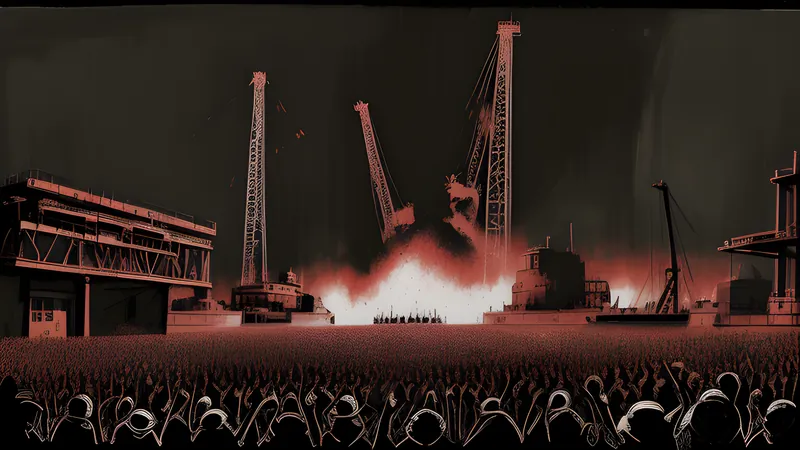
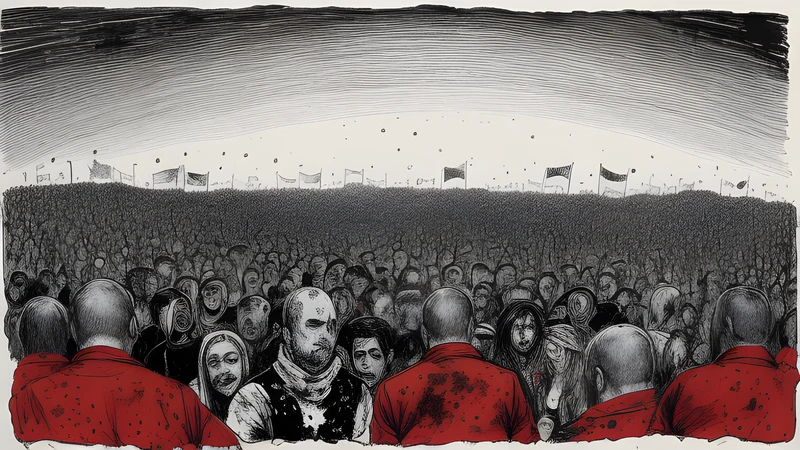
There is a specific pleasure in watching a small town lose its mind for a week, and few places do it more completely than Viveiro. This is a fishing and market town of maybe sixteen thousand people on the Galician coast, tucked into the far north-west corner of Spain, the kind of quiet Atlantic settlement that most Europeans could not find on a map. Every July it becomes, briefly, one of the loudest places on the continent, as a hundred thousand metalheads descend on it for Resurrection Fest and turn the whole town into a temporary capital of heavy music. The transformation is total, and it is one of the great spectacles in European festival culture.
What makes the story remarkable is where it started. Resurrection Fest began in 2006 as a small hardcore and punk all-dayer, a genuinely DIY affair put on by local enthusiasts with more passion than budget, the sort of grassroots event that usually stays small or quietly dies. Instead it grew, year on year, with a momentum that is genuinely rare, from a few hundred people watching hardcore bands in a modest venue to one of the largest metal festivals in Europe. That trajectory, from underground all-dayer to continental institution, is almost unheard of, and it has left the festival with a DIY conscience embedded in an event that now operates at enormous scale.
The town becomes the festival
The single defining feature of Resurrection is that it does not sit apart from Viveiro. It occupies it. Where most big festivals build a sealed site in a field and bus the crowd in, Resurrection spreads across the town itself, with the main site by the coast and the festival’s energy bleeding into every bar, plaza and beach in the area. Campsites sprawl along the shore. The narrow old-town streets fill with people in band shirts. Local shops and restaurants that spend fifty-one weeks a year serving a sleepy Galician clientele suddenly cater to a horde from across Europe, and the whole local economy reorganises itself for one week around the invasion.
That model invites an obvious comparison with the German village that hosts the world’s most famous example of the same phenomenon, and I have written about how Wacken lets a village of a couple of thousand host eighty-five thousand metalheads. Viveiro is the Iberian answer to that question, and it works for the same fundamental reason: the town said yes. A festival on this scale can only take over a settlement if the settlement decides the disruption is worth it, and Viveiro, like Wacken, made a collective bet that a week of chaos and a year’s worth of income was a trade worth making. The town’s willingness is the festival’s foundation.
The hardcore conscience
It is easy to lose sight of how strange it is that a festival this large kept its hardcore heart. Hardcore is a scene defined by its suspicion of scale, a music built on small rooms, cheap entry, bands and crowd on the same level, an ethic that treats the gap between performer and audience as something to be closed rather than sold. Most events that grow out of that world either stay tiny by choice or shed the ideology on the way up. Resurrection did something rarer: it carried the hardcore conscience into a hundred-thousand-capacity festival, keeping the fast, political, community-minded bands on the bill and the values in the DNA even as the production budget swelled into the millions.
You can see it in the details. The festival’s stage designs and iconography lean into a heavy, communal, faintly ritualistic aesthetic, all skulls and villages and barbarian imagery, that reads as scene culture rather than corporate gloss. The crowd skews toward the committed rather than the curious, people who follow the underground bands as closely as the headliners. That density of genuine fans is the thing that keeps the atmosphere honest at a scale where most festivals turn generic, and it is the clearest surviving trace of where Resurrection came from.
Galician heat and Atlantic water
The setting is genuinely spectacular and genuinely punishing. Viveiro sits on the Rías Altas, the rugged estuarine coastline of northern Galicia, and the festival takes place under a fierce Iberian July sun with the Atlantic right there. That combination is a double-edged blessing. The beach is a real amenity, a place to recover between bands in a way no muddy northern-European field can offer, and the light and the sea give the festival a holiday atmosphere entirely alien to the grey pilgrimages of the north. But the heat is serious, and a metal crowd in black clothing under a Spanish summer sun is a genuine safety challenge that the festival has had to engineer around with free water, shade and constant messaging.
This is the inverse of everything I know from home. My festivals are defined by their fight against the rain and the cold, the mud at Roskilde, the exposed harbour wind at Copenhell. Resurrection’s antagonist is the sun, and the whole culture of the event is shaped by heat management, by the rhythm of hiding from the afternoon and coming alive as it cools. It gives the festival a Mediterranean, or more precisely Atlantic-Iberian, character that sets it apart from the rest of the European metal circuit, most of which happens in colder, wetter, greyer places further north.
The booking and the breadth
The lineup reflects the festival’s origins and its ambitions at once. Resurrection kept its hardcore and punk soul even as it grew, so the bill spans the full width of heavy music, old-school hardcore and metalcore alongside thrash, death metal, the big legacy headliners and the current arena-filling names. It has hosted the genuine giants of the genre, the bands who can headline anywhere, while retaining space for the harder, faster, more underground acts that a purely commercial festival would drop. That breadth is deliberate and it is a point of pride, a refusal to abandon the scene that built the festival even after the festival outgrew it.
The result is a bill that competes directly with the established northern giants like Download for the same touring headliners, while offering something they cannot: the Galician setting, the town takeover, the sun and the sea. For a metalhead planning a single European festival trip a year, the choice between a muddy field in Leicestershire and a beach in Galicia is not always as obvious as the northern establishment assumes, and Resurrection has built its rise partly on being the loud, sun-soaked alternative to the grey traditions of the north.
The Estrella economy
Like every festival of its size, Resurrection runs on sponsorship and a managed economy, most visibly its long association with Estrella Galicia, the regional beer that is effectively the festival’s lifeblood and a fitting local partner for an event so tied to its Galician identity. The commercial machinery is real, the branding is everywhere, and the festival has professionalised enormously from its DIY beginnings. That evolution carries the same tensions that shadow every growing festival, the worry that scale and sponsorship slowly sand away the underground character that made the thing worth loving in the first place.
Resurrection has navigated that better than most, largely because its identity is so bound up with a specific place and a specific origin story. You cannot franchise Viveiro. The festival’s magic is inseparable from the town, the coast, the heat and the improbable fact that a hardcore all-dayer grew into this without ever quite leaving its roots behind. That rootedness is a kind of protection against the homogenising forces that flatten so many festivals into interchangeable branded weekends, because the one thing Resurrection sells that nobody can copy is Viveiro itself.
Spain finally gets its metal capital
The rise of Resurrection also tells a broader story about Spanish metal, which spent decades underserved by the international touring circuit. For years the big metal tours treated the Iberian Peninsula as an afterthought, a long drive south that many bands skipped, and Spanish metalheads had to travel north into France or beyond to see the acts that never came to them. Resurrection changed that calculus. A festival capable of drawing a hundred thousand people is a booking that the biggest bands in the world cannot ignore, and its existence dragged the whole Iberian metal circuit up with it, forcing the industry to take Spain seriously as a market rather than a detour.
That is the quiet, structural achievement underneath the spectacle. Alongside the sprawling, taste-making Primavera Sound up the coast in Barcelona, which proved Spain could host a world-class broad-church festival, Resurrection proved the country could host a world-class metal one, built from the ground up by locals rather than imported by a multinational. Two very different festivals, at opposite ends of the same country and the same musical spectrum, together announced that Spain had arrived as a festival nation on its own terms. Viveiro’s contribution to that was the loudest and the least expected.
Why the pilgrimage holds
Every year the town empties of metalheads, the campsites are cleared, the bars go back to serving fishermen and pensioners, and Viveiro returns to being a quiet corner of the Galician coast for another eleven months. And every year the festival comes back, a little bigger, carrying the same essential promise: a week when a small Atlantic town becomes the centre of the European metal world, when the sun is fierce and the sea is right there and the bands are enormous. It is a pilgrimage in the truest sense, a journey to a specific, meaningful place that the faithful make together, and the specificity of the place is exactly why it means so much.
From the far side of Europe, what I admire most about Resurrection is the improbability of it. That a DIY hardcore show in a remote Galician town could grow into one of the continent’s defining metal festivals, without losing the town or the scene that made it, is the kind of story the industry likes to claim is impossible now. Viveiro proves otherwise, once a year, in the July heat, with the Atlantic at its back and a hundred thousand pilgrims in its streets.
Related Content