Reading and Leeds: The Rite of Passage
The twin festival that raised half of British music, and turned a teenage weekend into a tradition
Contents
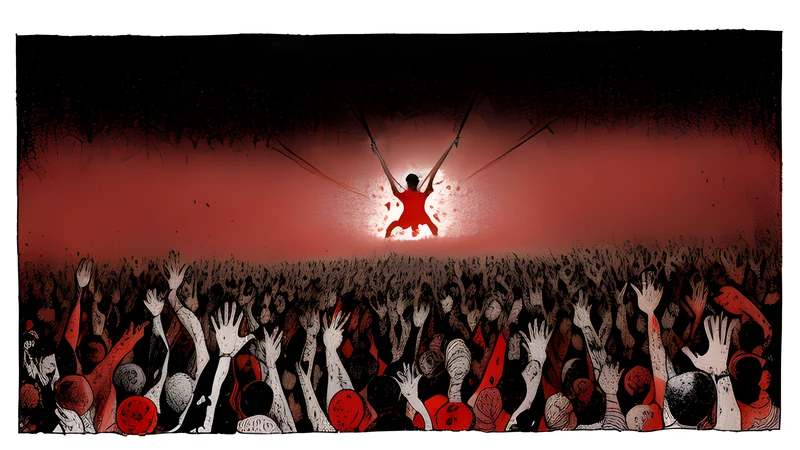
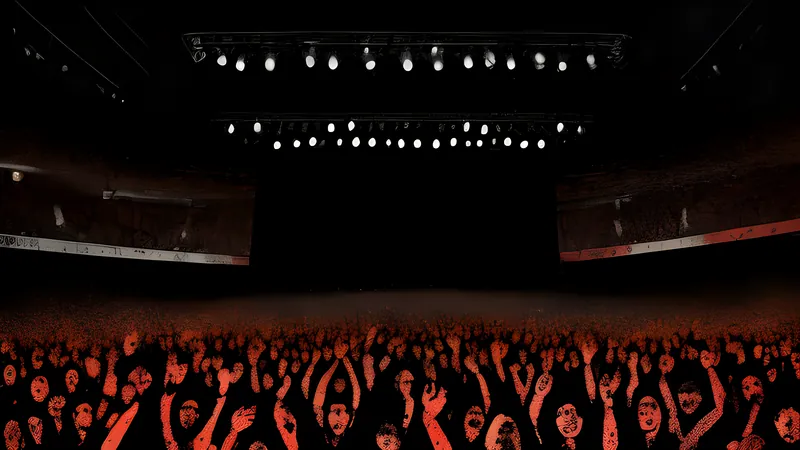
There is no British institution quite like the Reading and Leeds weekend, because there is no other festival that so completely belongs to teenagers. Every August bank holiday, in two fields three hundred kilometres apart, a couple of hundred thousand mostly very young people gather for what is, for a huge share of them, the first weekend of their lives away from parents. It is a rock festival, a pop festival, a rap festival and, above all of that, a rite of passage, the moment a generation of British sixteen-year-olds collectively steps out of childhood into a muddy field with a warm cider and no one to tell them when to go to bed.
The history is genuinely deep. Reading traces its lineage back to the National Jazz Festival that started in 1961, drifted around the Home Counties through the sixties, and settled on its riverside site at Richfield Avenue in Reading in 1971. From there it became one of the defining venues of British rock, mutating with each decade the way only a festival that survives long enough can. Prog and hard rock in the seventies, a notorious lurch into heavy metal in the mid-eighties that nearly killed it, and then the reinvention that made its modern name, the early-nineties pivot into indie, alternative and grunge that turned Reading into the most important alternative-rock festival in the country.
The Nirvana ghost
Every long-running festival has a defining moment, and Reading’s is Nirvana. The band headlined in 1991 on the way up and returned in 1992 as the biggest group on the planet, with Kurt Cobain wheeled onto the stage in a hospital gown and wheelchair as a two-fingered response to the tabloid rumours about his health before he stood up and played one of the sets that entered festival legend. That performance is woven into the site’s mythology, the sort of moment that gives a field its meaning, and it marked the point where Reading stopped being a rock festival that also booked alternative bands and became the spiritual home of the whole alternative movement in Britain.
That reputation carried the festival through the Britpop years and into the twenty-first century, when the model changed again. In 1999 the promoters did something clever and slightly audacious, cloning the festival onto a second site in the north. Leeds Festival, at Bramham Park near Wetherby in West Yorkshire, runs the identical lineup over the same weekend, with bands playing one site on the Friday and the other on the Saturday and swapping over. It doubled the capacity and the reach at a stroke and gave the north of England its own version of the same tradition, so that a Yorkshire teenager no longer had to travel to Berkshire for the rite.
Two fields, two characters
The twin-site model produces one of the festival’s quieter pleasures, which is the way the two crowds have developed distinct personalities despite sharing an identical bill. Reading, on its flat riverside site hemmed in by the town and the Thames, has the feel of an urban festival, close to the railway station, easy to reach, slightly harder-edged. Leeds, spread across the parkland of Bramham Park with its avenues of trees and its stately-home backdrop, has a more open, greener, faintly gentler atmosphere. The bands notice it, and stories circulate every year about a set going down better at one site than the other, the same songs landing differently on Yorkshire parkland than on Berkshire tarmac.
That split has practical consequences too. A band playing the Friday at Reading and the Saturday at Leeds is effectively doing the festival twice in two days, ferried up the country overnight, and the logistics of shuttling an entire lineup between two sites hundreds of kilometres apart is a feat of organisation that most festivalgoers never think about. It is one of the more audacious operational ideas in European festival history, and the fact that it has run smoothly for a quarter of a century is a genuine, if invisible, achievement.
Everything, for everyone under twenty
The modern lineup is famously, deliberately broad. What was once a guitar festival now spreads across rock, indie, pop, hip-hop, grime and dance, with headliners drawn from whoever is genuinely the biggest thing in youth culture that year rather than from any single genre. Purists grumble that the festival lost its identity, that a bill topped by a chart-pop act and a rapper has nothing to do with the field where Nirvana played. They are half right and entirely missing the point. Reading and Leeds stopped being a rock festival because its actual identity was never the genre. Its identity is its audience, and its audience is British teenagers, whose taste is broad and omnivorous and refuses to respect the old tribal lines.
This is what separates it from the more genre-loyal festivals on the calendar. Where a metal event like Download or a rock-scene festival like 2000trees serves a defined tribe, Reading and Leeds serves an age. It is the festival you go to at seventeen because everyone from your year is going, before you have worked out what you actually like, and for an enormous number of British music fans it is the gateway drug, the first festival that leads to all the others. The breadth is the whole function. It is designed to have something for a crowd that has not yet decided who it is.
The campsite is the point
If you want to understand Reading and Leeds you have to understand that for most of the crowd the bands are almost a secondary attraction. The main event is the campsite, and specifically the campsite at night, when a couple of hundred thousand newly liberated teenagers discover simultaneously that no adult is coming to intervene. The results are exactly what you would expect, chaotic, joyful, occasionally grim, and legendary. The Sunday-night tradition of setting fire to anything that will burn, gazebos, unwanted tents, the odd trolley, has become notorious enough that the organisers spend real effort trying to discourage it every year with limited success.
I have written before about the sociology of the festival tent city, and Reading and Leeds is the most extreme case study going, because the crowd is younger and less experienced than anywhere else. It is where a whole generation learns the unwritten rules of festival life the hard way, how to pitch a tent, how to survive on no sleep, how to look after a mate who has overdone it, what the campsite economy of shared warm lager and borrowed lighters actually feels like. That education is messy and it is real, and the festival has become the national classroom for it. A first Reading is a formative experience in a way a fortieth is not.
The stage that made careers
Beyond the Nirvana legend, Reading’s history is a near-complete roll call of British and American guitar music passing through at the decisive moment. The festival has a long tradition of handing breakthrough slots to bands on the cusp, the mid-afternoon berth that turns into a headline booking two years later. It has hosted farewell sets, reunion sets, and the occasional infamous disaster, the crowd’s willingness to bottle a band it dislikes being one of the festival’s more notorious and less admirable traditions. That hostility is part of the folklore too, a rite of trial as much as passage: earn this crowd and you have earned Britain.
The sheer churn of headliners over sixty years also makes the festival a useful barometer of how the headline pecking order gets set and how it shifts. Track who has topped the Reading bill decade by decade and you have a fairly accurate history of what British youth culture considered its biggest act at any given moment, from prog titans to punk provocateurs to grunge icons to the pop and rap headliners of the streaming era. Few institutions record the changing shape of popular taste so precisely, simply by putting the biggest name of the year at the top of the poster and doing it again twelve months later.
The corporate calculation
None of this is accidental or purely organic. Reading and Leeds sits inside the Festival Republic and Live Nation structure, run for years by the promoter Melvin Benn, and the targeting of the teenage market is a deliberate and highly effective commercial strategy. Sixteen-to-eighteen-year-olds are a renewable resource. Every year a new cohort finishes their exams, and every year the festival is there to receive them, which gives it a demographic engine most events would kill for. The lineup is tuned precisely to whatever that year’s cohort is streaming, and the marketing speaks directly to the results-day, first-weekend-of-freedom moment.
That machinery has its critics, and the broader complaint about the corporate homogenisation of British festivals, which I have set out in why every festival now feels the same, applies here as much as anywhere. The prices climb, the sponsors multiply, the lineup chases algorithmic relevance over character. And yet the festival endures because the underlying thing it sells cannot be commodified away. It is selling the specific, unrepeatable experience of being seventeen and free for a weekend, and that experience remains as powerful as it ever was, whatever is written on the main-stage banner.
Why it lasts
Watching Reading and Leeds from across the North Sea, what strikes me is how differently it functions from the festivals I grew up on. The Danish and Nordic festivals I know best are gatherings of tribes who already know who they are. Reading and Leeds is a gathering of people in the process of finding out. It is the least cool festival to admit you loved and the most important one to have gone to, the shared reference point that half of British music, on stage and in the crowd, can trace back to a formative August weekend in a field.
Sixty-odd years after the first National Jazz Festival, the site by the Thames and its northern twin at Bramham Park are still doing the same essential job, receiving each new generation of British teenagers and handing them their first taste of the thing that, for many of them, becomes a lifelong habit. The bands change beyond recognition every decade. The genres come and go. The eternal August ritual of a young crowd growing up overnight in a muddy field carries on exactly as it always has, which is the closest thing British music has to a tradition handed down intact.
Related Content