Pustervik, Gothenburg: The Loud Room Behind the Sound
A century of cinemas and theatre at Järntorget settled, in 2012, into the club where Gothenburg's rock scene actually plays
Contents
Järntorget is not a pretty square. It is a traffic junction in the Haga district of Gothenburg, tram lines converging from four directions, a roundabout’s worth of noise and concrete at street level. Pustervik sits right on it, in a building that has spent a century being reinvented as whatever the neighbourhood needed next, and the current version — a rock club with a 900-capacity main room — is arguably the best use anyone has found for the address yet.
A cinema, three times over
The building’s story runs back to the 1920s, when Järntorget’s spot at a major crossroads made it a natural home for a cinema, and the address cycled through a small run of them across the century: Järntorgsbiografen, then Rialto, then Prisma, each taking over as the previous operation ran its course or the format changed. Cinema gave way to theatre in the 1990s, another use for a large, dark room with good sightlines to a stage, and it was only after a renovation that the building took its current shape as a dedicated concert venue in 2012. That is an unusually late birthdate for what already feels like a Gothenburg institution, a reminder that a building’s cultural weight does not always track neatly with its formal opening date — Pustervik got to borrow a century of Järntorget’s foot traffic and reputation before it ever hosted a band.
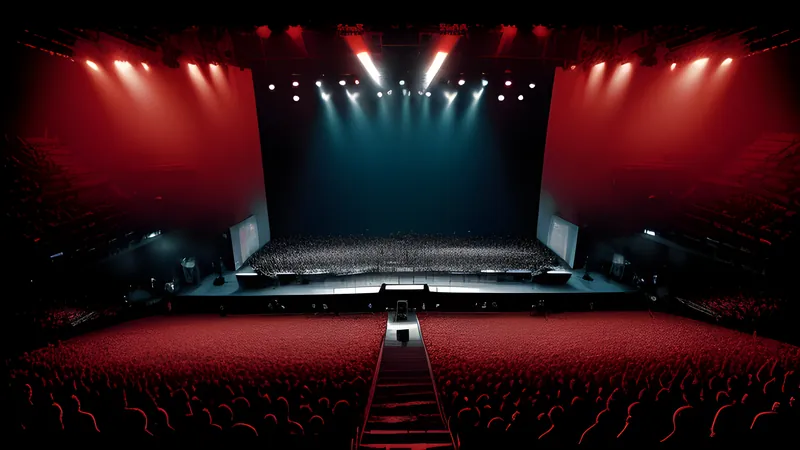
The bones of a cinema-then-theatre show up in how the room is laid out. The main space holds around 900 people and gives you a genuine choice of vantage points: the floor for the crush and the direct sound, or the balcony — both front and side sections are usable — for a proper overview of the stage and the crowd below. A second, smaller room seats roughly 250 and handles the club-sized bookings and the acts still building an audience. Two rooms under one roof, a legacy of decades spent hosting whatever the neighbourhood’s entertainment needs happened to be that decade.
What a former cinema does to a rock band
A room built to project film and carry spoken dialogue behaves differently from a room built from scratch for a Marshall stack, and Pustervik’s main hall still shows its cinema-and-theatre ancestry in useful ways. The floor is broad and reasonably flat, built originally for rows of seating rather than a standing crowd, which gives the room an evenness front to back that some converted venues lack — there is no dead zone two-thirds of the way to the stage, the kind of spot where sound collapses in badly tuned halls. The balcony, inherited wholesale from the theatre years, does the job it was designed for: a clear, elevated view over the floor that plenty of purpose-built rock venues never bother to include at all.
Where it shows its limits is low end. A room designed for dialogue and orchestral pit sound rather than sub-bass was never going to be the ideal home for the heaviest end of what gets booked here, and a band leaning on serious low-frequency weight — a doom act, a modern metalcore band running triggered kick drums — will feel the room compress that a little more than a venue engineered from day one for amplified rock. It is not a bad room for heavy music by any means; Cannibal Corpse played it and nobody walked out complaining. It is simply a room whose real strength sits in the mid-range clarity that decades of spoken dialogue and orchestral scoring demanded, and that shows up as an advantage for guitar-forward rock and punk and a mild compromise for anything built entirely around low-end crush.
A city’s whole range, one building
What actually gets booked at Pustervik tells you more about it than the architecture does. The venue’s history includes Swedish punk exports like Millencolin, British indie acts like Wolf Alice, veteran British metal in Saxon, American death metal at its most extreme in Cannibal Corpse, the wounded psychedelia of the Jesus and Mary Chain, and homegrown Gothenburg stoner rock in Graveyard, whose gritty, Sabbath-indebted sound was built a short walk from this exact stage. Add touring Americana in Drive-By Truckers, art-pop in Future Islands, and protest-folk elder statesman Billy Bragg, and you get a booking policy that refuses to specialise. Pustervik is not a metal room or a punk room or an indie room. It is Gothenburg’s room, full stop, and whatever the city’s musical mood happens to be in a given month, this is usually where you go to hear it live.
That range matters more here than it might elsewhere, because Gothenburg’s reputation abroad rests overwhelmingly on one specific export: the melodic death metal movement, the Gothenburg sound, that In Flames, At the Gates and Dark Tranquillity built in this city in the early 1990s. Pustervik in its current form is younger than that movement by two decades, so it was never the room where the genre was invented. What it is instead is the room that keeps the city’s broader loud-music culture alive around that legacy — punk, stoner rock, extreme metal, garage rock, all of it cycling through the same 900-capacity hall a few streets from where the melodic death metal scene first found its sound.
More than a stage for bands
Pustervik does not switch off between gigs the way a lot of mid-size venues do. The building runs a steady schedule of club nights and DJ sets alongside the live bookings, and the same 900-capacity room that hosts a touring metal band on a Friday can be running a completely different crowd through a club night the following evening. That dual identity — gig venue and nightclub sharing one address — is common enough in Scandinavian cities where a single building has to earn its keep across a whole calendar rather than specialising in one format, but it means the room’s character shifts noticeably depending on which night you turn up. A metal crowd on a Tuesday and a house night on a Saturday are using the same floor, the same bar, and very nearly the same volume, just pointed at different music.
That flexibility is arguably why the venue survived its various format changes in the first place. A cinema that becomes a theatre that becomes a concert hall is a building whose owners have consistently bet on adaptability over specialisation, and Pustervik’s current booking policy — punk one week, extreme metal the next, indie and Americana in between — is the live-music equivalent of the same instinct. Rooms that insist on one genre tend to live and die with that genre’s fortunes. Rooms that stay generalist tend to still be standing a century later, which is exactly Järntorget’s track record.
Haga’s other loud room
Pustervik is not the only serious stage in this part of Gothenburg. A short walk away sits Trädgår’n, the nineteenth-century entertainment palace where ABBA played their live debut and which still books mid-size touring rock in a considerably grander, older room than Pustervik’s cinema-turned-club. The two venues make an obvious pairing for anyone spending a weekend on Gothenburg’s live scene: Trädgår’n for the pedigree and the scale, Pustervik for the rawer, more club-level version of the same city’s appetite for loud music. Between them they cover most of what a touring band below arena size would want from this city.
The wider Swedish circuit backs the comparison up further. Plan B in Malmö, a few hundred kilometres south, runs a similar-sized room with a similarly omnivorous booking policy, and the fact that both cities support a serious mid-scale club scene alongside their headline festivals says something about how deep Sweden’s live-music infrastructure actually runs below the level of Sweden Rock or the arena tours. A country this size supporting rooms like Pustervik in more than one city, each one booking everything from Cannibal Corpse to Billy Bragg without blinking, is not an accident of a few enthusiastic promoters. It is what happens when a state takes its music culture seriously enough to fund the rooms underneath the famous bands, the same underlying logic that keeps Gothenburg’s metal scene supplied with places to play between the tours that actually reach America.
Practical notes
Pustervik sits directly on Järntorget, which is a junction for several of Gothenburg’s tram lines, so getting there from anywhere in the city is a short, uncomplicated ride rather than a trek. The surrounding Haga district is one of Gothenburg’s oldest, a grid of wooden houses and cafés that predates the venue by a couple of centuries, and it is worth arriving early enough to walk it rather than heading straight for the door. Inside, the balcony is the better bet if you want to actually see the whole stage rather than fight for a sightline on the floor, particularly for anything with more than one band member doing something worth watching; the floor itself is where you go if the point is proximity and volume rather than a clear view.
The through-line across a century of cinemas, a decade of theatre, and now more than ten years as a concert hall is a building that has never once been precious about what it is for. Järntorget needed a cinema in the 1920s and got one. It needed a theatre in the 1990s and got that instead. Since 2012 it has needed a room where Gothenburg’s rock, punk and metal scenes can all show up on different nights of the same week, and that is exactly the room Pustervik has become.
Related Content