Pumpehuset: Rock in an Old Waterworks, With a Beer Garden Out Back
The yellow-brick sweatbox on Studiestræde, and the garden that saves you

Contents
There is a moment, most nights at Pumpehuset, when the machine house remembers what it was built for. Somewhere in the second half of a loud set, the room hits a temperature that no ventilation was ever going to argue with, the yellow brick starts to sweat along with everyone leaning on it, and you understand — physically, through the soles of your boots — that you are standing inside a nineteenth-century pumping station that used to move Copenhagen’s drinking water and now just moves air with a bass guitar. The building has always been in the business of pressure. It changed the medium, that’s all.
Pumpehuset sits on Studiestræde, deep in the medieval tangle of central Copenhagen, a couple of minutes’ walk off Vester Voldgade and within easy stumbling distance of the lakes. From the street it is easy to walk past. That is part of the trick of the place. A discreet yellow-brick frontage, arched windows, a slate roof, the whole thing looking more like a handsome old civic building than a rock club, because that is precisely what it is. Denmark’s first proper waterworks opened on this ground in 1859 and pumped away until 1951. The music has been here since 1987, which by Copenhagen standards makes it an institution with a capital I, old enough that people who saw their first sweaty gig here are now bringing their kids to see bands they themselves are too old to have discovered.
The room, and what it does to sound
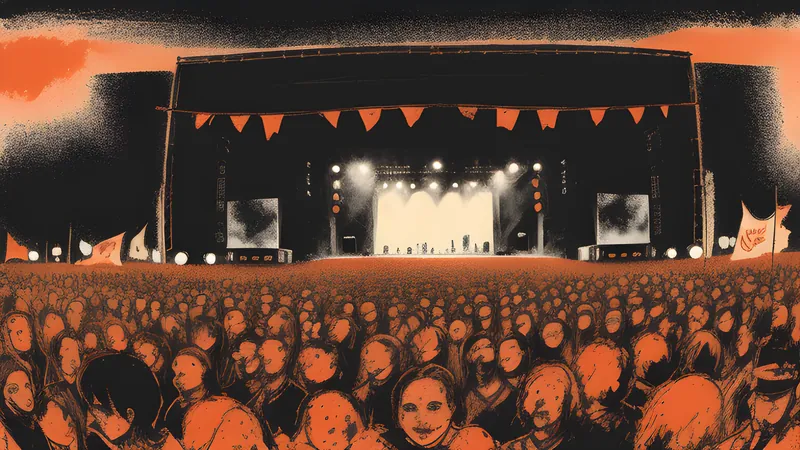
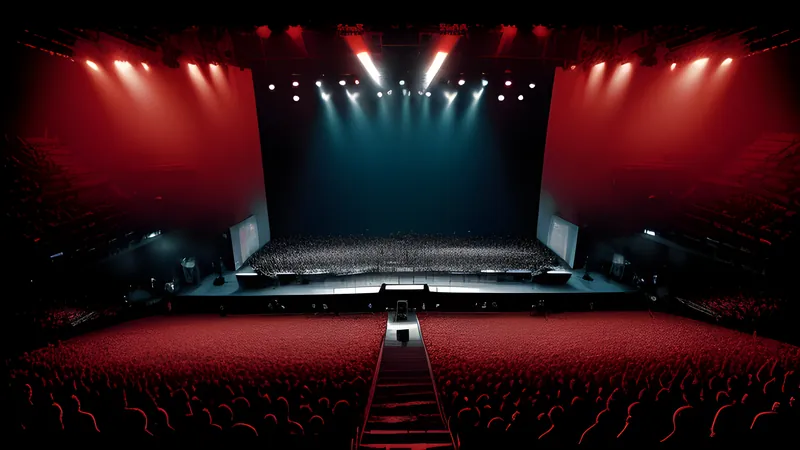
The main hall — the big upstairs room — holds around six hundred people, and it is the reason to come. It is a proper mid-size rock box: high ceiling, hard surfaces, brick and iron and a floor that has absorbed four decades of spilled beer and given up trying to be clean. The acoustics are exactly what you would expect from a masonry engine house, which is to say the room has opinions. Loud, guitar-driven music with weight behind it sounds enormous in here. A hardcore band, a stoner-rock outfit, a punk act with a wall of amps — the brick throws it all back at you and the low end sits in your sternum where it belongs.
The flip side of a hard-walled room is that it can turn to soup when the wrong band meets the wrong engineer. Push too much volume through delicate, detailed material and the reflections start fighting each other; a busy support act with a green sound tech can end up as a lovely warm blur where you can feel the songs more than hear them. When the desk is driven by someone who knows the space, though — and Pumpehuset’s house sound has a good reputation for a reason — the mix locks in and the room does the heavy lifting for you. It rewards bands who play to its strengths and quietly punishes the ones who ignore them. Come for something heavy and you will rarely be let down.
Downstairs there is a second, smaller stage, added in 2011, holding a few hundred. It is the more intimate room, lower-ceilinged and closer, the natural home for a rising act on their first Copenhagen headline or a niche touring band who would rattle around upstairs. The two-room setup means the venue runs a genuinely broad programme — indie, rock, punk, hip-hop, electronic-leaning stuff, the odd left-field booking — and on a busy night you can have two entirely different crowds sharing one bar and one smoking yard, which is its own kind of theatre.
Sightlines, and where to plant yourself
The upstairs hall is flat-floored, so your sightline economics are the usual ones for a standing room this size: your height, and the height of whoever fate parks in front of you. The stage sits at a sensible elevation, high enough that you are not staring at the drummer’s cymbals from the middle of the floor, and because six hundred is a manageable number the sightlines never get truly hopeless the way they do in a barn.
If you want to see everything and keep some structural integrity when the front goes off, stand a third of the way back and slightly off the centre line — far enough from the pit to choose whether you join it, close enough that the band are still human-sized and not a distant rumour. There is a raised bit and some perimeter along the sides where the sound is a touch boomier but you can actually watch hands on frets. Down the front is the front: warm, physical, gloriously loud, and a commitment. Once the room fills, getting from the back to the bar and back to your spot becomes an act of diplomacy, so sort your drink and your bladder before the headliner or make peace with losing your ground.
The crowd, and the character
The crowd skews the way the bookings skew, so it moves with the night. A punk or hardcore bill brings the black-denim, worn-patch, knows-every-word faithful, an older-than-you-think contingent standing next to teenagers at their first proper gig. An indie night is gentler, more chatterers-at-the-back, more people filming. What holds across all of it is that this is an unpretentious, music-first room. Nobody is here to be seen. The lighting is too honest and the floor too sticky for a scene. People come because they want to hear the band, and the general good humour of a Copenhagen crowd — orderly right up until the song they love, then briefly and joyfully not — gives the place an easy, welcoming feel even when it is rammed and forty degrees.
It is worth saying that Pumpehuset has a long-standing socially-engaged streak; the organisation behind it has run youth and human-rights programming alongside the gigs for years, and that ethos leaks into the atmosphere. It is a room with a conscience, which sounds like it might make for a worthy night out and instead just makes for a friendly one.
Layout, and the secret weapon out back
Here is where Pumpehuset separates itself from every other sweatbox in the city. Out the back there is a beer garden — Byhaven — and in summer it is the finest reprieve in Copenhagen live music. Picture the equation. You have spent forty minutes packed into a brick oven with six hundred damp strangers while a band peels the paint off the walls. The set ends, the house lights come up cruel and yellow, and you are cooked. And then, instead of being spat straight onto the pavement, you drift out into a walled garden, order a cold one, and stand under the open sky with the sweat drying on you and the ringing slowly fading from your ears while everyone around you talks too loudly about what they just saw. It is the perfect decompression chamber, and it turns a good gig into a whole evening.
The garden does double duty. On warm nights it hosts its own programming and bar trade, so you can have a night at Pumpehuset that never involves a stage at all — just the yard, a beer, and the particular pleasure of a Copenhagen summer evening that refuses to get properly dark. It is the venue’s ace, and it is the thing regulars miss most through the long Danish winter when the yard shuts and you are back to queuing for the cloakroom in a puddle of melting snow.
Speaking of which: the cloakroom situation is the usual Copenhagen ritual — layers come off, get checked, and you retrieve them at the end in a scrum. Factor it into your exit timing. The bars inside pour the standard club selection, efficient and unromantic, priced like every other city-centre venue, which is to say you will wince and pay it. Do not come for the drinks; come for the room and let the garden be the bonus.
Getting there, and getting out
Central location is Pumpehuset’s other quiet advantage. You are in the heart of the old city, so whatever corner of Copenhagen you are staying in, you can get here. Nørreport — the busy interchange hub with its trains, S-trains and Metro — is a short walk north, and from there the whole transit network is yours. Bikes are the local move, as ever in this city, and there is the usual central-Copenhagen challenge of finding a legal spot to leave one on a busy night, so allow a minute to lock up somewhere sensible rather than dumping it against the venue wall with a hundred others.
Getting out is the easy part. When the lights come up you are moments from Vester Voldgade, the lakes, and a dozen late bars, so the night carries on without a taxi rank or a long trudge. If the garden is open you may not want to leave at all. For a bigger, plusher, more designed night in the same city you would head across to VEGA in Vesterbro, the grander club with the better-behaved acoustics; for the opposite pole entirely — rougher, freer, weirder — you cross the water to Christiania and the beloved sweatbox that is Loppen, or the great echoing hangar of Den Grå Hal. Pumpehuset lives squarely between those worlds: more polished and central than the freetown rooms, smaller and grittier than the big Vesterbro club, and blessed with a garden that neither of them can match.
The verdict
Pumpehuset is a mid-size rock room that knows exactly what it is and does it with quiet confidence. Come here for something loud and guitar-shaped and you will get a physical, brick-walled, properly sweaty night that the room amplifies rather than fights. The main hall’s six hundred is a sweet spot — big enough for a real show, small enough that the band can see the whites of your eyes — and the downstairs stage keeps the programme wide and the discoveries coming.
Skip it, maybe, for delicate acoustic material that the hard walls would smother, and mourn a little if you turn up in deep winter when the garden is locked and the yellow brick offers no escape from its own heat. But hit it right — a heavy band, a full room, a warm evening with Byhaven open behind you — and Pumpehuset gives you one of the most complete nights out in Copenhagen live music. An old machine still under pressure, still moving something through the crowd, still doing the one job the building has always done.
Related Content