Posten: Odense's Reliable Stage
The old post office on Funen that keeps the loud circuit honest
Contents
Odense gets overlooked, and Odense knows it. Denmark’s third city sits on Funen, the island between Jutland and Zealand that most touring bands cross on the motorway without stopping, and it has spent years fighting the assumption that the only real music towns in this country are Copenhagen and Aarhus. Posten is a big part of the argument. It is the city’s dependable rock room — a former post office turned live venue that has quietly held down the loud end of Funen’s cultural life for years, and it is the reason a band routing across Denmark has a reason to pull off the motorway at Odense.
The building
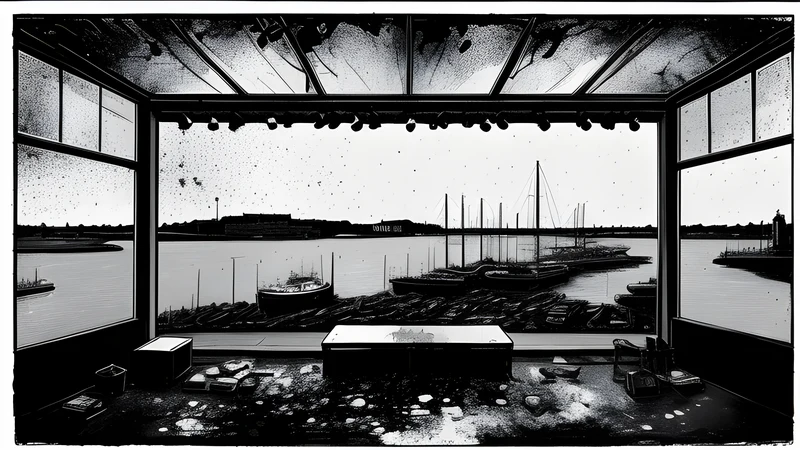
Posten is exactly what the name says: the old post. The venue occupies a former postal building near the station end of the city, and like a lot of the best rooms in Denmark it got its character from being repurposed rather than purpose-built. There is a solidity to these converted municipal and industrial buildings that a new-build entertainment box never quite manages — thick walls, honest proportions, the sense of a structure that was made to last and then handed a second life. The room seats a few hundred standing, squarely in the mid-size bracket that suits a serious touring gig without swallowing the crowd.
It is a proper concert room first and foremost. The stage is a real stage with a real production capacity, the sound is handled by people who do it for a living, and the layout keeps the audience close enough to the band that the room feels full and warm even on a middling night. That warmth matters in a city that has to work to pull a crowd. A room that feels alive with three hundred people in it is worth more to a mid-size town than a barn that feels empty with five hundred, and Posten is scaled to feel right rather than to impress on paper.
Posten runs alongside a sister room, Dexter, which handles the jazz, roots and quieter acoustic end of the city’s programme. Between them the two venues cover the waterfront of live music on Funen — the loud and the amplified at Posten, the seated and the acoustic at Dexter — and the shared operation gives Odense a two-room live infrastructure that a city its size could easily lack. Having both means a touring act of almost any stripe has a home in the city, which is exactly what a regional scene needs to stay connected to the wider circuit.
The regional-venue backbone
Posten is a regionalt spillested, one of the network of Danish venues jointly funded by the Ministry of Culture and the local municipality on a four-year cycle, with a brief to present and develop live rhythmic music. That status is the quiet reason the room can do its job. Odense does not have the population or the tourist churn of the two bigger cities, so a purely commercial venue there would have to book conservatively and often to survive. The public subsidy lets Posten take the risks that keep a scene interesting — the developing act, the difficult genre, the touring band who will draw a respectable rather than a spectacular crowd.
The regional-venue network is one of the genuinely admirable things about how Denmark runs its culture, and Odense is a good place to see why it exists. Left to the market, live music concentrates in the biggest cities and the rest of the country makes do with the occasional package tour. The subsidy deliberately spreads the load, funding rooms like Posten in Odense, Godset down in Kolding and the others across the map, so that a band can play a real national tour and a punter in the third city can see the same acts as one in the capital. Posten is what that policy buys: a dependable, well-run stage in a city that would otherwise be a motorway blur.
Reliable is a compliment
I called Posten reliable in the title and I meant it as high praise, because reliability is the rarest and most underrated virtue a venue can have. Plenty of rooms burn bright and flame out. The valuable ones are the steady presences — the rooms that are simply there, year after year, booking the circuit, running the shows on time, giving the city a fixed point in its cultural calendar. Posten is one of those. It does not chase headlines or reinvent itself every season; it just keeps the lights on and the stage busy, which over a decade adds up to far more than any flashier room delivers in a burst.
That steadiness shapes the crowd. Odense’s gig-goers know Posten is the room, so they check its listings out of habit, and a venue that the local audience trusts by reflex has solved the hardest problem in the business. The crowd here is a genuine cross-section of Funen — students from the university, locals who have been coming for years, the loyal core who turn up for the loud shows regardless of who is playing. It is an unpretentious audience in an unpretentious room, and there is a lot to like in that.
The booking runs the breadth of the amplified spectrum: rock in all its weights, metal and hardcore when the tours come through, indie, hip-hop, the Danish acts working their way up the national circuit. For a loud-music punter the heavy nights are the draw, and Posten pulls a fair share of the touring underground and mid-size metal bills that cross the country. It is the Funen stop on tours that also hit VEGA in Copenhagen and the Jutland rooms, and it holds its own on that circuit.
Odense’s bigger picture
The city’s live scene has grown in confidence over the last decade, and the arrival of a major summer festival changed the conversation. Tinderbox put Odense on the festival map when it launched, dragging a big international audience to Funen every June and forcing the rest of the country to take the city’s appetite for live music seriously. A festival that size needs a year-round club culture underneath it to make sense, and Posten is a big part of that foundation. The festival is the spectacle; the room is the everyday.
That relationship between the festival and the club is worth understanding, because it works in both directions. The festival proves there is a hungry audience on Funen, and the club feeds that audience the rest of the year so the appetite does not go dormant between summers. A city with only a festival is a city that cares about music one weekend a year. A city with a festival and a reliable room like Posten is a city with a real, continuous live culture, and that is what Odense has built.
The sound and where to stand
For a converted building, Posten does well by the ear. Thick old walls contain the volume in a way flimsy modern boxes cannot, and the mid-size shape means the PA does not have to work miracles to fill the room. The house engineers run a solid, unshowy mix that serves the band rather than the desk, and a heavy act comes across with weight and clarity rather than the boomy mush that plagues a lot of rooms this size. It is a working rock room that gets the fundamentals right, with no pretence to boutique-audiophile refinement, which is all most gigs actually need.
Where to stand depends on your appetite. The floor is flat and open, so front-and-centre puts you in the thick of it for the loud shows, and a few rows back finds the spot where the mix knits together best. There are no bad corners to speak of — the room is small enough that even the back wall keeps you in touch with the stage — so latecomers are not punished the way they would be in a barn. Get there early for a busy heavy night if you want the front, and stroll in whenever for a quieter bill and still have a decent view.
Punching above the postcode
There is a particular satisfaction in a room that refuses to accept the limits of its city. Odense could easily have settled for being a place bands drive past, and Posten is a standing refusal of that fate. Every well-run show in the third city is a small argument that the geography of Danish music is wider than the two big-city capitals assume, and over years those arguments accumulate into a genuine scene. The room has helped raise a generation of Funen gig-goers who expect to see good live music without leaving the island, and that expectation is itself a cultural achievement.
It also keeps the touring economics honest. When a band can string together Copenhagen, Odense and the Jutland rooms into a real Danish run, the whole country stays on the map for the international circuit, and the mid-size acts who cannot fill an arena still find it worth crossing the water. Posten is a load-bearing wall in that structure. Take it away and the third city goes quiet, the national tour loses a stop, and Funen’s gig-goers are back to driving to Aarhus for the night. The room’s reliability is doing quiet structural work for the whole region, and that is worth saying plainly.
Practicalities and the case for stopping
Posten sits near the station, so getting there by train — the obvious way to reach Odense from either bigger city — is straightforward, and the compact city centre puts food and a drink within easy reach either side of a show. Odense is small enough to walk and central enough that a gig here can be a day trip from Copenhagen or Aarhus if the bill is right, which for the more selective touring acts it sometimes is.
The honest pitch for Posten is the honest pitch for Odense itself: do not skip it. The third city has a proper room, a proper crowd and a proper place on the national circuit, and the assumption that Danish music happens only in the two big cities does a disservice to a venue that has been reliably delivering for years. Next time a band you care about lists an Odense date, take it. Posten will do right by the show, and Funen deserves the credit it rarely gets.
Related Content