Plan B, Malmö: The Loud Room a Bridge Away
A small, sweaty rock club in Malmö — and the Øresund train that turns a foreign gig into a school-night out
Contents
Here is a thing about living in Copenhagen that takes a while to sink in: one of your best small venues is in a different country, and reaching it costs you a train ride. There is no flight, no hotel, no week’s holiday burned on a lineup. You get on a train that leaves Copenhagen Central, ducks under the harbour, climbs onto a bridge over open water, and puts you in Malmö before you have finished your can. Somewhere on that ride you cross into Sweden, and nobody stamps anything, and the loud room you are headed for — Plan B — is the kind of sweaty, close-quarters club that most cities would kill for and that this one just happens to have on the far side of a strait.
Plan B is a small rock and metal club in Malmö, the sort of place where the stage is low, the ceiling is close, and the distance between you and the band is measured in feet rather than the length of a barrier and a photo pit. Punk, hardcore, metal, indie, the odd thing that defies the label on the poster — it runs the loud and the awkward and the young, the acts that need a room this size because a room this size is where they make sense. I want to talk about the club. But I also want to talk about the water, because for a Copenhagener the geography is half the reason the place matters at all.
The bridge is the whole story
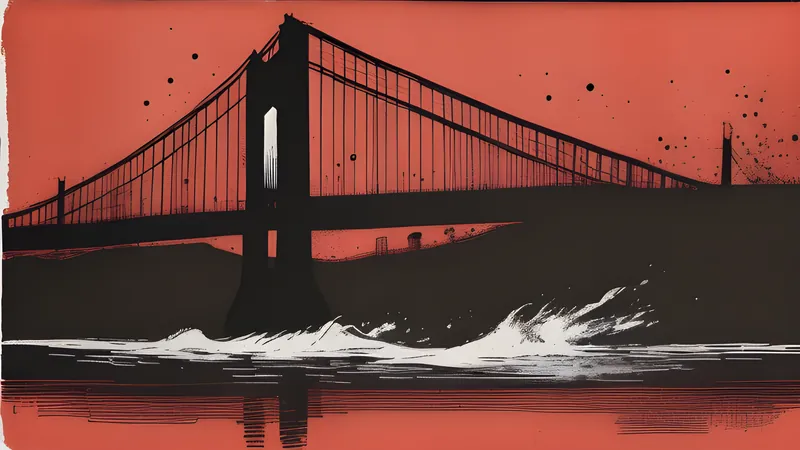
The Øresund Bridge opened in 2000, and it quietly rewired what “going to a gig” means for anyone living on the Danish side of the strait. Before it, Malmö was a ferry away — reachable, sure, but on ferry time, which is nobody’s idea of a spontaneous Tuesday. After it, the two cities were welded into one commuter region by a fixed link that runs road on top and rail underneath, a bridge that becomes a tunnel partway across via the artificial island of Peberholm so it doesn’t foul the flight paths into Kastrup. It is a genuinely beautiful piece of engineering, and if you have only ever seen it as the establishing shot in a Nordic-noir title sequence, riding across it with a gig at the far end recontextualises it fast.
The train is the part that matters for a punter. The Øresundståg runs across the bridge frequently, and the ride from Copenhagen Central to Malmö C takes something in the region of 35 to 40 minutes — call it the same as a slog out to a suburban venue in a big city, except this one ends in Sweden. You tap through, you sit down, the city thins out into the airport, and then the water opens up on both sides and the bridge lifts you over it. Malmö Central spits you out in the middle of town, walking distance from most of where you want to be. There is no airport queue, no security theatre, no shoes off. For most of the bridge’s life the crossing has been effectively passport-free in practice, a legacy of the old Nordic passport union and the Schengen zone, though it is worth carrying ID because border checks on the Swedish side have come and gone with the politics of the decade and can reappear without much warning. Bring the passport, expect not to need it, be unbothered if you do.
What all of that adds up to is simple and slightly magical: you can watch a band play in another country and sleep in your own bed. The last train back is the only clock that matters, and it is a forgiving one. That is the frame around every word that follows. Plan B is a good small club on its own merits. Plan B reachable on a 40-minute train under the sea is something Copenhagen should be more smug about than it is.
What kind of room it is
Strip away the novelty of the border and you are left with the thing that actually counts, which is whether the room is any good. It is. Plan B belongs to a species of venue that every healthy music city needs and that keeps quietly going extinct: the small club that exists for loud guitars and does not pretend to be anything grander. The capacity is modest — a few hundred at most, packed — and that constraint is the entire point. Bands that would be a distant smudge on an arena stage are, here, a person sweating three feet from your face, close enough that you can watch them recover from a bum note in real time.
I will keep the specifics general, because a small club’s exact address, its capacity to the body, its opening hours and its bar prices are the volatile stuff that dates a venue guide within a season, and the character is what lasts. The character is this: it is dark, it is intimate, it gets hot fast, and the sound in a box that size is a physical event rather than a distant one. Low stages do a specific thing to a crowd — they collapse the hierarchy between the band and the room, so a good night tips over into the kind of shared-sweat communion that big rooms spend fortunes on lighting rigs trying to fake. You do not go to a place like Plan B for sightlines and legroom. You go because the band is right there and the volume is in your sternum.
It also does the unglamorous civic work that small clubs do and that nobody claps for: it gives touring bands a rung on the ladder. The act too big for a rehearsal-room show and years off filling anything larger needs a room exactly this size to play Malmö at all, and a scene without those rooms is a scene where you only ever see bands once they are already huge and already boring. Plan B is where you catch them on the way up, when they still have something to prove and the ticket costs less than the beer.
Two cities, one catchment
The part that a map won’t tell you is that Copenhagen and Malmö effectively share a live-music catchment, and have done since the bridge went up. Two cities forty minutes apart, straddling a border that barely functions as one, pull from an overlapping pool of the same touring circuit. A band routing through Scandinavia does not always play both sides — sometimes the Øresund date is Copenhagen, sometimes it is Malmö, and which one you get is down to promoters, venue availability and the shape of the tour rather than any law of nature.
Which is exactly why the train is a scene tool, a genuine part of the gig calendar. If the band you want plays the Malmö date and skips Copenhagen, the strait is a 40-minute inconvenience and nothing more, and Plan B is one of the rooms on the Swedish side where those dates land. It cuts both ways, of course — plenty of Malmö heads make the crossing in reverse for a Copenhagen show — and the water runs in both directions to both cities’ benefit. The two scenes have grown up leaning on each other, and a Copenhagener who treats the bridge as a border is leaving half their gig calendar on the table.
Malmö’s own scene is worth the trip on its own terms regardless of who is playing. Sweden’s third city has a long, stubborn loud streak, and the wider country’s pedigree in heavy music needs no introduction to anyone who has stood in a Swedish club — the lineage that runs through everything from the death-metal foundries of the early nineties to the Gothenburg sound an hour up the coast means a Swedish crowd for this kind of music comes pre-loaded. If you want the full Swedish loud-room tour you keep heading north — Stockholm alone runs from the punk-rooted rooms of Debaser to the deconsecrated industrial cavern of Slaktkyrkan — but Malmö has the enormous advantage of being the nearest bit of all of it. It is closer to Copenhagen than it is to Gothenburg or Stockholm, close enough that its clubs feel like an extension of my own city’s circuit. The nearest bit of Sweden, and it happens to be loud.
The ritual of the crossing
Let me make the case for the whole evening as a ritual, because the crossing is genuinely part of the gig, in the way the walk to a football ground is part of the match. You finish work, you eat something, you get to the Central station with the loose, pre-gig looseness of a night that is definitely happening. The train comes. You go under the harbour, you come up onto the bridge, the sun if there is any is doing something dramatic over the water, and for a few minutes the commute is the event. Then Malmö, and time for a pint somewhere near the station before the doors — a Swedish beer at a Swedish price, which after Danish bar prices can feel either like a bargain or a wash depending on the exchange rate that week, but tastes like abroad either way.
Then the club. The band, the heat, the low stage, the specific joy of a small loud room doing what it is for. And here is the discipline that makes the whole thing work: you keep half an eye on the clock, because the water only forgives you until the last train. There is a particular pleasure in an encore when you have a train to catch, a low-grade countdown that sharpens the last twenty minutes and then sends you jogging, ears ringing, back toward the station and the bridge. The ride home is quieter, the carriage full of other people who have clearly also just been somewhere loud, everyone doing the post-gig decompression as Sweden slides back into Denmark under your feet. You are in bed by a reasonable hour, in your own country, having seen a band in another one on a school night.
That is the pitch, and it is not a small one. Cheap thrills are the best kind, and a foreign gig you can do on a Wednesday and still make work the next morning is about as cheap a thrill as travel offers. Plan B is a good club. The bridge makes it your good club, whichever side of the water you started on. Check the listings, watch which side of the strait your band lands on, and remember that the border is a technicality and the last train is the only rule that counts.
Related Content