Party.San: The East German Metal Field
A few thousand purists, an old military airfield in Thuringia, and the most uncompromising bill in Germany
Contents
For every giant festival that books the safe headliners and counts its hundred thousand, there is a smaller, harder one that exists to serve the people the giants leave behind. In Germany, the purest example is Party.San, an extreme-metal festival held every August on a former military airfield near the small town of Schlotheim in Thuringia, in what used to be East Germany. It caps its crowd at a few thousand, it books almost nothing a casual listener would recognise, and it is one of the most respected festivals in European metal precisely because it refuses to compromise on any of that. This is the connoisseur’s festival, the one the underground trusts.
The setting tells you most of what you need to know. Party.San takes place on the Obermehler-Schlotheim airfield, a decommissioned military strip in rural Thuringia, and the runway-and-hardstanding aesthetic of an old airbase suits the music perfectly. This is a part of Germany that the post-reunification boom largely passed by, a landscape of small towns and agricultural flatland in the former East, and there is something fitting about the most uncompromising metal festival in the country planting itself in exactly this kind of overlooked place. The festival started in 1996, in the years after reunification, and it has grown into an institution without ever growing large.
Small by conviction
The defining fact about Party.San is its size, or rather its deliberate lack of it. Where a festival like Rock am Ring chases the biggest possible crowd with the biggest possible names, Party.San does the opposite as a point of principle. It stays small, a few thousand people, because that scale is what allows it to book exactly the bands it wants to book without any commercial pressure to soften the bill. A festival that only needs to satisfy a few thousand committed extreme-metal fans can programme death metal, black metal and the harshest end of the underground with total freedom, and that freedom is the entire product.
This is the same logic that runs the best small festivals everywhere, the understanding that scale and purity pull in opposite directions and that choosing one means sacrificing the other. Party.San chose purity decades ago and never wavered. The result is a bill that reads like an underground metal fan’s private wishlist, cult bands reactivated for rare appearances, respected veterans of the death and black metal scenes, and the kind of uncompromising acts that would never survive contact with a mainstream festival’s booking committee. The crowd it draws is correspondingly devoted, people who travel from across Europe specifically because they trust the festival’s taste more than any other.
What extreme metal actually asks of you
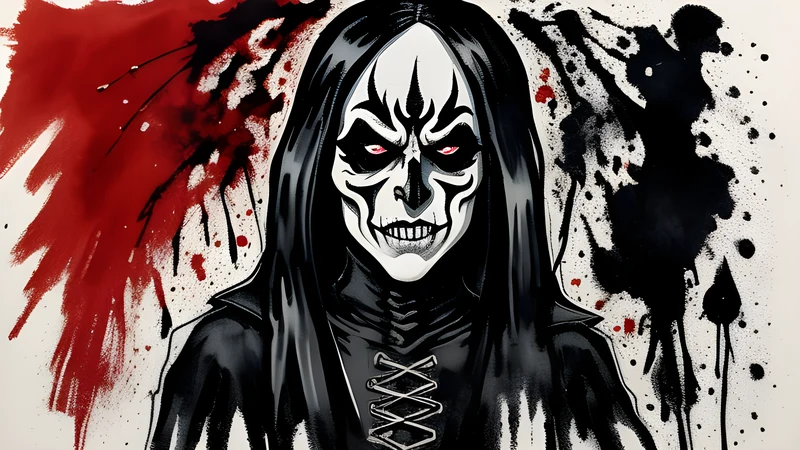
To understand why a festival like this needs to exist, you have to understand what the music demands. Death metal and black metal, the two poles Party.San mostly draws from, are among the most technically and emotionally extreme forms of popular music ever developed. Death metal is a study in density and precision, blast-beat drumming, guttural vocals, riffs that pack more notes into a bar than most genres use in a song. Black metal runs colder and more atmospheric, tremolo-picked guitars and shrieked vocals building a sound designed to feel vast, bleak and transcendent. Both reward the listener who puts in the hours and punish the one who wants a chorus to hum.
Music this uncompromising cannot survive on a mainstream stage, sandwiched between pop-rock acts and served to a crowd waiting for the headliner. It needs a context built around it, a crowd that arrived fluent in its language, a sound system tuned for its particular assault, a programme that treats it as the main event rather than a curiosity. Party.San is that context. The whole festival is engineered to give extreme metal the serious presentation it almost never gets, and that seriousness is why the bands and the fans hold it in such regard.
The purist’s calculation
There is a whole philosophy embedded in a festival like this, and it is worth taking seriously. The extreme end of metal, death metal, black metal, the various harsh subgenres, is music that actively resists mass appeal. It is fast, dense, often deliberately ugly by conventional standards, and it rewards deep familiarity in a way that casual listening cannot access. A festival built entirely on that music has to accept that it will never be huge, and Party.San made peace with that trade long ago. It exists to serve the people who already understand, and it makes no effort to convert anyone who does not.
That refusal to pander is exactly what earns the festival its authority. In a metal world increasingly shaped by the same consolidating commercial forces that flatten every other kind of festival, Party.San stands as a proof of concept for the stubbornly independent alternative. I felt the same ethic at Brutal Assault in the Czech Republic, the fortress festival I made my one foreign trip for in 2022, which shares Party.San’s commitment to the harder, cleverer, more underground end of the genre and its refusal to dumb the bill down for a bigger gate. These festivals form a network of trust across Europe, the events that the serious extreme-metal crowd plans its year around, and Party.San is one of the oldest and most respected nodes in it.
The airfield community
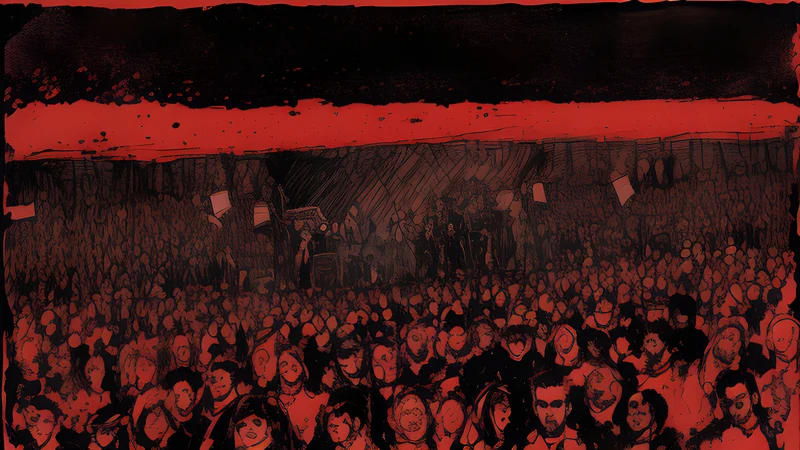
What people who go to Party.San talk about most is the atmosphere, and specifically the sense of community that a small, self-selecting crowd produces. When a few thousand people travel to a Thuringian airfield to watch music that most of the world finds actively unpleasant, they arrive already knowing they are among their own. That shared understanding creates a warmth and a camaraderie that the giant festivals, for all their scale, struggle to match. There are no tourists at Party.San and no drifting mass half-watching the screens between beers. Everyone chose to be there, specifically, for this, and it shows in the way the crowd behaves.
That density of genuine fans changes everything about the experience. The bands, many of them underground acts who spend their lives playing small clubs, get to perform to a field full of people who know every riff, and the feedback loop between a committed crowd and a band playing to its actual audience produces performances that a festival of casual attendees never gets. It is the festival equivalent of the small club shows I champion back home, the back rooms of Loppen and Stengade where the crowd and the band are on the same wavelength, scaled up just enough to become a proper festival while keeping the intimacy that makes those rooms special.
The former East and the metal map
There is a geographical story here worth drawing out. The former East Germany has a distinctive and often overlooked metal culture, shaped by the region’s particular history and its post-reunification economics, and Party.San is one of its landmark institutions. The eastern states are home to a cluster of underground metal festivals and a scene with its own character, harder and less commercial than the west, rooted in places the mainstream economy neglected. Party.San sits at the centre of that world, an anchor for a regional scene that the big western festivals rarely acknowledge but that produces some of the most committed metal fans in the country.
That rootedness is a strength. A festival tied this closely to a specific place and a specific scene has a stability that a purely commercial event, chasing whatever crowd is largest this year, can never match. Party.San knows exactly who it is for, and that clarity has carried it through nearly three decades without the identity crises that afflict festivals trying to be everything to everyone. It is the same lesson the best small festivals keep teaching: define your audience narrowly, serve it completely, and the loyalty you earn will outlast any amount of chasing the mainstream.
A node in the underground network
Party.San does not stand alone. It is one point in a loose European network of extreme-metal festivals that together sustain the underground, events that share bands, share crowds and share an ethic of putting the music first. The Norwegian black-metal gatherings, the Czech fortress festivals, the specialist death-metal weekends scattered across the continent, all of them draw from the same travelling population of committed fans who plan their summers around this circuit. A band on the rise in the underground works its way through these festivals the way a mainstream act climbs the mega-festival ladder, and Party.San is one of the essential rungs.
That network is how a scene with no mainstream support keeps itself alive. Extreme metal gets almost no radio play, little press outside its own specialist media, and no help from the wider music industry, so it built its own infrastructure instead, its own festivals, its own labels, its own economy of trust. Party.San is a load-bearing piece of that structure in Germany, one of the places where the scene physically gathers each year to renew itself. Lose a festival like this and you do not just lose a weekend; you lose one of the joints that holds an entire independent culture together.
Why the small ones matter
Party.San will never be famous outside the world it serves, and that is the entire point. It is a festival built on the conviction that some music is worth doing properly for the few thousand people who genuinely love it, rather than approximately for a hundred thousand who half-do. In an industry obsessed with scale, that conviction is close to radical, and it is why the festival commands a respect out of all proportion to its size. The underground trusts Party.San because Party.San has spent thirty years proving it can be trusted, booking the bands nobody else would and keeping the faith with a crowd that asks for nothing but the real thing.
From across Europe, the festival stands as a reminder that the health of a music scene is measured at both ends. The giant festivals get the headlines and the crowds, and they matter. But the small, stubborn, uncompromising festivals like Party.San are where the actual culture is kept alive, where the difficult music finds its people and the scene renews itself away from the commercial glare. An old airfield in Thuringia, a few thousand purists, and the harshest bill in Germany add up to something the mega-festivals cannot buy, which is the trust of the people who care the most.
Related Content