Party.San Open Air: Germany's No-Compromise Extreme-Metal Field
A cultural read on the Thuringian airfield where death and black metal keep the mainstream firmly at the gate
Contents
There is a category of festival I write about from the outside, and I want to be honest about that from the first line. I have never stood in the field at Party.San. It falls in the first week of August, which is Wacken week in my calendar and Brutal Assault week in most others, and it sits on a former military airfield in the middle of Thuringia that is not on the way to anywhere. So this is a read from the record — from the lineups, the reputation, the way the extreme-metal world talks about it — rather than a dispatch from the barrier. But some festivals are worth understanding even if you never make it, and Party.San is one of them, because it is the clearest working example I know of a festival that decided what it was and then refused, for thirty years, to become anything else.
A field with a very short guest list
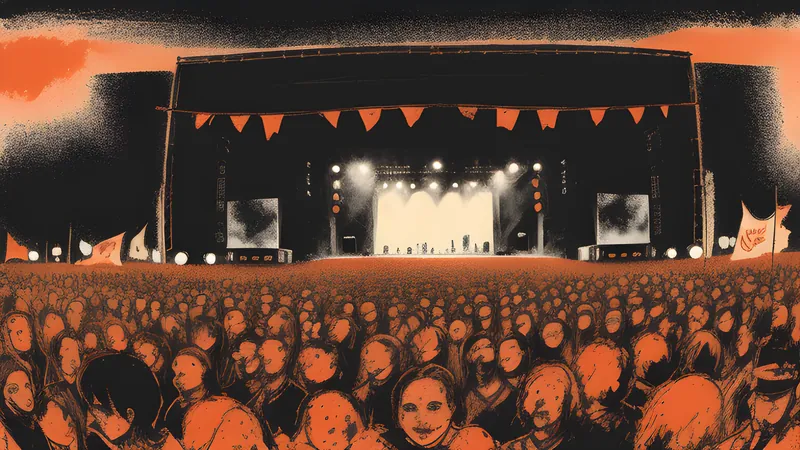
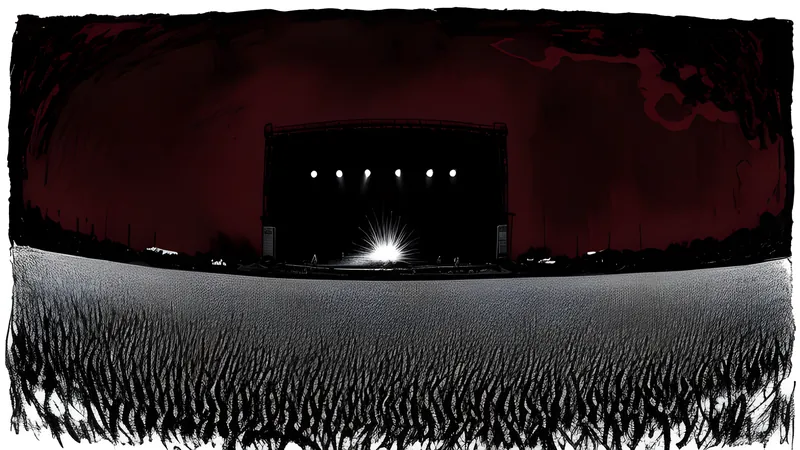
Party.San Open Air happens near Schlotheim, a small town in Thuringia in the old East Germany, on the grounds of a decommissioned airfield. The numbers are the first thing that tell you what you are dealing with. This is a festival that caps out in the low tens of thousands at the very most — a fraction of Wacken’s 85,000-strong small city — and by the standards of the German summer circuit that makes it tiny. The site is flat, unglamorous, functional: a couple of stages, a wall of merch, a camping field, and around it the ordinary agricultural nothing of central Germany.
What makes it worth a piece is the booking policy, which is close to a manifesto. Party.San books death metal and black metal, with the occasional thrash or grind act at the edges, and it books essentially nothing else. There is no metalcore compromise, no nu-metal nostalgia slot, no big rock heritage act parachuted in to shift an extra few thousand tickets. If you look at a Party.San poster and you are not already fluent in the underground, most of the names will mean nothing to you, and that is precisely the point. The festival exists for people who want the real, uncut version of the two heaviest genres metal has produced, delivered by the bands who actually play them.
The virtue of staying small
I have written before about why every festival now feels the same — the slow homogenisation of the summer circuit as the big events chase the same headliners, the same sponsors, the same broadened, safened lineups. Party.San is the anti-particle to all of that. Its whole identity is built on the refusal to grow past the point where it would have to compromise.
You can see the logic if you compare it to its bigger German cousins. Summer Breeze has become a beautifully run mid-sized machine with a broad melodic-and-heavy spread; Rockharz works the deep-cut German fields for a loyal, unfussy crowd. Both are excellent at what they do, and both, to keep the numbers up, book across a wide swathe of the metal spectrum. Party.San has chosen the opposite trade. It stays small enough that it never has to book a band it doesn’t believe in, and the crowd rewards that fidelity by treating a ticket almost as a statement of allegiance. You do not end up at Party.San by accident, the way you might drift into a big festival because a mate had a spare ticket. You go because the specific thing it does is the thing you want.
That self-selection produces the festival’s most-praised quality: the crowd. Report after report describes the same thing — a field full of people who know every band on the bill, who are there for the music with an intensity that the giant festivals, for all their spectacle, can struggle to match. When the audience is a self-chosen congregation of the genuinely committed, the atmosphere sharpens. There is a particular energy to a room, or a field, where nobody needs the lore explained to them.
What the bookings tell you
Look across the festival’s history and you get a working map of extreme metal’s aristocracy. The bills reach for the foundational death-metal acts — the American old guard, the Swedish and Dutch schools, the buzzsaw and the brutal and the technical — alongside black metal that runs from the Norwegian second wave through the more atmospheric modern strains. Grindcore turns up. Old-school thrash turns up. The through-line is a shared standard rather than a shared sound: bands with real underground credibility, booked because they matter to the genre rather than because they will trend. A thrash band and a black-metal band and a death-metal band share no tempo, no vocal approach, no aesthetic — what they share is that the people booking them actually listen to them.
This is a curation philosophy as much as a business one. Anyone can assemble an extreme-metal lineup by throwing money at the three or four bands big enough to headline anything. The harder, more interesting job is building a bill three or four days deep where the mid-afternoon slots are as considered as the headline ones — where a band playing to a field at two in the afternoon is a band the bookers genuinely rate. That depth is what the faithful come for, and it is the thing a festival can only offer if it has kept its identity narrow enough to have real taste rather than merely broad reach.
The East German thread
There is a piece of geography and history worth pulling on here, because it is not incidental. Extreme metal put down unusually deep roots in the former East, and the region has a cluster of institutions to show for it. With Full Force grew into East Germany’s great extreme-metal institution near Leipzig; Party.San sits in the same broad cultural watershed of Thuringia and Saxony, a part of Germany where the loud, uncompromising end of the music found a durable home.
I don’t want to over-theorise a festival I’ve only read about, but the pattern is real enough to note. The old East produced a scene that valued authenticity and suspicion of the polished mainstream, and festivals like Party.San carry that inheritance in their bones. The refusal to sell out reads differently in a place with that history than it does as a marketing line. It feels less like a brand position and more like a temperament.
The honest limits of an outsider’s view
I said at the top that I write this from the record, and I want to hold that line rather than dress the piece up as something it isn’t. I can tell you what the festival books, how big it is, where it sits, and what the extreme-metal world consistently says about it. I cannot tell you what the beer tent smells like at 3am, or how the sound carries across that particular field when the wind is up, or which specific set in which specific year turned into the one everybody still talks about. Those are the things you earn by going, and I haven’t earned them here.
What I can say is that a festival like this is a kind of load-bearing wall for the underground. The genre needs events that exist purely to serve it, that never widen their remit to catch a bigger crowd, that give the bands two rungs below the headline a proper stage and a proper audience. Without them the extreme end of metal would depend entirely on the sub-stages of festivals whose real priorities lie elsewhere — a guest in someone else’s house rather than the host of its own.
Why it matters even if you never go
For all the loud-and-heavy festivals I actually attend, I find I care about the existence of the ones I don’t. Party.San is proof that a festival can survive for three decades without chasing scale, that a narrow identity ferociously kept can be a stronger foundation than a broad one endlessly diluted. Every time a big summer event books another crossover act to shift another block of tickets, the field near Schlotheim is quietly making the opposite case: decide what you are, book only that, and trust that the people who want exactly that will find you.
If you are the kind of listener for whom death metal and black metal are the main course rather than a phase or a garnish, then this is a festival built precisely, and only, for you. It asks nothing of the casual and everything of the committed, and it has been rewarded with a loyalty most events would trade a headline slot to earn. That is a rare thing in a circuit forever trying to be everything to everyone. I may never make the trip — the calendar and the geography conspire against it — but I am glad the field is there, doing the one thing it does, keeping the gate shut against the mainstream year after year after year. The scene is healthier for the walls that refuse to come down.
Related Content