Parkway Drive: The Pyro and the Aussie Rise
How five surfers from Byron Bay turned melodic hardcore into a stadium fire show — and headlined Wacken doing it
Contents
At Wacken in 2019 a band from a surf town in New South Wales stood on the biggest metal stage in Europe and set the horizon on fire. That band was Parkway Drive, and the distance between where they started and where they were standing is one of the strangest ascents in modern heavy music.
Byron Bay, 2003
Parkway Drive come from Byron Bay, a beach town on the far north coast of New South Wales better known for yoga retreats and surf breaks than for breakdowns. They formed in 2003, five friends who took the name from a street in their own town. The line-up has barely moved since: Winston McCall on vocals, Jeff Ling and Luke Kilpatrick on guitars, Jia O’Connor on bass, and Ben Gordon on drums.
Their early records are pure melodic metalcore of the mid-2000s — the two-step riffs, the throat-shredding roar, the breakdown built to open a pit. Killing with a Smile arrived in 2005 on Epitaph, Horizons in 2007. Both did exactly what that scene did at the time, and did it with a ferocity that travelled. Australia is a long way from anywhere, and touring out of it is punishing and expensive, so the fact that Parkway Drive got out at all — vans, ferries, cheap flights, floors to sleep on — says something about how hard they pushed in those years.
For a long stretch they were a very good band inside a very crowded genre. The interesting part is what happened when they decided that was no longer enough.
The pivot: from breakdown to bombast
The turn came with Ire in 2015. McCall started actually singing. The guitars reached for orchestral scale, the choruses widened, and the whole thing was built to fill a field rather than a club. Plenty of the old hardcore crowd grumbled, and the grumble is worth understanding: Parkway had decided to become an arena band, and they were willing to lose some purists to get there.
Reverence followed in 2018 and won the ARIA Award for Best Hard Rock or Heavy Metal Album, the band’s second in that category. Darker Still in 2022 pushed further into balladry and epic structure, McCall crooning in places you’d once have heard only a scream. You can argue about whether the songs are as good as the old ones — I go back and forth — but the ambition is undeniable and, more to the point, it worked. The albums got bigger because the shows were getting bigger, and each fed the other.
By the back half of the 2010s Parkway Drive were a headline act. The songs had been engineered for exactly that, and there is an honesty in a band writing music that matches the size of the room it wants to play.
The fire show
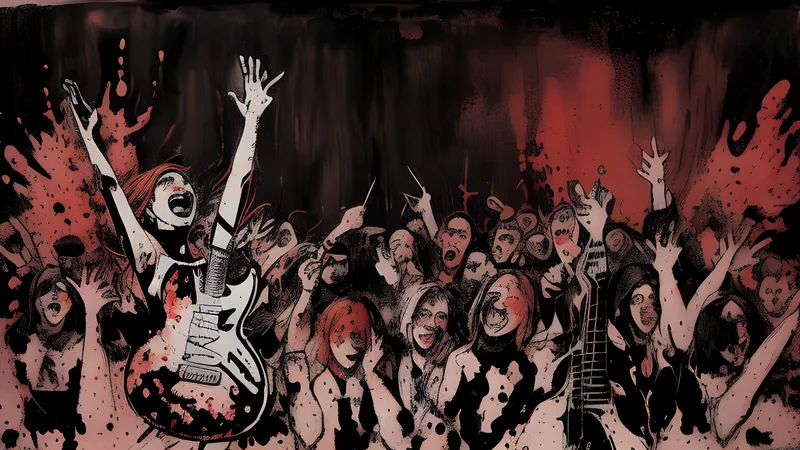
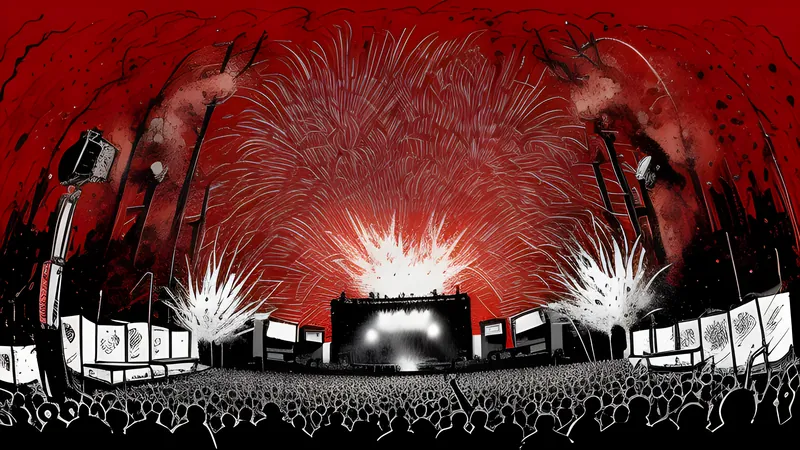
Which brings us to the pyro, because Parkway Drive built one of the loudest, most literal fire shows in metal. Flame jets line the stage. Great columns of it go up on the downbeats. McCall walks through it and stands in it. The set is timed so the heat lands with the music, and even from deep in a festival crowd you feel the warmth on your face when the front row does.
The signature bit belongs to the drummer. Ben Gordon’s kit is mounted on a riser that rotates through a full vertical circle, so during “Wild Eyes” he is drumming upside down, hanging from his stool, hair pointing at the ground, while the crowd bellows the wordless chorus back at the stage. It is an absurd piece of engineering and it is genuinely thrilling to watch, the kind of spectacle metal used to leave to the arena-rock old guard. Parkway grabbed those tools and pointed them at a younger, sweatier audience.
There is a lineage to this. The flamethrower has a long and glorious history on the metal stage — Rammstein turned pyro into a whole aesthetic philosophy — and Parkway are working squarely in that tradition, adapting stadium theatre to a band that started in a hardcore basement. When the fire goes up, the pit still does what pits do; the mechanics of a moving crowd don’t change just because the production budget did.
Wacken, and the view from a European field
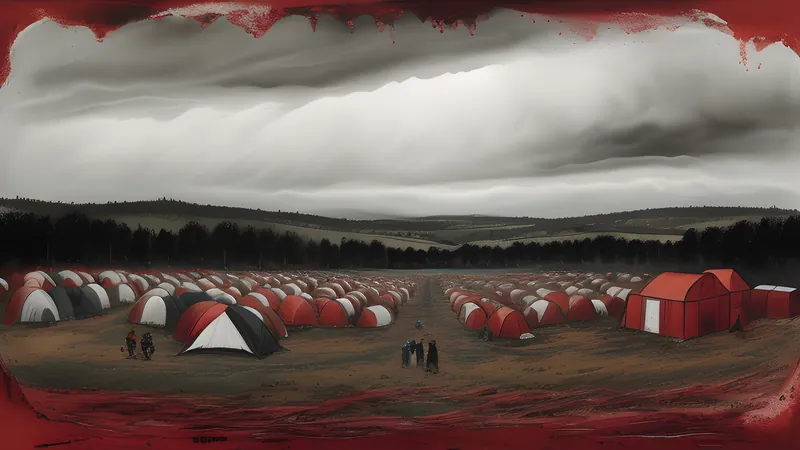
I was at Wacken in 2019 when Parkway Drive headlined, and it was a proper marker. Wacken is the biggest metal festival on earth, a temporary city of tens of thousands in a German farming village, and its headline slot is heavy with history — the bands that stand there are usually decades-deep institutions. Handing it to an Australian metalcore group that had formed only sixteen years earlier was a statement about where the genre’s centre of gravity had shifted.
They filmed that run for the concert film Viva the Underdogs, released in March 2020, alongside a documentary tracing the band’s climb and a soundtrack that included German-language reworkings of some of their songs — a nod to how central the German festival circuit had become to their story. Watching them from out in that field, the thing that struck me was how completely the show had been built for the space. Every gesture was scaled for the back of a crowd that size. Nothing was accidental.
That is the whole Parkway Drive story in one image: a band from a surf town, playing to a German field the size of a town, on fire, with the drummer upside down. They decided years earlier that they wanted to stand exactly there, and then they built the songs and the show to make it happen.
The long tyranny of distance
To understand why Parkway Drive’s climb is impressive you have to understand the geography working against them. Byron Bay is roughly nine hours’ drive north of Sydney, and Sydney is a very long flight from anywhere a metal band needs to be. An Australian group that wants a career outside Australia faces a brutal arithmetic: the flights are dear, the touring is gruelling, and the home market is too small to sustain a band at scale on its own. Plenty of excellent Australian acts simply never make the leap.
Parkway made it by treating touring as the entire job. Through the late 2000s they were a relentless live proposition, grinding across the United States and Europe on the metalcore package tours, playing to rooms that got a little bigger each cycle. They built a following the slow way, city by city, before the internet did quite as much of that work for a band. By the time the festival main stages came calling, there was a real audience underneath the booking — people who had seen them in clubs and watched them grow.
There is an export instinct in Australian loud music that Parkway carried further than most. The country has always sent out heavy bands wildly out of proportion to its population, and the ones that succeed tend to share that same refusal to be limited by where they started. It is the same story you find in Denmark’s outsized metal export — a small, far-flung scene producing bands that conquer rooms on the other side of the world because getting out was the whole point from the beginning.
What the rise actually tells you
The easy read on Parkway Drive is that they sold out — swapped hardcore credibility for pyro and clean choruses and arena ambition. I think that misses what happened. They came from about as far from the metal mainstream as geography allows, out of a scene with no obvious ladder to the top, and they climbed it by being relentlessly deliberate about every step.
The fire show is the visible part. Underneath it is a band that understood, earlier than most of their peers, that heavy music was moving into bigger rooms and that somebody was going to fill them. Australia has always punched above its weight in loud music, and Parkway carried that export instinct further than almost anyone from the metalcore generation. Whether Darker Still moves you as much as Horizons is a fair question and a matter of taste. That five friends from Byron Bay ended up headlining Wacken with columns of flame at their backs is not a matter of taste. It is one of the more improbable success stories heavy music has produced this century, and it started on a suburban street a very long way from any stage.
The pyro will date, the way all spectacle eventually does — some future band will build a bigger, hotter, more ridiculous show and the fire jets will look quaint. What will not date is the decision underneath it: to decide, from a beach town at the edge of the map, that the biggest stages in the world were reachable, and then to spend fifteen years reaching them. The flames are just the receipt for a decision made long before anyone was watching.
Related Content