Ottery St Mary's Tar Barrels: Devon Runs Flaming Casks Through the Crowd
On Bonfire Night a Devon town coats barrels in tar, sets them alight, hoists them onto bare shoulders and sprints them through streets packed shoulder to shoulder
Contents
Every fifth of November, in a small Devon town, a grown adult crouches, and a group of other adults lower a burning wooden barrel — coated on the inside with tar, fully alight, throwing sparks and smoke — onto their back and shoulders, and then that person stands up and runs into a crowd so tight there is nowhere for the crowd to go. This is Ottery St Mary’s Tar Barrels, and it is, by a distance, the most alarming fire tradition in Britain. I have never seen it. Having read everything about it I could find, I am not entirely sure I would keep my nerve if I did, and I have spent years in the front third of metal crowds specifically because I like it there.
I write this one from the record — from the town’s own accounts, from the reportage, from the plain terrifying photographs — because Devon on Bonfire Night is a long way from my Copenhagen basecamp and nowhere near my festival calendar. But this is the same beat I always work: a communal fire spectacle run by locals who inherited it and guard it jealously, staged at a scale that no risk assessment in a saner country would ever sign off. Ottery is the extreme end of that beat, and it deserves the attention.
What actually happens
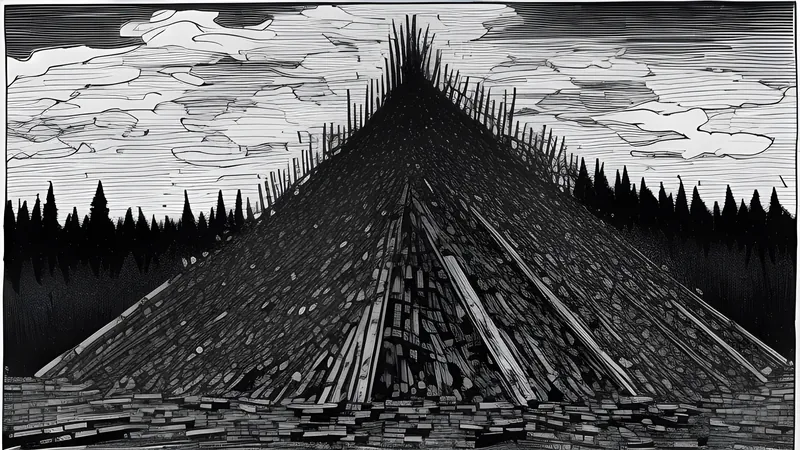
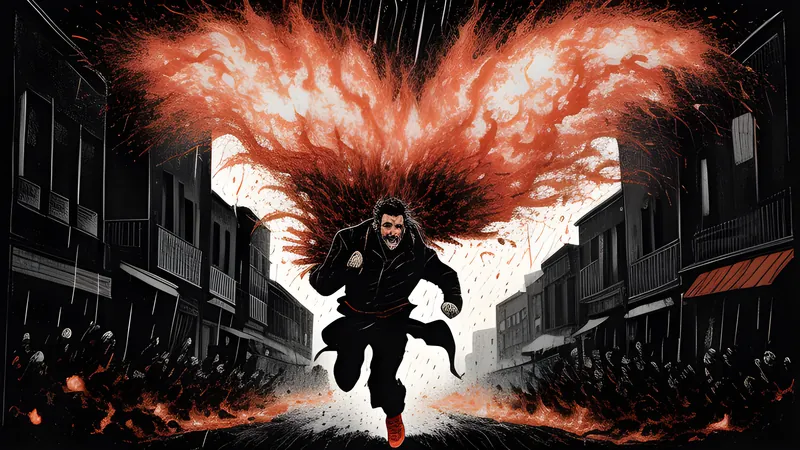
The mechanics are simple, which is part of what makes them so frightening. Barrels — real wooden casks — are coated inside with tar. On the evening of 5 November they are set alight outside the town’s pubs, and once a barrel is properly burning, a barrel roller hoists it up onto their shoulders and back and carries it, flaming, through the streets. Not rolls it along the ground. Carries it aloft, at head height, into and through the packed public.
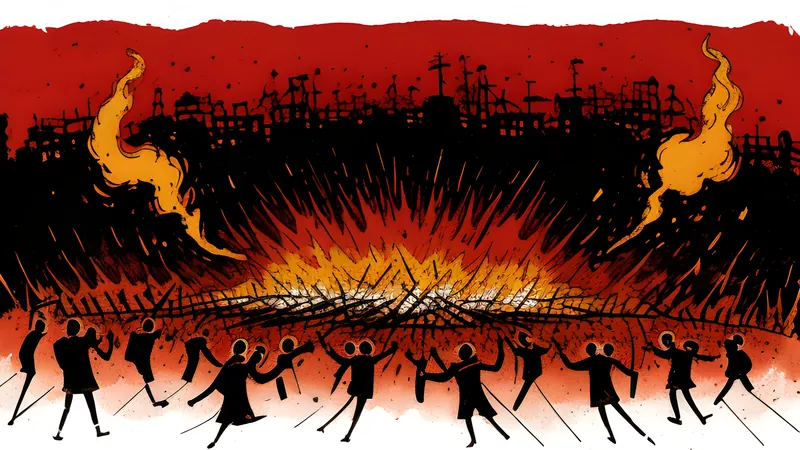
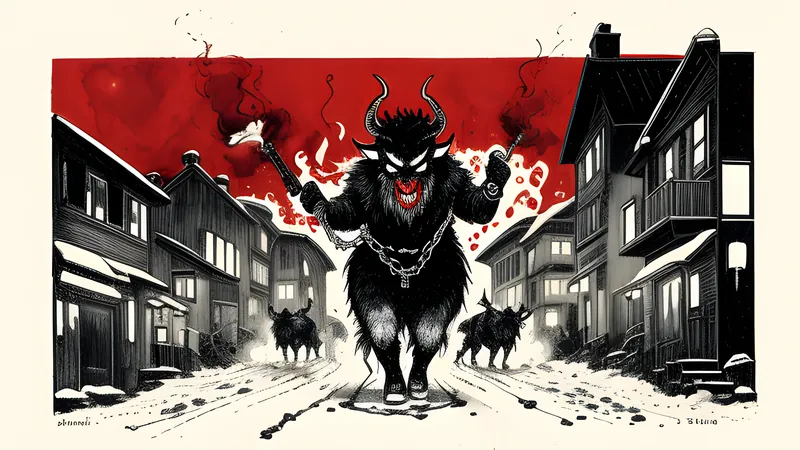
The crowd is the danger and the point. Ottery’s streets are narrow, and on the night they are jammed with thousands of spectators pressed in to watch from as close as they dare. A barrel roller sprints into that mass with a fireball on their back until the heat or the weight forces them to hand off to the next roller, who takes the same barrel and runs on. The barrels get bigger as the night goes: the early ones are lighter, and by the later runs the men’s barrels weigh a serious amount — the heaviest are hefty enough that carrying one at all, unlit and cold, would be a task, let alone on fire and at a run through a crowd that scatters and reforms around you.
The evening is structured as an escalation. It opens with lighter barrels carried by children, then youths, then a women’s event, each stage larger and later than the last, building to the men’s barrels in the full dark of the late evening and toward midnight. Seventeen barrels in all across the night, each associated with one of the town’s pubs. Ottery is the only town in the country that still carries full-sized lit tar barrels through its streets — plenty of places once did something like it, and one by one they stopped, for the obvious reasons. Ottery didn’t.
Why nobody has stopped it
That is the question that hangs over the whole thing, and the answer is the most interesting part. This is not a manufactured heritage spectacle laid on for tourists. It is a genuine inherited town ritual, guarded by the families who run it, and by strong tradition you cannot simply turn up and carry a barrel — the rollers are Ottery people, born in the town or long bound to it, who have grown up around the barrels and earned their turn. The right to run a burning cask through your neighbours is passed down through local families like a surname. That inheritance is exactly why the tradition survived when the risk-averse modern world killed off every comparable one: it belongs to the town so completely that the town would never allow it to be taken away or watered down.
I recognise that instinct precisely, because it is what keeps every real scene alive. The best things are always run by the people inside them, for reasons outsiders find baffling and insiders find obvious. It is the same fierce local ownership that stands a Viking galley up in flames every January at Up Helly Aa in Shetland — another British fire festival that no committee invented and no committee could ever cancel. Ottery guards its barrels the way Lerwick guards its galley. The danger isn’t a bug they’ve failed to fix; it is inseparable from the meaning.
Where it might come from
Nobody actually knows the origin, and I respect Ottery for admitting it rather than inventing a tidy myth. The custom is old — one common account puts it in the seventeenth century, and the most-repeated theory ties it to the years after the Gunpowder Plot of 1605, which would place it squarely in the Bonfire Night tradition of burning things to mark the plot’s failure. The barrels would then be a local, escalated cousin of the effigy-burning that the fifth of November spread across England.
Other explanations get floated and none can be proven. One holds that burning barrels were rolled or carried to fumigate the cottages, smoking out infection or vermin. Another, more romantic, ties them to a beacon-warning of the approaching Spanish Armada in 1588 — fire as an alarm passed from town to town. The honest position, and the town’s own, is that the roots are lost and the tradition is older than its paper trail. What is certain is that by the modern era it had fused with Guy Fawkes Night, and the fifth of November is when Ottery burns.
There is a full programme around the barrels, too, the way there always is around a fire that a town has organised its whole year on. A bonfire is built and lit in a field outside the centre, a huge one by any measure, and a funfair sets up so the day has a shape before the barrels start. Families come in the afternoon, the town fills through the evening, the pubs do the business of their year, and the barrels punctuate the night in their rising order until the last great cask of all has been run and handed off and finally burned out in the street. It is a full day’s festival with a fireball at the heart of it, and the barrels are the reason every one of those thousands came.
Fire in a crowd, on purpose
What pulls Ottery onto the same shelf as the fire festivals I keep circling back to is the specific, deliberate closeness of the danger. Most fire spectacles put the flame at a safe remove: the crowd stands back, the bonfire is roped off, the effigy burns at a distance you can admire. When Valencia burns its giant sculptures for Las Fallas, firefighters hose the surrounding buildings and keep the inferno contained to its condemned monument. When Beltane lights up Calton Hill in Edinburgh, the fire is performance, staged and choreographed at arm’s length.
Ottery does the opposite. It brings the fire into the crowd — onto a human back, at a run, through a street too full to flee. The whole spectacle is built on the electric proximity of a burning object to a mass of unprotected people who have chosen to be exactly that close. It is the same charge as the front rail at a heavy show, where the pit is a controlled danger you opt into on purpose because the controlled danger is the entire experience. Ottery has industrialised that charge and set it on fire. There is a burn risk, plainly, and there are singed spectators most years and a real physicality to the whole night that no amount of good management fully removes. Everyone in those streets knows it. That is why they’re there.
The town that won’t put it out
I keep coming back to the sheer improbability of Ottery St Mary in the modern age. A small English town, every fifth of November, hands its own children lit barrels to carry and then works up through the night to grown men sprinting head-height fireballs through a crowd of thousands, and it does this because it always has, and because the families who run it will not let it die, and because the danger is the tradition rather than a flaw in it. Every comparable custom in the country was extinguished by caution. This one survives on nothing but a town’s collective refusal to be sensible about the one night a year it has decided not to be.
I would like to stand in one of those narrow streets some November and find out whether I hold my ground when the first men’s barrel comes through at a sprint. From the safety of Copenhagen and the record I can tell you the thing I already know for certain: Ottery St Mary understands, better than almost anyone, that some experiences are only worth having because they might actually hurt you, and that a community which keeps one such night on its calendar is a community that has decided to stay properly, dangerously, gloriously alive.
Related Content