Nummirock: Midsummer Metal in a Finnish Forest
The festival that trades juhannus bonfires for double kick drums
Contents
Every year on midsummer weekend, a few thousand Finns drive into a pine forest near a lake called Nummijärvi and spend the brightest nights of the calendar in front of a stage that never really goes dark. This is Nummirock, and I have never been, because midsummer is when I am usually standing in a field in Roskilde. That timing collision is the whole story of why Nummirock stays a well-kept Finnish secret to the rest of us.
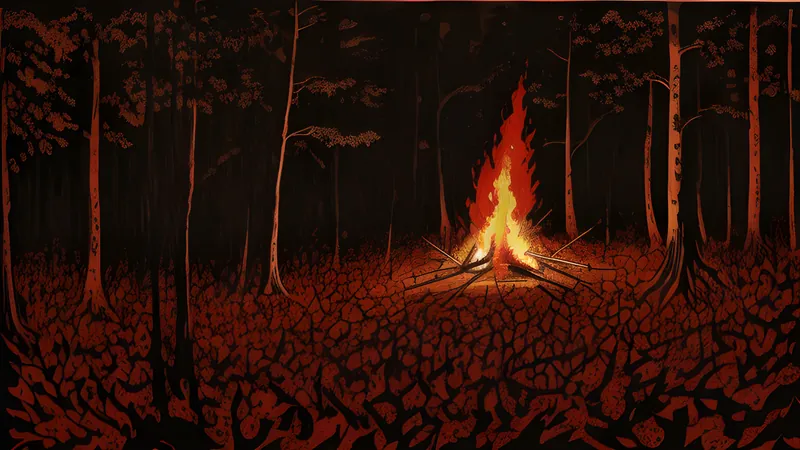
Finland does midsummer — juhannus — as a near-religious retreat to the countryside. The cities empty. Families disappear to summer cottages, light bonfires by the water, and go quiet. Nummirock takes that same instinct, the same lake, the same refusal to sleep while the sun refuses to set, and points it at a stack of amplifiers. It is one of the oldest festivals in Finnish metal, and it wears its age like a battle jacket.
A midsummer dance that got louder
The land at Nummijärvi has hosted midsummer gatherings since the 1930s, when the local agricultural society ran dances by the lakeshore. After the war it settled into a long run as Nummijärvi’s midsummer festival, a general rock event, the sort of dependable summer fixture every rural Finnish community seemed to grow. The name Nummirock dates to 1987, and for its first fifteen years it stayed broad-church — rock in all its shapes, a bit of everything.
The turn came after 2002. Financial trouble forced a rethink, and the organisers made a decision that reads as obvious now and was a genuine gamble then: go heavy. Commit to metal, book the bands the bigger Finnish festivals were nervous about, and trust that the audience for that music would drive a very long way to a very small village to see it. They were right. Finland turned out to have one of the densest metal fanbases per capita on earth, and a lot of those fans wanted their juhannus loud.
That decision is the reason Nummirock still exists while plenty of general rock festivals from the same era folded. Specialising was survival. The festival grew to three days, and since its thirtieth anniversary it has run as a four-day event, stretching the midsummer weekend to its limit. For a festival with no city around it, no arena, no corporate campus — just forest, lake, and stages — that longevity is the achievement.
The Finnish midsummer paradox
Understanding Nummirock means understanding what midsummer means in Finland, because the festival is built on a small act of cultural rebellion. Juhannus is the year’s great disappearing act. You are supposed to be at the cottage with your family, sauna and lake and silence, phones off, the most private weekend Finns keep. Booking a metal festival on top of it is a cheerful provocation — it takes the most inward-facing weekend of the Finnish year and makes it a communal roar.
The light is the thing outsiders never quite prepare for. This far north in late June there is no real night. The sun dips and the sky goes to a long amber dusk that lasts until it starts brightening again. A band closing the main stage at two in the morning plays to a crowd that can see every face around them. There is no cover of darkness, no light show doing the heavy lifting, no merciful gloom to hide in when you are tired. The performance has nowhere to hide, and neither do you. People talk about that endless grey-gold light as the single most disorienting and memorable part of the whole weekend.
It changes the texture of the crowd, too. Sleep becomes optional and then theoretical. The festival runs on a strange, floating energy — bodies awake far past the point the brain expects darkness to arrive, sustained by the light itself. Finnish metal has always had a melancholy streak, a fondness for the mournful and the vast, and there is something fitting about hearing it under a sky that cannot commit to either day or night.
The bands that made the trip
Nummirock’s booking history is its strongest argument. For a festival most non-Finns have never heard of, the list of acts who have stood on that forest stage is startling: Iron Maiden, Megadeth, Slayer, Pantera, Motörhead, Scorpions, Sepultura, Morbid Angel, Danzig, Deep Purple. The Ramones played there. So did a strange assortment of acts far outside metal, back in the broad-church years — the festival has always had a slightly anarchic booking streak, willing to put something unexpected on the bill next to the thrash.
The organisers built a reputation for landing exclusives — the one Finnish festival appearance of a given summer, the band that plays Nummirock and nowhere else in the country that year. That is a canny move for a festival with a location disadvantage. If you cannot compete on convenience, compete on rarity. Make people drive to the forest because the forest is the only place they can see the thing. It is the same logic that keeps the tape-trading, deep-cut end of the scene loyal: scarcity is its own draw.
The domestic side of the bill is where Nummirock really shows its roots. It is a reliable showcase for Finnish metal across every subgenre the country produces, and Finland produces a lot — the melodic death of the Gothenburg-adjacent bands, the folk and the funeral doom, the melodic and the brutal. If you want to understand the breadth of what Finland exports, the Nummirock bill on any given year is a decent map. It is a cousin, in that sense, to Helsinki’s Tuska, the country’s flagship metal weekend — where Tuska is urban, curated and international, Nummirock is rural, stubborn and midsummer-drunk on daylight.
Why the forest matters
The location is the festival’s identity and its constraint. Nummijärvi is not near anything. Kauhajoki, the municipality it belongs to, sits in Ostrobothnia in western Finland, farm country, flat and quiet. Getting there is a commitment. There is no train that drops you at the gate, no tram from a city centre, no airport with a shuttle. You drive, or you get driven, and the drive is part of the filter — the people who make it are the people who really want to be there.
That remoteness produces the thing bigger festivals spend fortunes trying to manufacture: a genuinely enclosed world. For four days the forest by the lake is the entire universe. There is a sauna, because this is Finland and there is always a sauna; there is the lake to swim in when the heat and the sleeplessness catch up with you; there is the endless light. The festival has a reputation for a certain feral warmth, a crowd that has self-selected for hardiness and good humour, the campground haze of a few thousand people who have all agreed to skip midsummer with their families to be here instead.
The scale keeps the whole thing human. A few thousand people over four days is small enough that the festival becomes a kind of temporary village, faces you start to recognise by the second night, a shared understanding among everyone present that they have made an unusual choice and made it together. Finnish reserve, famous and real, tends to dissolve a little in a forest at three in the morning with a band still playing. The stories that come back from Nummirock are less about any single headline set than about that atmosphere — the sauna, the swim, the sleeplessness, the sense of a country’s most private weekend turned briefly, gloriously communal.
I write this as an outsider looking in, because I have never managed to get there — the calendar simply refuses to allow it. Late June is Roskilde for me, and a Dane choosing a Finnish forest over the festival on his own doorstep is a hard sell to make even to myself. But Nummirock is on the list of places I would fix if I could rearrange the summer. It belongs to the same family of small, intense, location-defined northern gatherings that make the Nordic metal circuit worth mapping — the ones that trade capacity and comfort for character. If you have ever wondered why so many big festivals now feel interchangeable, a forest in Ostrobothnia that runs on midsummer daylight and stubbornness is the cure.
The deep-north appeal
Nummirock will never be Wacken. It does not want to be. It is a festival that made a decision in the early 2000s to be exactly one thing — heavy music, midsummer weekend, forest, lake — and has held that line for two decades while larger events chased growth and lost their edges. There is a lesson in that consistency. The festivals that survive at the small-to-mid scale are usually the ones that know precisely what they are and refuse to dilute it.
For the visiting metalhead, Nummirock is a pilgrimage of the good sort: awkward to reach, impossible to replicate, and unforgettable once you have surrendered to the light. It sits alongside the other deep-cut northern gatherings as proof that the most memorable festival experiences are rarely the most convenient ones. Someday I will square the calendar, drive into that forest, and find out first-hand what it is to watch a band at two in the morning under a sun that will not set. Until then, it stays the one that got away — the midsummer I keep meaning to spend somewhere far stranger than a Danish field.
Related Content