Nummirock: Finland's Midsummer Metal
The oldest Finnish rock festival hides in a lakeside village and never grew up
Contents
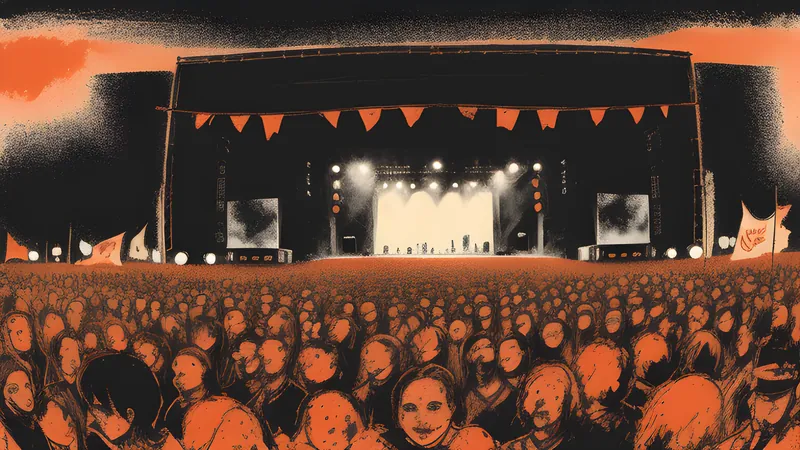
There is a village in South Ostrobothnia called Nummijärvi, a scatter of houses around a lake in the municipality of Kauhajoki, three hours north-west of Helsinki by car and a very long way from anywhere you have heard of. Once a year, over the Finnish Midsummer, that village fills with several thousand people in black T-shirts, and the oldest continuously running rock festival in Finland switches its amplifiers on. Nummirock has done this every summer since 1987, which makes it older than most of the bands who play it, older than the word “djent”, older than the internet that told me it existed. I have never been. It sits on the one weekend of the year I cannot spare, and that scheduling accident has kept it a rumour to me for two decades.
Why a Dane keeps missing it
The problem is Midsummer itself. Finnish Juhannus lands in the last full weekend of June, and so does everything I already do. Copenhell wraps in mid-June and I am usually still recovering; Roskilde is stacking its stages for the turn of the month; and somewhere in the exact gap between them, Nummirock happens. The Finns treat Midsummer as a near-sacred holiday, when the cities empty and everyone heads for a lakeside cabin, so the festival is really a national instinct with a stage bolted on. Where a Swede goes to a summer house to grill sausages in the endless light, a certain kind of Finn drives to Nummijärvi and does the same thing at 110 decibels.
That endless light is the whole point. This far north in late June the sun barely bothers to set, and Nummirock runs its main sets deep into a sky that never properly darkens. Bands used to a black room and a lighting rig find themselves playing to a field lit like mid-afternoon at one in the morning. It is the same trick that gives Tuska its strange midsummer energy down in Helsinki, except Tuska is an urban festival in a former power plant and Nummirock is a farm field with a lake in it. One is the Finnish metal scene dressed for the city. The other is the same scene gone feral in the countryside.
A small festival that refuses to scale
Everything about Nummirock is deliberately modest. Capacity runs to a few thousand rather than the tens of thousands you get at Wacken, and the site is a permanent campground rather than a bulldozed greenfield rented for a week. People pitch tents among the pines, swim in the lake between bands, and treat the whole thing as a camping holiday that happens to have a death metal soundtrack. The bill leans hard Finnish: the country produces metal the way Norway produces oil, and Nummirock has always been a shop window for it, from the veteran acts down to the local hopefuls who get an early slot on a smaller stage.
The line-ups over the years read like a census of Finnish heavy music. Children of Bodom played it repeatedly before Alexi Laiho’s death in 2020; Amorphis, Stratovarius, Sonata Arctica and half the melodic-death and power-metal roster have all cycled through. International headliners appear, but they are the garnish rather than the meal, and that is the correct ratio for a festival this size. The organisers have never tried to turn Nummirock into a destination event with a pan-European bill and airport shuttle buses. They kept it small on purpose, and small is why it has survived nearly forty years when flashier festivals folded inside five.
The Finnish metal density problem
To understand why a lakeside village can sustain a metal festival for four decades you have to understand the raw statistic underneath it. Finland has more metal bands per head of population than anywhere else on earth, a figure that gets quoted so often it has curdled into a national joke, and the joke is roughly true. It is a country of five and a half million people that treats extreme music as ordinary furniture. Lordi won Eurovision in 2006 dressed as monsters and the President congratulated them. Provincial towns have their own scenes, their own venues, their own festivals. Against that backdrop a permanent metal campground in a village of a few hundred people is the logical expression of a place where being into this stuff is simply normal.
The Finns are so relaxed about the whole thing that the country produced an entire straight-faced online joke about not existing at all, which tells you something about the national sense of humour that also produces a festival like this. Nummirock is trying to be fun rather than cool, and the difference is the difference between a marketing exercise and a party.
The Ostrobothnian setting
The location does real work. Kauhajoki is farm country, flat and forested, and Nummijärvi is the kind of lake that Finns build their whole summer around. Between afternoon and evening sets you can walk to the water, and plenty do, which gives the festival a rhythm no urban event can match: heavy music, cold swim, sauna, repeat. The permanent site means the infrastructure is worn smooth by thirty-odd years of use rather than improvised each June, and the campground culture means the festival is really a long weekend of living outdoors with your friends, punctuated by bands.
It also means Nummirock never developed the corporate crust that thickens on bigger festivals every year. There is no sponsor’s VIP compound the size of a village, no tiered wristband hierarchy sorting the crowd into castes. The economics of a few thousand campers in a field simply do not support that machinery, and the festival is better for the absence. What you get instead is closer to the original idea of the thing: people who love loud music gathering in a beautiful place to hear some of it, in a light that never quite goes out.
Nearly forty years of holding on
The most remarkable statistic about Nummirock is simply that it is still here. Music festivals are fragile businesses, forever a wet weekend or a bad headliner away from collapse, and the graveyard of dead Nordic festivals is enormous. Nummirock started in 1987 and has run every single summer since, which makes it the oldest rock festival in Finland and one of the longest continuously running metal-leaning festivals anywhere in Europe. It has outlasted booms and busts, the collapse of the physical music industry, and the arrival of a dozen slicker, better-funded competitors, and it has done so from a village most Finns would struggle to find on a map.
Longevity like that is a cultural achievement rather than a commercial one. The festival survived by keeping its costs low and its ambitions modest, by owning its relationship to the Midsummer holiday, and by building a multi-generational audience who treat the trip to Nummijärvi as an annual fixture rather than a one-off purchase. There are people who have gone every year for decades, who first went as teenagers and now bring their own teenagers, and that kind of loyalty is worth more than any marketing budget. A festival that becomes a family tradition is very hard to kill.
The programming philosophy helped. By leaning so heavily on Finnish and Nordic talent, Nummirock insulated itself from the arms race for expensive international headliners that has bankrupted flashier events. When you build your bill from the deep domestic scene, a single act pulling out or pricing itself out of reach does not sink the weekend. The festival could always reach into a bottomless well of Finnish metal and pull out a strong line-up for a fraction of what the big destination events spend chasing the same handful of global headliners.
The camping-holiday soul
To picture Nummirock properly you have to abandon the mental image of a modern mega-festival with its branded zones and cashless wristbands, and instead think of a Finnish summer holiday that happens to have distortion pedals. The permanent campground is the heart of it, a lakeside site people return to like a second home, and the rhythm of the weekend is set by the outdoors as much as by the stages. Swimming in Nummijärvi between bands, the near-obligatory sauna, cooking over a fire, the endless pale light of the northern Midsummer night — these are the textures that make the festival what it is.
That setting produces a particular kind of crowd chemistry. The Finnish reputation for reserve dissolves completely at a place like this, where the shared holiday and the shared music turn strangers into weekend neighbours. It is a warmer, more communal experience than the anonymous crush of a giant festival field, closer in spirit to a village fête that has been colonised by metalheads. The Midsummer timing gives it an almost pagan undertone too, a modern loud descendant of the old Nordic tradition of gathering by water to mark the longest days, the same instinct that fills the Danish beaches with bonfires at the same time of year.
For a Danish punter raised on the harbour-side spectacle of the big Copenhagen events, Nummirock represents the road not taken, the version of festival culture that stayed small and rural and human-scaled while everything else got bigger. It is a reminder that the loud-music weekend does not have to mean tens of thousands of people and a corporate logo on every surface. Sometimes it can just be a few thousand friends of friends, a lake, a stage, and a sun that refuses to go down.
Where it sits on the map
Finland runs a whole ecosystem of these events, and Nummirock is the grandfather of it. Steelfest over in Hyvinkää serves the extreme and black-metal end with a darker, more confrontational identity; Tuska covers the urban, professionally curated middle. Nummirock owns the pastoral, the midsummer, the camping-holiday soul of Finnish metal. If you drew a triangle of the country’s metal weekends, it would sit at the rural corner, furthest from the city, closest to the lake.
I keep telling myself that one June I will finally sacrifice the Roskilde opening weekend, fly to Helsinki, hire a car, and drive the three hours north to see whether the reality matches the four decades of second-hand reports. The honest answer is that the calendar will probably win again next year, as it has every year since I first heard the name. Some festivals you attend. Some you carry around as a promise. Nummirock, for me, is still the second kind, a small stubborn light in an Ostrobothnian field that has refused to go out since the year I turned one.
Related Content