Norwegian Black Metal: Corpse Paint, Cold Forests, and a Very Dark Chapter
How a tiny scene in early-1990s Norway produced some of the most atmospheric extreme music ever made, and some genuine crimes that must be told honestly
Contents
The story of Norwegian black metal is two stories tangled together, and any honest account has to keep hold of both. One is about a small group of young musicians in early-1990s Norway who invented a genuinely new and powerful strain of extreme music, cold and atmospheric and unlike anything before it. The other is about arson, and a murder, and a set of real crimes committed by some of those same people. The music is remarkable. The crimes were crimes. Pretending either fact away produces a lie, so this piece holds both at once.
What the music actually was
By the early 1990s, extreme metal had a problem: death metal had become technically dazzling and, to some ears, over-produced and lifeless. A young Norwegian scene reacted against that polish by going in the opposite direction entirely. They wanted extreme music that was raw, cold, primitive and atmospheric, recorded deliberately lo-fi so the guitars became a freezing wall of buzz, the vocals a shrieked rasp, the drums a relentless blast. Over the top they layered a bleak, melancholic sense of atmosphere, drawing on Norwegian landscape, folklore and a self-consciously dark, anti-Christian aesthetic.
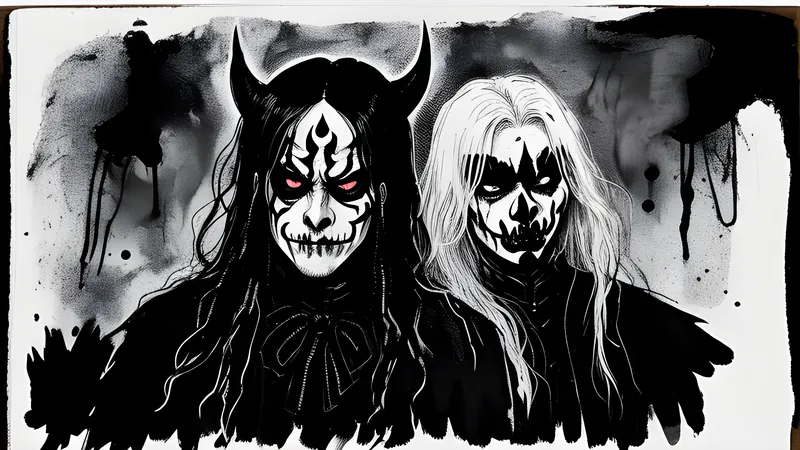
Done well, it produces something genuinely hypnotic, a swirling, tremolo-picked, minor-key trance that can feel like standing in a pine forest in the dark. The scene’s founding bands, Mayhem, Darkthrone, Emperor, Immortal, Burzum, Satyricon and others, built this vocabulary between roughly 1991 and 1994, and the best of those records are still touchstones of atmospheric extreme music, admired by people who have no interest at all in the surrounding mythology. The look came with it: the white-and-black face paint known as corpse paint, worn to make the musicians appear inhuman and deathly, though the visual template itself long predated the Norwegian scene and can be traced back through acts like King Diamond and Mercyful Fate, the Danish originators, and further back to shock-rock theatre.
Mayhem, and the descent into real crime
The dark centre of the story is Mayhem, the Oslo band founded in 1984 by guitarist Øystein Aarseth, who went by Euronymous. He was the scene’s chief organiser and ideologue, running a record shop called Helvete in Oslo that became the movement’s clubhouse and a small label, Deathlike Silence Productions. Around him formed what the participants themselves grandly called the “inner circle”, and it is here that the music and the criminality became fatally entangled.
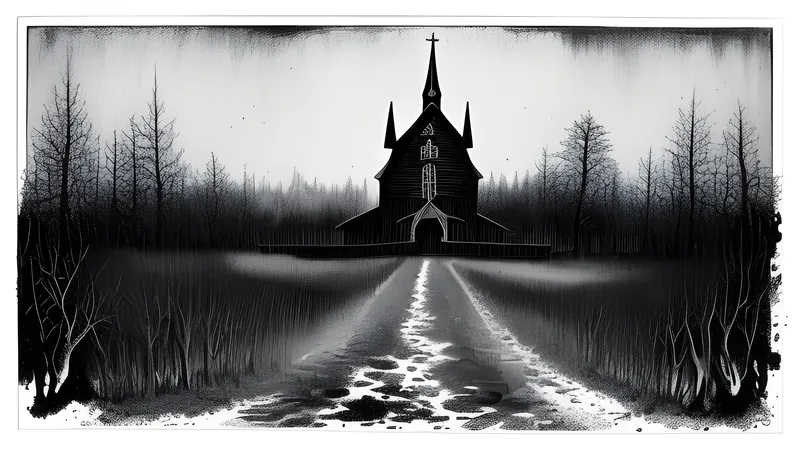
The first tragedy was a suicide. Mayhem’s vocalist, the Swede Per Yngve Ohlin, known as Dead, took his own life in 1991. The circumstances afterwards were grim in ways that told you something had gone badly wrong with the culture around the band. Then came the arsons. Beginning with the destruction of the historic Fantoft stave church near Bergen on 6 June 1992, a wave of church burnings swept Norway, carried out by figures associated with the scene, who framed the attacks as strikes against Christianity and Norwegian conformity. Historic wooden churches, irreplaceable pieces of the country’s heritage, were destroyed. These were serious crimes with real victims in the form of the communities and the culture that lost them, and no amount of aesthetic mythologising changes that.
The story reached its worst point on the night of 10 August 1993, when Varg Vikernes, the sole musician behind the band Burzum and a member of the scene’s inner circle, went to Euronymous’s Oslo apartment and stabbed him to death. Euronymous was 25. Vikernes was convicted in May 1994 of the murder, of church arson and of illegal possession of explosives, and sentenced to the maximum term Norwegian law then allowed. He has always claimed self-defence; the court did not accept it. There is no way to tell this history that makes the killing anything other than what it was, a man murdered by another man, and this desk has no interest in the strand of the culture that treats that night as glamorous. It was a squalid, violent death, and the person who caused it is a convicted murderer.
Why a small scene mattered so much
Part of what makes the Norwegian scene so studied is how tiny it was. This was a few dozen young people, many of them teenagers, in and around Oslo and Bergen in the early 1990s, most of whom knew each other personally. A scene that small producing an entire globally influential genre is a genuine rarity, and it happened because of a specific concentration of talent, ambition and a shared, uncompromising idea about what the music should be.
The aesthetic was total, and that totality is part of why it worked as art even where it failed as ethics. The bands cared enormously about atmosphere, about the cover art, the logos rendered in illegible spiky script, the deliberately primitive production, the forest photography, the whole world-building apparatus around the sound. They were making a complete imaginative universe, and the music was only one component of it. That obsessive attention to atmosphere is why the best early records still transport listeners so effectively; every element was pulling in the same direction, toward cold, toward dark, toward a kind of hostile transcendence.
Musically, the innovations were real. The tremolo-picked wall of guitar, played high and fast so that individual notes blur into a shimmering drone, was a genuine textural discovery, and it has been borrowed by countless bands since, including plenty far outside metal. The marriage of that shimmer to blast-beat drumming and shrieked vocals created a template that atmospheric and post-black-metal bands are still working inside three decades later, most of whom have nothing to do with the criminality and everything to do with the sound. The music escaped its origins, which is the usual fate of any style that turns out to be genuinely good.
Holding the music and the crimes apart
The difficult, necessary task with Norwegian black metal is refusing the two easy positions. One easy position is to wave the whole scene away as evil and its music as worthless, which is untrue: the records genuinely rewired atmospheric extreme metal and influenced thousands of later bands who never burned anything or hurt anyone. The other easy position is to launder the crimes into cool origin-myth, to treat the arson and the murder as edgy branding that makes the music more authentic, which is grotesque, because real churches burned and a real person was killed.
The honest position is harder and requires holding two facts steady. The music of the early Norwegian scene is a real and lasting artistic achievement. The crimes committed by some of its central figures were real crimes that ruined heritage and ended a life, and they are not to be celebrated. Plenty of the scene’s own musicians, in the decades since, have said exactly this, distancing themselves from the criminality while continuing to make the music. The genre grew up. Bands like Enslaved evolved into ambitious, progressive, widely respected artists with no interest in the old ugliness, and Satyricon became a major concert draw playing serious rooms, the music long outliving the teenage nihilism that surrounded its birth.
The scene today, and how to think about it
Modern Norwegian black metal is, for the most part, simply music, made by musicians who want to make records and play festivals. The country hosts respected extreme-metal gatherings, among them the Bergen festival Beyond the Gates, where the atmosphere is that of any serious music event rather than anything sinister. The corpse paint survives as stagecraft, an aesthetic tradition several bands still honour, drained of the criminal edge that a handful of people gave it thirty years ago.
There is a wider point here about how we consume art made by people who did terrible things, a question that reaches far beyond one Norwegian scene. Music does not require its makers to be good people, and the history of the art form is littered with great records made by difficult, damaged or genuinely dangerous individuals. The Norwegian black metal case is unusually stark because the crimes were so serious and so bound up with the scene’s self-image, but the underlying question is an ordinary one that thoughtful listeners face all the time. The answer this desk lands on is neither boycott nor amnesia. It is context: know what happened, name it plainly, refuse to romanticise it, and then make your own decision about the music with your eyes open rather than closed.
If you come to this music, come to it clear-eyed. Listen to the early records for what they are, some of the most genuinely atmospheric and influential extreme metal ever recorded, a real Scandinavian achievement that sits alongside the very different innovations of the Gothenburg sound across the border in Sweden. And keep the crimes in full view, named honestly, neither excused nor made glamorous. The forest and the buzzing guitars are worth your time. The arson and the killing are worth remembering exactly as what they were. Both things are true, and a grown-up listener can carry both.
Related Content