Northside: The Aarhus Festival That Grew Up
How a scrappy indie weekend in a river valley became a polished, organic, corporate-adjacent institution
Contents
Every festival has an origin story it likes to tell about itself, and Northside’s is one of the good ones. In 2010 a promotion team in Aarhus looked at the map of Danish festivals — Roskilde owning the end of June, Smukfest owning August, a scatter of regional events in between — and decided Denmark’s second city deserved a big-league festival of its own that did not require a tent, a week off work, or a spiritual commitment to mud. A city festival. Three days, camp at home, sleep in your own bed, walk or cycle in each afternoon. The pitch was almost suspiciously reasonable, and it worked.
The valley years
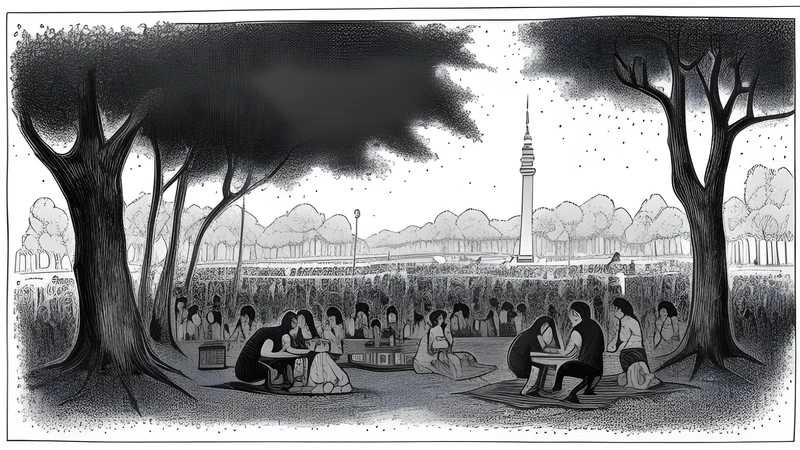
The first editions happened in Ådalen, the river valley on the northern edge of Aarhus, and those years had the scrappy charm of a festival still figuring out what it was. The lineup leaned indie and alternative, the kind of bill that a certain generation of Danes had been driving to Roskilde or flying abroad to see, now delivered to their own doorstep. There is a particular energy to a festival in its early years, before it knows it is going to survive, when the booking is a wager and the crowd is composed entirely of people who chose to take a chance on something new. Northside had that.
It also had the specific texture of Aarhus, which matters. This is a university town with a huge student population and a self-image built around being the cooler, less self-important alternative to Copenhagen. A festival that grew out of that soil was always going to be a bit more indie, a bit less about the mega-headliner and a bit more about the interesting mid-card. For a few years Northside was the festival where you went to see the band you would be recommending to friends in eighteen months.
In 2016 the festival moved from Ådalen to Eskelunden, a larger recreational green space south of the city, and the move was the physical sign of a festival outgrowing its childhood. More room means more stages, bigger production, a larger capacity to fill — and a larger capacity to fill means booking that has to reach for a broader audience. The valley years were over. The grown-up years had begun.
The green religion
If there is one thing Northside genuinely deserves credit for, it is sustainability, and it got there early enough to mean it. The festival made a name as one of the greenest events in the country, pushing organic and sustainable food across the whole site at a time when most festivals were still selling grey burgers of unknown provenance. It leaned hard into waste reduction, sustainable sourcing, and the kind of environmental certification that most events did not even know existed. For a while, Northside was the festival you pointed to when someone claimed a big outdoor event could not be run responsibly.
I am genuinely in favour of this, and I want to be clear about that before I get sceptical. A festival that serves proper organic food, takes its waste seriously and treats the climate as a real constraint rather than a poster slogan is doing something worth doing, and Northside did it before it was fashionable. The food at a Danish city festival is often the best festival food you will eat anywhere, and Northside pushed that standard upward for everyone.
The scepticism comes in only at the point where the green branding starts doing double duty as a marketing identity. There is a version of festival sustainability that is real infrastructure — composting, sourcing, energy — and there is a version that is a wristband colour and a feeling. Northside mostly does the first kind, which is why I trust it, but the polish that came with growing up means the messaging can get ahead of the substance. When a festival is owned by a large promotion group booking pop headliners into a green-certified field, “sustainable” becomes part of the product rather than a challenge to it. Worth watching, worth keeping honest, and mostly earned.
What growing up costs
Here is the thing about a festival that grows up: the polish is real and the loss is also real, and pretending only one of those is true would be dishonest. Modern Northside is a well-run, comfortable, handsomely produced pop and indie festival with a green conscience and a broad, radio-friendly booking. It is easy to enjoy. It is also, by design, less of a wager than it used to be. The booking that once reached for the interesting mid-card now has to fill a bigger field, and bigger fields get filled by names that a bigger audience already knows.
This is the same arc that every successful city festival walks, and Northside’s Odense sibling Tinderbox — run by the same promotion world — walked it faster, having been built polished from day one in 2015. The two festivals are cousins in the Danish summer, both city-adjacent, both leaning pop, both smoothly produced. Set beside the non-profit intensity of Roskilde, where the whole point is that the surplus is given away and the booking takes genuine risks, the city festivals read as the comfortable, commercial, well-catered other end of the Danish festival spectrum. That is not a criticism so much as a description. Different festivals do different jobs.
What Northside does now is provide a very good weekend to a large number of people who want a well-organised, well-fed, well-soundtracked few days without the commitment of a camping festival. The crowd skews to the Aarhus mainstream — students, young families, the thirty-somethings who used to go to Roskilde and now want to be home by midnight. The sound is generally good, the site is walkable, the food genuinely excellent, and the atmosphere is relaxed to the point of being almost suburban. If you want chaos, this is the wrong field. If you want a civilised, sustainable, professionally run pop festival in a green space a bike ride from a lovely city, Northside is close to the platonic ideal.
Reading the lineups year over year
The clearest way to watch a festival grow up is to line its posters up chronologically and read them like tree rings. Northside’s early bills carried the fingerprints of people booking for taste — alternative and indie acts with critical weight and a modest draw, the sort of names that told you the programmers went to gigs themselves. As the site grew and the capacity climbed, the top of the poster shifted toward the internationally bankable: the big pop headliner, the reunited rock name, the act whose job is to sell the last few thousand tickets rather than to surprise the faithful. The mid-card stayed interesting for years, which is where a booker’s real character lives, and on a strong year it still is. The apex, though, now belongs to the mainstream, and that is the visible cost of filling Eskelunden instead of the old valley.
Prices tell the same story from a different angle. A three-day city festival with world-class catering, sustainable infrastructure and international headliners is an expensive thing to stage, and the ticket reflects it. Northside sits at the premium end of the Danish market, which is defensible given what it delivers, but it does move the festival away from the students who gave Aarhus its edge and toward the salaried thirty-somethings who can absorb the cost. Watch the crowd age a year for every couple of editions and you are watching the pricing do its quiet demographic work. None of this is scandal — it is simply the machinery of a successful festival becoming what success requires — and naming it plainly is the least a local can do.
The Aarhus dimension
The reason Northside matters beyond its own gates is what it does for Aarhus. A city festival is a statement that a place is a real music town, and Aarhus has spent the last fifteen years making exactly that case. The festival sits on top of a genuinely healthy year-round scene — the loud rooms and club stages where the city’s bands actually develop, from the sweatier end of the circuit to the reliable mid-size rooms like Voxhall. Northside is the visible summer peak of that scene, the three days when the national and international spotlight swings to Aarhus and the city gets to show off.
That connection is the healthy version of what a city festival can be. It is not an event airlifted into a field with no relationship to the place around it; it grew out of an Aarhus that already had bands, venues, and an audience, and it feeds back into that ecosystem by giving local acts a home-city stage and drawing music tourists into a town they might otherwise skip. A festival that does that is earning its place, however polished it becomes.
The verdict a critic can actually give
Northside is a good festival that used to be an interesting one, and it would be dishonest to pretend those are the same thing. What it gained in growing up — production values, food, sustainability, reliability, scale — is genuinely valuable, and the crowd that fills Eskelunden every June is having a demonstrably good time. What it filed off in the process was the edge, the wager, the sense that the booking might surprise you. That is the tax every festival pays for success, and Northside has paid it more gracefully than most.
Go for what it is now: a civilised, green, well-produced city festival in a fine Danish city, an easy and genuinely pleasant few days that shows off Aarhus at its summer best. Keep an eye, though, on the thing all grown-up festivals have to watch — the moment when comfort becomes the whole product and the booking stops taking any chances at all. Northside has not fully crossed that line. The valley kid is still in there somewhere, under the organic catering and the corporate ownership, and on a good year you can still hear it.
Related Content