Northside, Aarhus: The Hometown Festival
Three days of indie, pop and pointed organic idealism in my own back yard
Contents
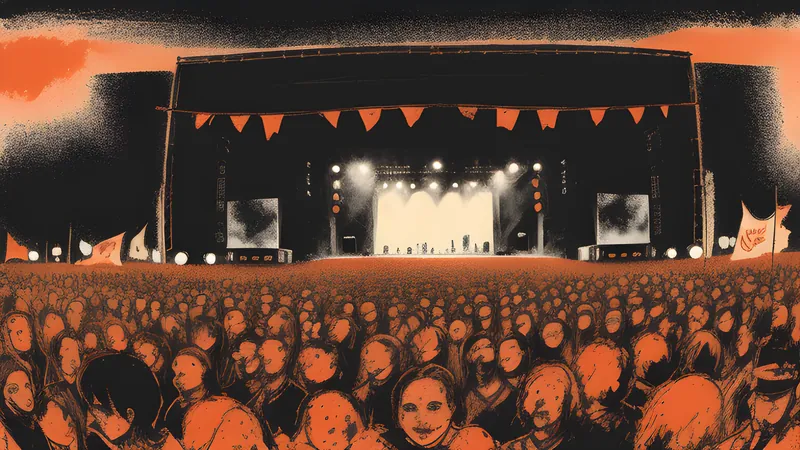
I was born in Aarhus in 1986, which means Northside is the one festival where I can walk from my mother’s kitchen to the main stage and still be back for breakfast. Every June the city I grew up in clears a patch of green in the Ådalen valley of Åbyhøj and turns it into a three-day festival of indie, pop and radio-sized rock, and for those three days the whole of Denmark’s second city seems to tilt slightly towards it. I have been going back for years, partly for the bands and partly because it is the only way to see half the people I went to school with in one place.
Northside is young by Danish standards, and it wears that youth well. It has none of the weight of history that hangs on Roskilde, none of the beech-forest romance of Smukfest. What it has instead is a very specific idea of what a modern city festival should be, and a stubborn willingness to spend money making that idea real. The result is one of the more interesting festivals in the country, even if it will never be the loudest.
A one-day gig that ate a valley
The origin is recent enough that the founders are still running the thing. Northside began in 2010 as a single-day event at Tangkrogen, down by the water south of the city centre, with five Danish acts on the bill — Nephew, Turboweekend, Mew, Selvmord and Veto. That is a tidy snapshot of Danish indie at the turn of the 2010s, and it tells you exactly where Northside came from: the guitar-pop, art-school end of the domestic scene rather than anything heavier.
It worked, and it grew fast. In 2011 the festival moved inland to Ådalen in the Åbyhøj district, became a two-day event, and sold out. By 2013 it had stretched to the three-day format it still runs, and the lineups had climbed from homegrown indie darlings to genuine international headliners. Within a handful of years a one-day gig had become one of the three or four festivals that define the Danish summer, and it did it in my home town, which I take a slightly absurd amount of local pride in.
The company behind it, Down the Drain, went on to build a small empire — the same people are behind Tinderbox down in Odense, which gives the two festivals a shared corporate DNA that shows up in the polish of the production and the way the bars and the site are run. Northside is the more likeable of the pair, to my ear, because it kept a genuine idea at the centre of it rather than just chasing the biggest available names.
The organic experiment
That idea is sustainability, and Northside pursues it harder than any other big Danish festival. The stated ambition is to be the most environmentally conscious festival in the Nordics, which is the kind of mission statement that usually means a few recycling bins and a press release. At Northside it means something you can taste. Since 2017 every scrap of food, all the coffee, the wine, the champagne — the lot — has been organic, and the festival has published its progress in annual reports done with a local consultancy rather than just claiming it.
The plastic-cup system is the part everyone notices. You pay a deposit on your cup, you get it back when you return the cup, and the upshot is that the overwhelming majority of cups come back for reuse rather than ending up trodden into the grass. In 2017 they reported a 91 per cent return rate, which for anyone who has waded through the aftermath of a normal festival is a genuinely startling number. Add green energy, serious waste sorting, and a food court where the default is organic and often vegetarian, and you get a festival that feels different underfoot — cleaner, more deliberate, a little more grown-up.
You can be cynical about it, and some people are. A festival owned by a commercial promoter selling organic idealism to a well-off Aarhus crowd is an easy target for a sneer, and the ticket price reflects the premium. My honest read after years of going is that the idealism is real even where the commerce is obvious. The organic-everything rule is expensive and hard to maintain, and the festival keeps maintaining it, which is more than most of the industry manages. If the sustainability push is partly a brand, it is a brand they actually deliver on, and that is rare enough to respect.
Who plays, and who comes
The music is broad, mainstream-leaning and firmly of its moment. Northside books the kind of bill that a big European city festival books now — international pop and indie headliners, a strong spine of Danish and Nordic acts, a scattering of hip-hop and electronic names, and enough guitar bands to keep the older crowd happy. It is not a festival with a genre; it is a festival with a demographic. The demographic is educated, urban, thirty-ish, and it turns out in force.
That gives the crowd a very particular flavour. Northside is where Aarhus goes to be seen having a nice time, and the site has a bright, sociable, almost daytime-party feel that the heavier festivals lack. Nobody is here to get their listening rewired or their ribs broken; they are here to drink good coffee, eat something organic, watch a band they half-know, and run into everyone they have ever met. As a loud-music person I sometimes miss the danger, but as an Aarhus person I understand exactly what it is for, and it does that job beautifully.
The physical festival helps. The Ådalen site sits close enough to the city that you can live at home and commute in, which changes the whole texture of the event — it is a city festival in the truest sense, plugged into Aarhus rather than sealed off in a field. The layout is compact and walkable, the sound is well managed, and the food genuinely is a highlight rather than the usual greasy afterthought. For all my instinct to prefer the harbourside chaos of Copenhell, I can admit that Northside is simply a more pleasant place to spend a warm afternoon.
The hometown angle
There is a thing that happens to you when a festival lands in the town you grew up in, and it is worth being honest about, because it colours everything I think about Northside. I cannot judge this festival cleanly. When I walk into Ådalen I am not only a music writer; I am a bloke from Aarhus watching his home town throw the biggest party it knows how to throw, in a valley I used to cycle through as a kid. The affection is baked in and I am not going to pretend otherwise.
What I can do is tell you what that hometown quality does to the festival itself, because it is real and it is part of the appeal. Northside feels owned by its city in a way that the bigger, more national festivals do not. Roskilde belongs to all of Denmark and to the wider world; Smukfest belongs to Jutland and its volunteers; Northside belongs to Aarhus, specifically, with a local pride that runs through the volunteers, the food stalls, the crowd and the whole civic mood of the weekend. The city treats it as a hometown institution because that is exactly what it is.
For a festival barely into its teens, that rootedness is an achievement. Aarhus has adopted Northside the way older towns adopted festivals decades ago, and the sustainability mission gives the local pride something concrete to attach to — this is the festival that does it properly, the one that proves the second city can be cleaner and smarter than the capital. Whether or not that civic chip-on-the-shoulder is entirely fair, it produces a festival with a strong sense of self, and a strong sense of self is the thing most modern festivals are quietly losing.
Where it fits
Denmark keeps far more big festivals alive than a country of under six million people has any right to, and Northside is now firmly one of them. It sits in the early-June slot, ahead of the summer’s heavy hitters, and it has carved out a clear identity as the urban, design-conscious, sustainability-forward option — the festival for the crowd that wants the experience curated and the coffee good. In an age when so many festivals have started to feel interchangeable, Northside’s insistence on doing one specific thing well is what keeps it distinct.
I will keep going back, and I will keep being a hopeless witness for the reasons above. But strip out the hometown sentiment and the case still stands: Northside took a plain idea — a clean, organic, city-centred festival with a smart booking policy — and built it with real conviction over a decade and a bit. That is a harder trick than assembling a giant lineup, and Aarhus, my Aarhus, pulled it off. I am prouder of that than I probably should admit in print.
Related Content