Myrkur: Amalie Bruun and the Fight to Be Taken Seriously
How a Danish musician made black metal on her own terms and survived the backlash that came for it
Contents
When the black-metal project Myrkur first surfaced in 2014, the internet’s reaction told you more about black metal than it did about the music. Here was a genuinely accomplished record, atmospheric and cold and clearly made by someone who understood the genre, and a large chunk of the audience decided to spend its energy on hunting down who was behind it so they could decide whether she was allowed. The answer, when it came, was Amalie Bruun, a Danish musician with a pop background, and the discovery set off one of the ugliest pile-ons the modern metal internet has produced. This is the story of that mess, and of the artist who kept working straight through it.
The reveal that lit the fuse
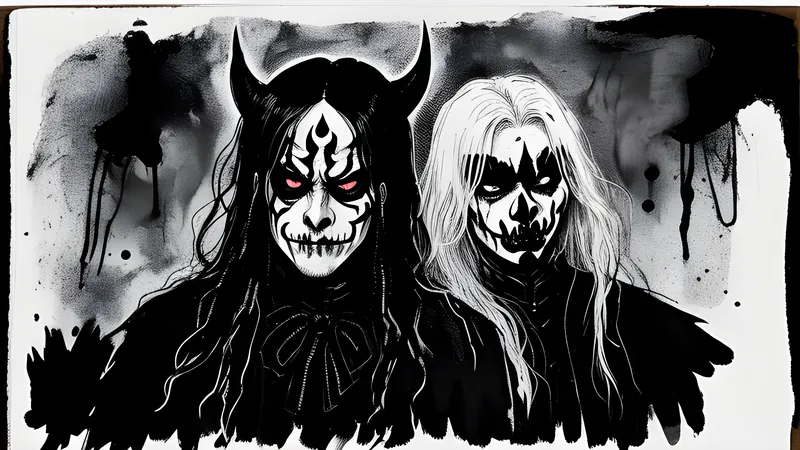
Myrkur, from the Icelandic word for darkness, arrived on Relapse Records in 2014 as a mostly anonymous project. The label leaned into the mystery, which was its first mistake, because black metal has a long and specific relationship with authenticity and anonymity, and a big label hyping a shadowy new act was always going to trip the scene’s gatekeeping wires. When it emerged that the person behind the corpse-paint atmospherics was Bruun, a Dane who had previously worked in indie pop with acts like Ex Cops and had modelled, the reaction curdled fast.
The complaint, dressed up in the language of authenticity, was that she had not paid her dues, that a pop musician could not possibly be a real black-metal artist, that the whole thing was a manufactured stunt. Underneath the dues-paying rhetoric, though, a great deal of the abuse was simply about the fact that she was a woman, and a conventionally glamorous one, entering one of the most male and most insular subcultures in music. The harassment escalated past criticism into something genuinely dark. Bruun received death threats. She deactivated her Facebook account at one point because the flood of them would not stop. A debut record got met with a campaign to drive its maker out of the scene entirely, where reviews should have been.
What the abuse was actually defending
It is worth being precise about what black metal thinks it is protecting when it behaves like this, because the impulse is not pure nonsense even when its expression is vile. Black metal built its identity in Norway and Scandinavia in the early 1990s partly around ideas of authenticity, hostility to the mainstream, and a deliberately forbidding wall against casual entry. The genre’s whole aesthetic is designed to keep people out. Anonymity, unreadable logos, lo-fi recording, an ethos that treats commercial success as a kind of betrayal, all of it functions as a border wall.
So when a major independent label rolled out a mysterious new act with a marketing push, the scene’s antibodies activated, and there was a sliver of a legitimate point buried in the reaction: the hype really was overcooked, and Relapse really did lean on mystery in a way that invited the backlash. But that sliver got used as cover for a torrent of misogyny that had nothing to do with label marketing. The tell is simple. Plenty of men have entered black metal from outside, from other genres, with label backing and heavy promotion, and none of them got death threats for it. The thing that made Bruun uniquely unacceptable to the mob was not her CV. I’ve written before, in what the mosh pit is actually for, about how heavy-music spaces police their own borders; the Myrkur pile-on was that policing turned poisonous, the community’s border wall weaponised against a specific person.
The music, judged as music
Strip away the noise and listen to the records, which is what should have happened in the first place. The debut album M arrived in 2015 and it is a serious piece of work. It was produced by Kristoffer Rygg, the Ulver frontman, which is itself a marker of genuine scene credibility, since Ulver are one of black metal’s most respected and most restlessly experimental names. The backing band for the project drew on members associated with Mayhem, Arch Enemy and Satyricon, which is to say the actual black-metal establishment showed up to play on the record the establishment’s fans were trying to cancel. That contradiction should have ended the argument. It did not, because the argument was never really about the music.
What Myrkur actually does is fuse black-metal atmospherics with Scandinavian folk melody and Bruun’s own trained, clear soprano, a voice that can move from a fragile folk lament to a shriek and back. Mareridt followed in 2017, deepening the folk and the dread, the Danish word for nightmare sitting over an album that earned considerably warmer reviews as the initial hysteria burned itself out. Then in 2020 came Folkesange, and this is the record where Bruun essentially answered her critics by refusing to argue with them. It is a traditional Scandinavian folk album, almost entirely stepping away from metal, built on old melodies and period-appropriate instrumentation. It reads as an artist saying that her connection to Nordic music runs deeper than the genre the gatekeepers wanted to police her out of. You cannot accuse someone of faking a relationship to Scandinavian folk tradition when they turn in a whole album of it, sung in Danish, with real scholarship behind the arrangements.
Copenhagen, the Nordic thread, and the bigger picture
Bruun is Danish, and Myrkur sits inside a wider Danish and Nordic heavy tradition even as it points back toward Norway’s black-metal heartland. That national context matters. Denmark keeps producing outsized heavy music from a tiny population, a phenomenon I’ve tried to account for in Little Country, Loud Export, and Myrkur is a distinctly Danish entry in it: cosmopolitan, formally trained, unafraid to blend high and low, and connected to the folk memory of the region. Where a band like Volbeat exports Denmark’s heaviness by welding it to American rock and roll, Myrkur exports it by digging backward into the Nordic past, toward folk song and landscape and the cold.
The Norwegian black-metal scene Myrkur draws on carries a genuinely grim documented history, the church burnings and the killing of Euronymous by Varg Vikernes, real crimes that the genre has never fully reckoned with. I mention it only to be clear about the tradition Bruun stepped into: a scene with a real and violent past, and a present-day fanbase that proved it could still turn violent in words when a woman it had not authorised showed up. That she made her best-received work anyway, and then walked calmly into a folk album that no one could dispute, is the whole arc.
The later work, and the vindication
The story did not stop at Folkesange. Bruun kept Myrkur running as a serious ongoing project, releasing Spine in 2023 through Relapse, and across that body of work the early hysteria has come to look exactly as small as it was. Critics who once felt obliged to litigate her legitimacy now simply review the records, which is all that should ever have happened. She has toured the material, scored other projects, and built the kind of substantial, evolving catalogue that no amount of forum rage can argue with. The gatekeepers wanted to decide whether she was allowed to exist in the scene; a decade of consistent, ambitious releases decided it for them.
There is a wider lesson in the arc for anyone who cares about how heavy music treats newcomers. The Myrkur backlash was, in retrospect, one of the moments when the metal internet’s worst instincts got put on full public display and did not come out looking good. The scene that spent 2014 sending a Danish woman death threats over a black-metal record has, by and large, moved on and accepted the work, which is progress, even if it arrived slowly and grudgingly. The episode became a reference point in the ongoing argument about gatekeeping, authenticity and misogyny in extreme music, an argument the genre badly needed to have, and Myrkur’s calm persistence through it was as much a contribution to that reckoning as any of the records.
What the story is really about
The Myrkur saga is not, in the end, a story about whether one Danish musician is a legitimate black-metal artist. She plainly is; the records settle it and the collaborators confirm it. It is a story about what a subculture does when someone arrives who does not fit its unspoken template, and how much of the “authenticity” policing that scenes are so proud of turns out, under pressure, to be about gender and glamour rather than craft.
Bruun’s response is the part worth carrying away. She did not spend her career litigating the backlash or performing wounded authenticity. She made M, then Mareridt, then Folkesange, then kept going, and let the body of work argue for itself. The gatekeepers wanted a fight about whether she belonged. She declined the fight and just built the thing they said she could not build. Years on, the death threats read as a period embarrassment for the scene, and the records read as exactly what they always were: serious, cold, beautiful Danish music that earned its place the hard way, by being good enough to outlast the people who screamed at it.
Related Content