Motocultor: Brittany's Loud Field
France's stubborn, muddy, fiercely independent metal festival, out on the Breton edge of the country
Contents
France has two metal festivals worth knowing about, and they could hardly be less alike. One is Hellfest, the enormous, theatrical, internationally famous cathedral-to-loud in the Loire that has become one of the biggest metal events on earth. The other is Motocultor, out west in Brittany, and it is the scrappy, muddy, fiercely independent cousin that the French underground holds closest to its heart. Where Hellfest is spectacle and scale, Motocultor is character and grit — a festival named, gloriously, after a two-wheeled agricultural tractor, held on a Breton field at the wet Atlantic edge of France, run with a stubbornness that has become its whole personality.
From Copenhagen, France is a stretch — further than my usual German and Dutch runs, and I have never made it to a Breton field in August — so this is a read from the record and the reputation rather than the mud. Motocultor is the kind of festival I follow with real affection even from a distance, because it represents something the metal world needs: the independent, underground-leaning, community-built event that survives on devotion rather than corporate money. Every scene needs one of these. Brittany’s is Motocultor.
A festival named after a tractor
The name tells you everything about the spirit of the thing. “Motoculteur” is the French word for a walk-behind cultivator, the small two-wheeled tractor a farmer uses to turn a field, and a festival that chose to name itself after one is a festival with no interest in glamour. Motocultor started in 2009 as a small event and grew through the 2010s into one of France’s most important metal gatherings, all while keeping the ramshackle, agricultural, cheerfully unpolished identity baked into its name. This is a festival proud of its mud and its rough edges, and that pride is exactly why the French underground loves it.
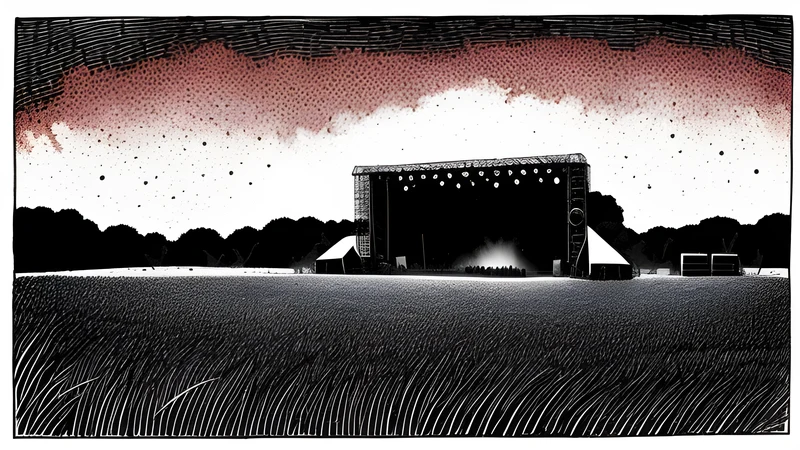
The Breton setting is central to the identity. Brittany is the wild, Celtic, weather-beaten peninsula on France’s north-western tip, a region with its own language and a strong independent streak, jutting out into the Atlantic where the weather rolls in hard. A metal festival on a Breton field is a festival that has made peace with rain and mud as recurring characters. Motocultor wears its reputation for turning into a swamp as a badge rather than an embarrassment, part of the shared endurance that binds the crowd. The mud is a rite of passage, and the people who go seem to relish it.
Booking the whole underground
Motocultor’s programming is where its underground credentials show clearest. This is a festival that books deep into the extreme and experimental end of metal — death, black, doom, sludge, the technical and the avant-garde — alongside the bigger names it can afford, and it does so with the taste of an event run by people who actually listen to this music. The French metal scene is one of Europe’s most creative, having produced a wave of bands, from the atmospheric black-metal experimenters to the technical death-metal innovators, that have influenced the genre well beyond France’s borders. Motocultor is where a lot of that scene comes home to play.
France’s most famous metal export gives a sense of the ambition of the national scene. Gojira grew out of exactly this world — a French underground that prized originality and craft — before becoming one of the most respected metal bands on the planet, and the ecosystem that produced them is the ecosystem Motocultor serves. A festival that books the French underground is booking one of the richest veins of creativity in modern metal, and doing it in the bands’ own country, for a crowd that has followed them from the small rooms up. The connection between the national scene and its festival runs both ways.
The move to Carhaix
A significant chapter in Motocultor’s story is its relocation. For most of its life the festival was held at Saint-Nolff, near Vannes in the Morbihan, on a site that became synonymous with the event and its legendary mud. In 2023 the festival moved to Carhaix, in Finistère, onto the Kerampuilh site — the same grounds that host the huge Vieilles Charrues festival — giving Motocultor more room and better infrastructure to grow into. A move like that is always a gamble for a festival whose identity is tied to a place, and the community held its breath to see whether the character would survive the relocation. By the accounts that came back, the spirit travelled with it. A festival’s soul lives in its people and its programming more than its postcode, and Motocultor carried both to the new field.
That willingness to move and grow while keeping its independent identity is the balancing act every successful underground festival has to manage. Grow too fast or sell out too far and you lose the community that made you; stay too small and the economics eventually strangle you. Motocultor has tried to thread that needle — expanding its capacity and its ambition without becoming the thing its whole personality is defined against. Whether it can keep that balance as it scales is the open question of its next decade, and the French underground is watching closely, protective of a festival it regards as its own.
Brittany’s own thing
It is worth dwelling on why Brittany, specifically, produces a festival like this. The region is one of France’s most distinct — Celtic in heritage, with its own Breton language, its own music and its own long tradition of doing things its own way regardless of what Paris thinks. That independent temperament runs right through Motocultor. A festival built on stubbornness and self-reliance fits a region that has spent centuries insisting on its own identity, and there is a natural sympathy between Breton pride and the outsider spirit of underground metal. Both are about refusing to be absorbed into the mainstream, about keeping something raw and local alive against the pull of homogenisation.
Brittany also has a deep festival culture that has nothing to do with metal, from the vast Vieilles Charrues to the region’s traditional music gatherings, so the ground Motocultor grew in was already fertile for large outdoor events. Placing a metal festival into that tradition gives it a rootedness that a festival dropped into neutral ground never has. Motocultor is a Breton institution as much as a metal one, part of the region’s summer rhythm, and that local embedding is part of why it has survived and grown. A festival that belongs somewhere specific is harder to kill than one that could be anywhere.
The French crowd and the DIY spirit
A Motocultor crowd, by every account, is the French underground at its most devoted — a passionate, knowledgeable, up-for-anything audience that came for the extreme end specifically and treats the mud as part of the fun. French metal fans have a reputation for intensity, and a festival that books deep into the underground draws the people who live and breathe it. The atmosphere is described consistently as communal and warm beneath the grime, the kind of festival where the shared endurance of the weather and the shared love of obscure bands forge fast friendships. That DIY, community-built feeling is the thing the corporate mega-festivals can never manufacture, and it is Motocultor’s greatest asset.
There is a lesson in Motocultor for anyone who thinks the future of festivals is only bigger and slicker. The independent, underground-leaning event run by enthusiasts, surviving on love and stubbornness, is a different and equally vital model. It is where scenes actually live — where the emerging bands get their break, where the die-hards find each other, where the music that will never fill an arena gets a proper field and a proper crowd anyway. Motocultor is France’s proof that the model still works, that a festival can grow without abandoning the community that built it, if it holds its nerve.
Surviving the hard years
Motocultor’s growth has not been frictionless, and it would be dishonest to pretend otherwise. Independent festivals live permanently close to the financial edge, running on thin margins and volunteer goodwill, and the pandemic that erased the 2020 and 2021 festival summers across Europe hit the smaller, less-cushioned events hardest of all. Motocultor came through that stretch, as the French underground came through it, and the relocation to Carhaix can be read partly as a bid to build the more sustainable footing a festival needs to weather the next shock. Growth, for an event like this, is as much about survival as ambition.
The tension between staying independent and staying solvent never fully resolves — it is the permanent condition of the underground festival. Every decision to grow risks the character; every decision to stay small risks the finances. That Motocultor keeps making those calls and keeps coming back is the whole story. The French metal community treats the festival as something to be defended precisely because they understand how fragile these things are, how easily a beloved field can vanish when the numbers stop working. Its continued existence is a small collective act of will, renewed every August.
Where it sits
For a Copenhagen punter mapping the European metal calendar, Motocultor is the French underground’s field — the counterweight to Hellfest’s spectacle, the festival you go to for the deep cuts and the community rather than the household names and the pyrotechnics. It belongs to the same honourable tradition as the smaller, fiercely independent events across Europe: the festivals built by scene devotees for scene devotees, prizing character over polish. France is lucky to have both extremes, the giant and the underground field, and the health of a national scene shows in having room for both.
The image the festival trades on, and earns, is the one it chose for itself: a Breton field in the Atlantic weather, a two-wheeled tractor as a mascot, a crowd caked in mud and grinning, and some of the most adventurous metal in Europe roaring out over the rain. Motocultor has never tried to be beautiful, and that refusal is exactly its beauty. It is the French underground’s stubborn, muddy, beloved field, and one August, if I ever make it that far west, I intend to get properly filthy in it.
Related Content