Midgardsblot: Metal Among the Burial Mounds
A Viking and atmospheric-metal festival staged on the largest burial-mound site in northern Europe
Contents
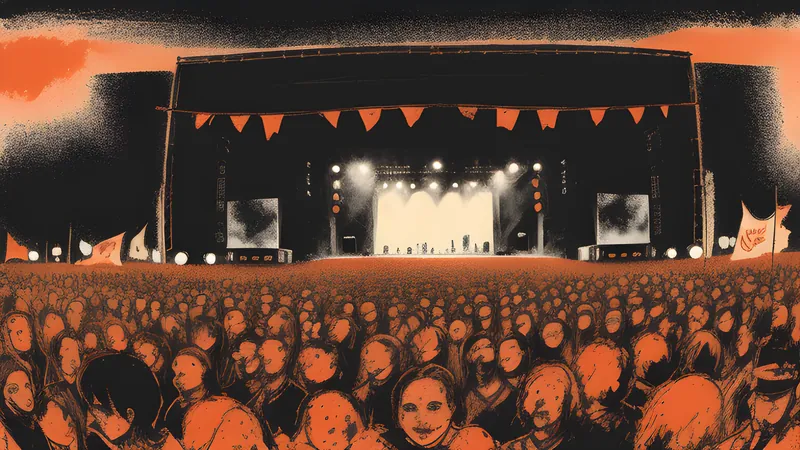
Most festivals with a Viking theme are working with polystyrene longships and a rented smoke machine. Midgardsblot has the actual graves. It stages Viking and atmospheric metal at Borre in Vestfold, on the largest concentration of monumental burial mounds in northern Europe, ground where real Iron Age chieftains were actually buried more than a thousand years ago. The setting is the entire point, and it is not a set dressing anyone could fake.
This is another one I cover from the record rather than from the field — Vestfold in August has never quite made it onto my calendar, sitting as it does at the tail of a summer already spent on Roskilde and Copenhell. But Midgardsblot is one of the most genuinely distinctive festivals in Europe precisely because of where it stands, and the archaeology underneath it is real and documented, which is exactly the sort of thing this desk likes to get right.
The mounds are real
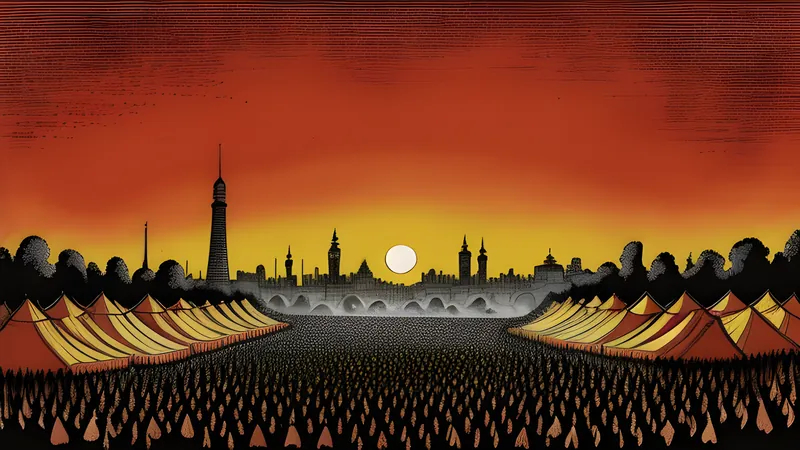
Start with the ground, because the ground is the whole story. Borre is home to the Borre mound cemetery, a cluster of large Iron Age and Viking-era burial mounds on the western shore of the Oslofjord — the biggest collection of monumental grave mounds in the Nordic region. These are genuine archaeological monuments, some of them enormous, raised over the powerful dead of a society that had this stretch of coast as a centre of power. The site is significant enough that an entire decorative style of Viking art, the Borre style, is named after finds made here. It is the sort of place where the world of the living and the dead were understood to meet, where warriors were laid to rest under earth you can still walk between.
The festival takes place at the Midgard Viking Centre, the museum and heritage site built around those mounds, which includes a reconstructed great hall, the Gildehall, based on the archaeology of an actual chieftain’s hall excavated nearby. So when Midgardsblot programmes a set of atmospheric black metal or Norse-inflected folk music, the stage is surrounded by real burial mounds under real trees on the real fjord. This is E-E-A-T made physical: a festival whose authenticity you can dig up.
Founded in 2015, built for the setting
Midgardsblot has been organised since 2015, founded by a team led by Runa Luna with the explicit aim of fusing Norway’s extreme-metal scene — black metal and Viking metal especially — with authentic Norse pagan heritage. That intent is what separates it from the theme-park end of Viking metal. The festival was designed from the start to belong to its site rather than to import a costume onto a random field.
The programming reflects it. Midgardsblot leans towards the atmospheric, folk-inflected and Viking-themed end of the metal spectrum — the bands whose music is already reaching for landscape, myth and history — which fits the mounds far better than a bill of pure thrash would. Norway is unusually well supplied with that kind of act, from the atmospheric black-metal lineage that came out of the 1990s scene to the folk-metal and Norse-themed bands that followed, and Midgardsblot has become a natural home stage for them. The result is a bill that feels curated to the site rather than assembled from the same touring roster every big festival shares. Around the music, the festival runs a genuinely substantial cultural programme: guided tours of the archaeological site, battle re-enactments, documentary screenings, lectures and panel discussions with historians and archaeologists. There is a Viking village called Fòlkvangr, a Viking market called Kaupangr, and an arena for archery and axe-throwing. It is a heritage event and a metal festival occupying the same ground at the same time, and the two halves genuinely reinforce each other rather than sitting awkwardly side by side.
Why this works when so much Viking metal is silly
I have a fairly low tolerance for the sillier end of Viking metal — the horned helmets nobody actually wore, the mead-hall cosplay, the general air of a stag do that discovered a lore wiki. What makes Midgardsblot different, from everything I can tell, is that it takes the history as seriously as the music, and the seriousness is earned by the setting. When actual archaeologists are giving lectures a few metres from actual burial mounds, the whole enterprise moves from cosplay towards something closer to genuine cultural engagement. The reconstructed great hall is based on a real excavation. The mounds are the graves they say they are. The festival did its homework.
That authenticity also gives the music a context it rarely gets. Atmospheric and Viking-tinged metal is often reaching for exactly this feeling — the weight of deep time, the northern landscape, the presence of the ancestral dead — and mostly it has to conjure that feeling in a sports hall or a muddy field where the atmosphere is entirely imaginary. At Borre the atmosphere is supplied by the site. A band playing about the old gods and the burial of kings, at dusk, surrounded by the burial mounds of actual kings, with the Oslofjord going dark behind the stage: the environment does half the work, and does it for real.
The programme around the mounds
The daytime layer is a large part of what makes Midgardsblot more than a gig with a scenic backdrop. The Midgard Viking Centre is a working heritage institution, and the festival leans on it hard. There are guided archaeological tours of the mound cemetery, led with real historical context; there are lectures and panels with historians and archaeologists; there are documentary screenings and battle re-enactments staged by people who take the craft of it seriously. The reconstructed Gildehall — the great hall built from the excavation of a genuine chieftain’s hall — anchors the site and gives the whole thing a permanent architectural centre rather than a rented stage.
Then there is the living-history apparatus that has grown up around the music. The Viking village Fòlkvangr and the market Kaupangr recreate the crafts, trade and everyday texture of the era, staffed by re-enactors who do this properly, and there is an arena for archery, axe-throwing and the physical side of the culture. A festival-goer can spend the daylight hours learning the actual history of the site and the period, then watch atmospheric metal among the graves after dark. That two-part rhythm — genuine heritage by day, heavy music by night — is the festival’s real innovation, and it is why it reads as cultural engagement rather than costume.
The scale stays deliberately intimate. Midgardsblot is a small festival by the standards of the big summer fields, and it needs to be — you cannot pack a hundred thousand people onto a protected archaeological site, and the organisers plainly have no wish to. The modest size keeps the setting legible and the atmosphere concentrated, which is the entire currency of a festival whose selling point is the ground it stands on.
The Norwegian heavy calendar it belongs to
Midgardsblot is the fourth corner of Norway’s heavy-music year, and the most specialised of them. The country’s calendar has settled into a clear shape: the big mainstream summer anchor at Tons of Rock in Oslo, the Easter extreme-metal institution at Inferno, the west-coast connoisseur weekend at Beyond the Gates in Bergen, and Midgardsblot holding the Viking and atmospheric wing among the mounds of Vestfold. Between them they cover most of what a heavy traveller could want from a single country, and Midgardsblot is the one that offers something no amount of money could replicate elsewhere: the actual graves.
There is a Danish parallel worth drawing too. Denmark runs its own historically minded events — the Viking markets that reconstruct trade and craft and combat on real and reconstructed sites — and Midgardsblot is what happens when that living-history instinct is welded to a metal festival. The re-enactors, the market, the archery: the DNA is the same, just turned up loud.
The verdict from the outside
I cannot in honesty tell you how a Midgardsblot dusk feels from personal experience, because I have not stood in it. But of all the festivals I write about from the record, this is one of the easiest to make the case for, precisely because its central claim is verifiable. Every other Viking festival is selling an atmosphere it manufactures. Midgardsblot is selling an atmosphere the landscape already contains, ratified by archaeology and thrown into relief by the music.
If your taste runs to the atmospheric, folk and Viking end of metal — the bands built for landscape and myth — there is no more appropriate place on earth to hear them than a heritage site on the Oslofjord where the real dead are really buried. The mounds were here a thousand years before anyone plugged in a guitar, and they will be here a thousand years after the last amp is packed away. A festival that understood that, and built itself humbly around it, has done something almost no themed event ever manages. One August I will go and stand among the graves and find out whether it feels the way the record promises.
Related Content