Metallica at Parken: When the Biggest Band Alive Plays a Football Ground
The WorldWired tour filled Copenhagen's national stadium in July 2019 — a homecoming for the Gentofte boy who built the biggest metal band on earth
Contents
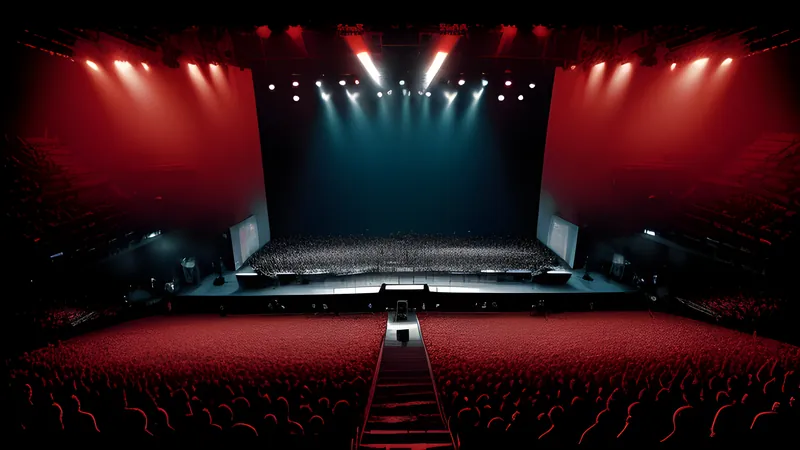
On 11 July 2019, just under forty-five thousand people packed into Parken, the Copenhagen football stadium, to watch Metallica. It was a Thursday. The roof was open, the Danish summer holding for once, and the pitch that normally belongs to FC København had been floored over and turned into the biggest standing crowd the city can legally assemble. There is a specific strangeness to seeing the biggest band alive play the ground where you watch the national team lose to Germany, and that strangeness is the whole subject here.
A football ground with the roof open
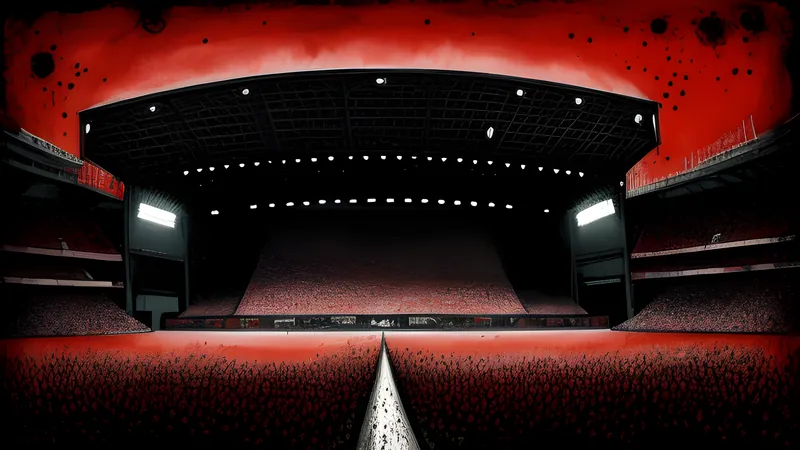
Start with the building, because the building explains the event. Parken sits in Indre Østerbro, a working residential slice of Copenhagen, on the site of the old Idrætsparken. The current stadium was built between 1990 and 1992 and opened on 9 September 1992 — fittingly, with the national team losing a friendly one-two to Germany. It is the home of FC København and the Denmark national side, holds a little over 38,000 for football, and had a retractable roof bolted onto the existing bowl in 2000 and 2001, largely to make it a viable indoor venue and to host Eurovision in 2001. Slide the seats and floor the pitch for a concert and it takes fifty thousand with an end stage, more with the stage in the middle.
That dual life matters. Parken was engineered from the start to be a machine for mass gatherings, and it has spent thirty years hosting the enormous touring acts that Copenhagen otherwise could not physically contain — Springsteen, the Stones, Bowie, Pink Floyd, the whole heavyweight circuit. A city of six hundred thousand people has exactly one room this big, and it doubles as the place the country plays football. So when a band graduates to Parken, it means something concrete: they have outgrown every other room in Denmark, including the arenas. There is nowhere left up.
For a metal band specifically, that graduation is rare and slightly improbable. Copenhagen has a dense, serious loud-music ecosystem — the sweatboxes and the mid-size halls and, since 2017, the Royal Arena out on Amager for the arena-scale tours. Very few heavy acts ever need the stadium. Metallica are one of maybe three or four in the world who fill football grounds on the strength of down-tuned guitars, and in Copenhagen they do it against a specific local backstory that makes the whole thing land differently.
The homecoming problem
Because Metallica in Copenhagen is a homecoming, and everyone in Parken knows it. Lars Ulrich, the drummer who willed the band into existence, is a local — born in Gentofte on the northern edge of the city in 1963, a Davis Cup family’s tennis prodigy who swapped the baseline for a drum kit and carried a European record collection to Los Angeles. I have written the long version of that story elsewhere, in Metallica’s Danish accent, because it genuinely reorganises how you hear the band: the biggest American metal group was assembled around one Copenhagen kid’s obsession with obscure English bands.
That biography changes the temperature of a Parken show. When Metallica play most cities, they are a global product parachuting in. When they play Copenhagen, one of them is home, in the city where he first got taken to see Deep Purple as a boy and decided the rest of his life. The Danish press has always, reasonably, treated Ulrich as one of their own — a national export who happens to make his noise in California — and a hometown stadium crowd carries that pride physically. The band has reciprocated over the years by treating the city as a place worth returning to and lingering in: they broke in the new Royal Arena with a run of nights in early 2017, and the big open-air Parken shows are the top of the same relationship. The homecoming is not a marketing line here. It is the literal fact of a man playing his home town at the largest scale it offers.
What a stadium does to a band
Here is the honest tension in any stadium metal show, and it is worth naming rather than papering over. A football ground is a hostile venue for this music. Metal is a close-quarters art form — it wants a low ceiling, a hot room, a crowd pressed tight enough to move as one body. Fifty thousand people spread across a floored-over pitch and three tiers of seating is the opposite environment: distance, dilution, a sound bouncing off the far stand a half-second late. The intimacy that makes a club show devastating is physically impossible at that scale.
Metallica’s answer, honed over decades of arena and stadium touring, is to stop pretending the room is small and to build a show engineered for the exact conditions of the enormous space. On the WorldWired tour they ran a stage designed to throw the band outward — long catwalks, drones and lighting rigs, video that carries a face to the back stand without the screen becoming the only thing anyone watches. The trick, and the ones who master it are few, is keeping the actual performance on the stage in three physical dimensions while still reading at two hundred metres. It is a genuine competence, and when a band gets it wrong the stadium turns into a very expensive television.
The other thing a stadium does is flatten a setlist toward the anthems, because the songs have to survive the distance. A gnarly deep cut that kills in a club can dissolve into mush across a football pitch, so the temptation is to play nothing but the singalongs. Metallica have learned to resist the worst of that, and the Parken show is a decent case study in doing it right.
The night itself
The July 2019 Parken concert is well documented, so I can be specific without inventing anything. It sat late in the long WorldWired campaign, the tour behind Hardwired… To Self-Destruct — the 2016 record that ended an eight-year album gap and sent the band back around the world for years. Support came from Ghost, the Swedish theatrical-metal act then mid-ascent, and the Norwegian trio Bokassa, whom Metallica had personally picked up for the European stadium run: a strong, un-lazy undercard for a bill this size, and a small sign of a headliner still paying attention to who it drags up the ladder with it. Metallica’s own set drew across nine albums, from Kill ‘Em All right through to Hardwired… To Self-Destruct, which is the spread you want: proof the band still treats its whole catalogue as live material rather than a fixed greatest-hits reel.
The detail that tells you they were paying attention to the specific city: the Copenhagen show pulled out material the band had not played there in years. “Ride the Lightning” and “No Leaf Clover” returned to a Copenhagen stage for the first time in a decade, and “Frantic” for the first time in fifteen years. That is a band actively varying its setlist by market rather than trundling out an identical machine every night — a small courtesy that a hometown crowd notices and rewards. Whether it lands as a great gig or a merely enormous one turns entirely on that willingness to treat the night as a specific event rather than a franchise stop.
I will not dress the evening up with dramatics I cannot verify. What I can say plainly is what a Parken metal show is for: it is the day the loud congregation of an entire country gets to assemble in one bowl, roof open, and be counted. You do not go for the intimacy. You go for the scale — for the specific, once-every-few-years experience of standing on the FC København pitch with forty-five thousand other people while the band your city half-claims as its own plays the biggest room the country owns.
Why the football ground works anyway
So does it work, this business of the biggest band alive playing a football ground? Mostly, and for a reason that has nothing to do with sound quality, which is always going to be the compromised part. It works because the stadium show is a civic event as much as a concert — the rare occasion a whole national scene converges in a single place, the loud counterpart to the Sunday the same building fills for football. Parken spends most of its life as the ground where Denmark plays. A few nights a summer it becomes the largest gathering the country’s music can produce, and there is something genuinely moving about a metal band being the reason.
Metallica earn the venue in a way almost no heavy act can, and in Copenhagen they earn it twice over — once on catalogue and once on the accident of Lars Ulrich’s postcode. The rest of the year, the loud life of the city happens where it should, in the clubs and halls and out at the arena. But once every few summers the football ground opens its roof and the whole thing scales up to the size of a national stadium, and the strangeness of that — a football pitch, a metal band, a hometown drummer, fifty thousand people — turns out to be exactly the point.
Related Content