Loppen: Christiania's Loud Little Room
Fifty years of noise up a narrow staircase in Freetown
Contents
There is a moment on the stairs at Loppen when you understand the whole place. You have come off Christiania’s main drag, past the falafel smoke and the bike repair stands, into an old military warehouse, and now you are climbing a narrow timber staircase with a bass rig thudding down through the floorboards above your head. By the time you reach the top you have already decided you like the band, because anyone willing to carry a half-stack up those stairs has earned a fair hearing.
Loppen has been doing this since 1973, which makes it older than almost every venue people think of as a Copenhagen institution. It sits inside Freetown Christiania, the self-governing quarter that squatters founded in 1971 in the abandoned Bådsmandsstræde barracks on Christianshavn. The venue occupies the upper floor of the old warehouse the locals call Loppebygningen, a few metres from Den Grå Hal, the vast former riding house that handles Christiania’s big nights. Loppen handles the small ones, and it has handled them with more consistency and better taste than most rooms three times its size.
The building does half the work
The room is roughly 350 capacity, and it feels smaller because the architecture refuses to get out of the way. Thick whitewashed stone walls, a low timber ceiling, and a scatter of structural pillars that will absolutely stand between you and the singer if you pick the wrong spot. This was a storehouse for the Danish military two centuries ago, and it was never meant to hold a PA or a sweating crowd. That is exactly why it works. Concrete boxes with good sightlines are easy to build and easy to forget. A room with this much character forces a band to play up to it.
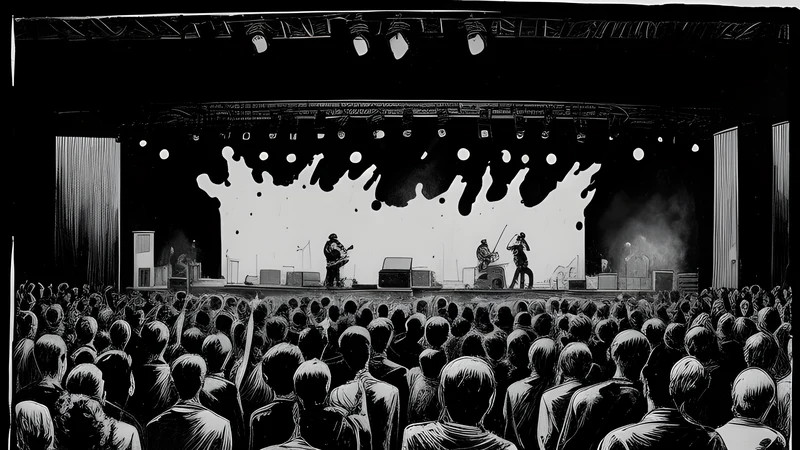
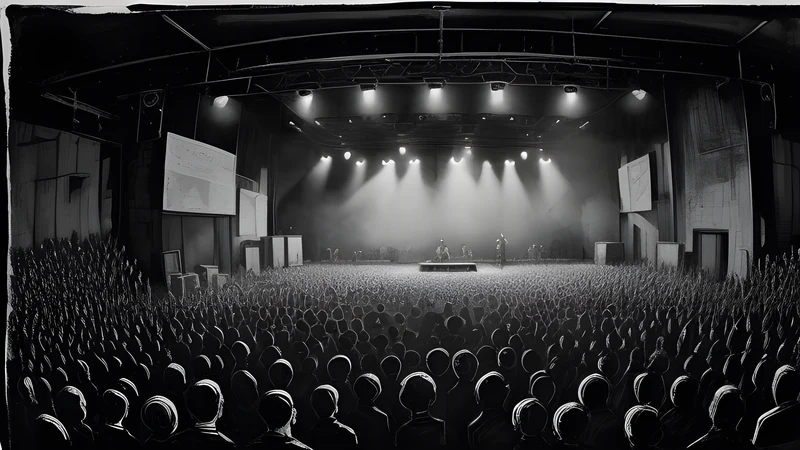
The stage is low and shallow, pushed against one long wall, so the front row is close enough to read the setlist taped to the monitor. There is no barrier and no pit crew, which puts a certain responsibility on the crowd and generally gets honoured. The bar runs along the back, timber and worn, and the light rig is modest enough that a good lighting engineer can still do something with the shadows the stone throws.
Sound in a room like this is a negotiation. Stone reflects everything, so a lazy front-of-house mix turns to porridge fast, all low-mid mud and a cymbal wash that never clears. When the engineer knows the room, though, Loppen hits with a physical directness that big halls spend fortunes trying to fake. A loud guitar band at Loppen is loud in your chest as much as your ears, and the low ceiling means the whole audience is inside the sound rather than watching it happen at a distance. It is the opposite experience to a clean, glassy room like VEGA across the water in Vesterbro, and both have their place.
Certain kinds of music suit the room and certain kinds fight it. A power trio, a sludge band, a hardcore act with a good drummer — anything built on riff and dynamics rather than dense layering — sounds enormous in here, because the stone flatters weight and the small volume of air means the low end arrives fast and hard. A band with six pedalboards and a wall of overlapping textures has a harder time; the reflections smear the detail and you lose the thing that makes them interesting on record. The engineers who work Loppen regularly know this and mix accordingly, pulling everything toward clarity and letting the room supply the muscle. When it all lines up — the right band, the right ears at the desk, a full and generous crowd — Loppen delivers a specific sensation that I have chased around Europe for twenty years and rarely found bettered.
Booked by people who actually listen
The reason Loppen matters beyond nostalgia is the programme. For half a century it has run as a non-commercial, collectively minded operation, and the booking has stayed genuinely broad and genuinely brave. On consecutive nights you might get a Norwegian black metal band, a free-jazz trio, a touring American hardcore outfit, and some unclassifiable Copenhagen noise project three people have heard of. The through line is quality and conviction rather than genre, which is rare in a scene where most rooms of this size play it safe with whatever the promoters know will sell.
That instinct for the awkward and the early has made Loppen a proving ground. Plenty of bands who later filled Pumpehuset or a sold-out Lille Vega cut their teeth here first, on a Tuesday, to forty people and a bar staff who were paying attention. I have spent a lot of my Copenhagen years being one of those forty. The great secret of the loud underground is that the best show of your year is often the one nobody told you about, played by a band whose name you had to ask twice, in a room like this.
Loppen also books touring acts that the bigger Danish promoters overlook, partly because it can offer something they cannot: a genuinely small, genuinely intense room in a genuinely strange part of town. International bands remember Christiania. They tell the story afterwards. That word of mouth has kept Loppen on the touring map long after other clubs its size have quietly closed.
A stage inside a myth
You cannot separate Loppen from the place around it, and you should not try. Christiania was founded in 1971 when squatters occupied the disused barracks, declared it a free town, and set about running it on their own anarchic terms. Half a century of friction with the Danish state followed — court cases, normalisation deals, the long grim saga of Pusher Street — and through all of it the music kept going. Loppen opened two years into the experiment and became, in effect, the free town’s concert hall for anything too loud or too odd for a conventional stage. That heritage is baked into every gig. When you watch a band here you are watching them inside one of the most contested square kilometres in northern Europe, and the room carries that charge whether the band knows it or not.
Danish music history runs through this building. Generations of the country’s punk, metal and experimental musicians count a first real gig at Loppen among their origin stories, and the collective that runs it has always treated booking as a cultural responsibility rather than a business calculation. There is a stubbornness to it that I find genuinely moving. In a city that has grown wealthy and polished, where a lot of the old rough edges have been sanded off for tourism, Loppen keeps insisting that the awkward, unprofitable, difficult music deserves a proper stage and a proper PA. It has kept insisting for fifty-odd years, and it has been right the whole time.
The backstage lore is part of the fun. Bands trade horror stories about the load-in up those stairs — the amps, the drum hardware, the merch boxes, all of it hauled by hand while the previous act’s crowd files past. Tour managers who prize an easy get-in do not love Loppen. The bands who play it well tend to be the ones who understand that a hard load-in and a small stage produce a certain kind of show, hungrier and closer, that a clean arena slot never will. You can hear the difference from the floor.
Where to stand, and how to arrive
Practical business. Getting there is half the atmosphere. Christianshavn metro is a short walk away, and you enter Christiania on foot through Pusher Street or one of the side gates, then follow the noise. First-timers should know the house rules of Freetown: no photos in certain areas, and a general expectation that you treat the place as somebody’s home, because it is. The walk in through the ramshackle workshops and painted huts is part of what makes a Loppen gig feel like an event rather than an errand.
Inside, the pillars are the tactical problem. Stand just left or right of centre, a few rows back, and you get a clean line to the stage plus a wall to lean on when the room fills. The dead-centre spots look ideal on paper and then a support beam eats your view of the guitarist. Down the front is close, hot, and physical, and the low stage means you are basically at knee height to the band. Toward the back by the bar the sound softens and you can actually talk between songs.
The bar keeps it simple and cash-friendly, the beer is cold and unfancy, and the prices have stayed more reasonable than most central Copenhagen rooms because Christiania runs on its own economy and its own priorities. Do not come expecting a cocktail programme or a food menu; you eat on the way in, from the stalls along the main path, and you drink beer at the gig. That plainness is a feature. Everything about the operation points your attention back at the stage.
The crowd is Christiania-flavoured, which is to say older heads and young diggers mixed together, scene veterans who have been coming since the eighties standing next to students at their first proper underground show. It is an unpretentious, attentive room. People are here for the band. If you want a sense of the unspoken etiquette that keeps a small floor like this from turning ugly, the same manners apply here as in any good club, and I have written about them in the crowd-surfing rules: watch your boots, catch the person coming over the top, and read the room before you start a shove.
The COVID hole and what survived it
I should be honest about the gap. When the venues shut in 2020 and 2021, Christiania went quiet in a way I had never seen, and Loppen — reliant on packed small rooms and touring bands who could no longer cross borders — was one of the places you genuinely feared for. Small, independent, thin-margin clubs are the first to fall when the touring economy stops, and a lot of comparable rooms across Europe did fall.
Loppen came back. It came back with the same booking philosophy and the same stairs, and if anything the reopening shows underlined why the place is worth defending. A city can build a new arena in a couple of years. It cannot manufacture fifty years of the right bands playing to the right crowd in a stone room that was never designed for any of it. When people talk about Copenhagen as a music city they usually mean the festivals and the big halls. The truth is that the character comes from the small rooms — Loppen, Stengade up in Nørrebro, the back bars where the openers play — and Loppen is the oldest and the strangest of them.
Go for a band you have never heard of. Climb the stairs. That is the whole point.
Related Content