KB Hallen: The Hall That Burned and Came Back
Frederiksberg's functionalist arena died in a 2011 fire and was rebuilt as a near-copy of itself — here's what that costs and what it keeps
Contents
On 28 September 2011 a piece of heated cardboard sat too close to a halogen lamp inside a Frederiksberg sports hall, and by the end of the day one of Copenhagen’s great interwar buildings was a blackened shell. KB Hallen — Kjøbenhavns Boldklub’s hall, opened by King Christian X in April 1938, a functionalist landmark by the architect Hans Hansen — was gone. What stands on Peter Bangs Vej today is the strangest kind of venue: a building that died and was rebuilt as a copy of itself, reopened in December 2018 after seven years of arguing about what a resurrection should look like. I love it and I’m faintly haunted by it, and both feelings are the point.
I want to be straight about what this room is, because the story of the fire tends to swallow the review. KB Hallen is a mid-size Frederiksberg hall with a capacity of around 4,500, pushed towards 4,950 when they open it right up for a concert. That puts it in a useful gap in the Copenhagen map — bigger than the clubs, smaller than the arena — and the acoustics and the odd, loaded atmosphere make it worth the trek out past the lakes. Here’s the honest tour.
What burned, and what they chose to do about it
The original KB Hallen was a genuine piece of Danish architectural history. Hansen’s 1938 building was ground-breaking for its size and its clean functionalist expression, a great arched span thrown over a floor that was built for badminton, tennis, basketball and volleyball long before it ever hosted a rock band. Kjøbenhavns Boldklub had bought the big site on the south side of Peter Bangs Vej back in 1924, and for seventy-odd years the hall did quiet civic work — sport, dance tournaments, flea markets — and then, gradually, concerts, until it became one of the city’s characterful mid-size stages.
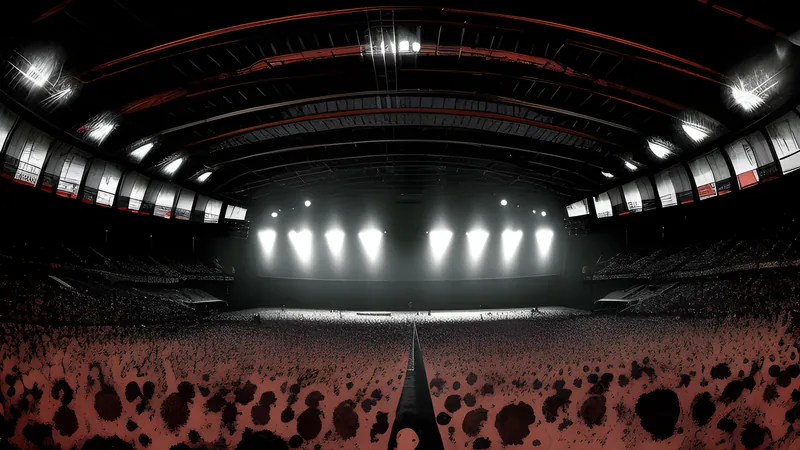
The 2011 fire ended all of that in an afternoon. When the smoke cleared, Frederiksberg had a decision that every city with a beloved dead building eventually faces: build something new and modern on the plot, or try to bring the ghost back. They chose the ghost. The architecture firm Christensen & Co led a rebuild explicitly inspired by Hansen’s original — the same arched silhouette, the same functionalist logic, updated to modern standards behind a façade that reads as continuity. It reopened in December 2018.
You can argue about that choice all night, and Copenhageners did. A faithful rebuild is honest about grief and dishonest about time — it hands you a 1938 shape wrapped around a 2018 building, and asks you to feel the history of a thing that is, structurally, younger than most of the crowd. I’ve come round to admiring it. The alternative, a shrug of glass and steel where the arch used to be, would have erased the memory entirely. The rebuild keeps the argument alive every time you walk in.
The room, and how it sounds
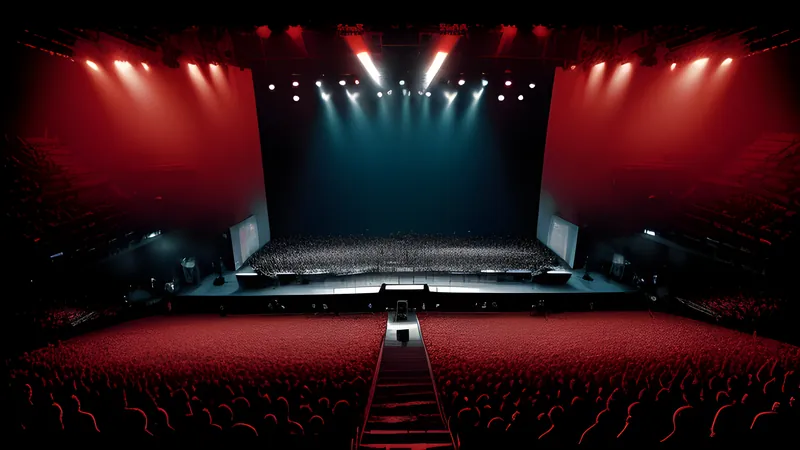
Inside, the resurrected KB Hallen does the useful thing a hall this size should do: it holds a proper crowd without turning the band into distant dots. The arched roof gives the space real volume overhead, which stops the sound compressing into the flat, boxy slap you get in cheaper modern halls. With a competent touring rig and an engineer who has bothered to listen to the room, you get a full, physical low end and vocals that stay intelligible right to the back wall.
It is still a multi-purpose sports hall at heart, and that means hard surfaces and a reverberant tail if the desk gets greedy with the volume. A well-mixed loud band sounds excellent here; a badly-mixed one turns to porridge faster than it would in a purpose-built music room like VEGA, which was designed from the studs outward to sound good. KB Hallen was designed to be flexible, and flexibility always costs you a little acoustic precision. On the right night — a heavy band, a switched-on front-of-house — that trade barely registers.
The sightlines are the sport-hall inheritance working in your favour. It’s a wide, open floor with good rake available on temporary seating when they use it, and because the ceiling arch springs from low down the sides, you rarely feel the space crushing you. Stand anywhere on the floor and you can see. Get into the front third and the room does what the best mid-size halls do — it collapses the distance between you and the stage until the gig feels like it’s aimed at you specifically.
Where to stand, and the Frederiksberg of it all
The move here is the floor, front-of-centre if the show earns the sweat, or a few metres back and slightly to one side if you want the full width of the sound with a bit of breathing room. The temporary seated configurations they run for calmer bookings are comfortable and sightline-honest, with none of the cursed pillar-blocked seats that older halls inflict on you. There’s no truly bad spot in here, which is rarer than it sounds.
The location is pure Frederiksberg — leafy, well-off, residential, a world away from the harbour grit of the eastern venues. That shapes the night in small ways. The area around Peter Bangs Vej is quiet streets and family flats, so the pre-gig drink happens in town or in the venue itself rather than in a cluster of grubby bars at the door, and the crowd spilling out afterwards is notably more orderly than a Nørrebro turnout. Getting there is easy: the M-line Metro runs to a station named for the hall itself, and buses thread the area, so you’re not stranded out in a field the way you can be at the big arena. It’s a civilised venue in a civilised part of town, and it wears that lightly.
The crowd, and the weight the room carries
Because KB Hallen sits in that mid-size sweet spot, it pulls the bands that have outgrown a club but aren’t ready to gamble on an arena floor — the touring act on the way up, the heritage band doing a right-sized room instead of a half-empty barn, the Danish name who can fill four-and-a-half thousand seats at home. That makes for good crowds: engaged, there for the music, old enough to remember the fire and young enough to be discovering the room fresh. On a heavy night it turns into a proper sweaty communion, closer in spirit to Den Grå Hal than to the polished processing of Royal Arena out in Ørestad.
There’s a practical dimension to that mid-size booking sweet spot worth spelling out, because it’s why the room stays busy. Copenhagen has a genuine gap in its venue ladder between the 500-to-1,000-capacity clubs and the 16,000-seat arena, and a hall that reliably takes four-and-a-half thousand plugs straight into it. That’s the size where a heritage act does a warm, right-sized room instead of rattling around a half-empty barn, where a mid-tier international tour lands when it’s outgrown the clubs but can’t gamble on an arena floor, and where a big Danish name plays a proper hometown show. KB Hallen catches all three. The result is a programme that skews towards bands with something to prove or something to celebrate, which tends to make for better nights than the anonymous arena churn.
And there is the weight, the thing that makes this room unlike any other in the city. You are standing inside a building that burned down and was willed back into existence. Most nights you forget it — a gig is a gig, the beer is cold, the band is loud. Then between songs you’ll glance up at that great arch, know it’s a careful reconstruction of a shape from 1938, and feel the strange doubled time of the place: the memory of a building layered over the building itself. No other Copenhagen venue does that to me. It’s not a sad feeling once you sit with it. It’s closer to gratitude — proof that a city can decide a piece of its own fabric is worth the trouble of resurrecting.
The verdict
KB Hallen is one of the most quietly valuable rooms in Copenhagen: a genuine mid-size hall with real acoustic volume, clean sightlines, easy Metro access and a Frederiksberg calm around it, sitting exactly in the gap between the sweatbox clubs and the big arena. If a band you love books it, go — the sound is good, the room is right, and you’ll rarely have a bad view.
Go also for the reason that has nothing to do with the setlist. This is the hall that burned in 2011 and came back in 2018, rebuilt in the image of Hans Hansen’s 1938 original because Frederiksberg decided the ghost was worth keeping. Stand under that arch, feel the doubled time of it, and you understand something about how a city holds onto itself. Then buy a beer, get down the front, and let the band remind you it’s a working venue after all. If you’re mapping the city’s other big utility rooms, the exhibition-hall pair over in Nordhavn and on Rosenørns Allé are the natural next stop — see the companion guide to Docken and Forum.
Related Content