Judas Priest in Copenhagen: Leather, Chrome, and the Metal God
The band that gave heavy metal its uniform, its twin-guitar attack and its operatic scream brought the Firepower tour to the Royal Arena — a Harley, a leather army, and one quietly heroic absence
Contents
There is a shorthand image most people carry for “heavy metal” — leather, studs, chrome, a scream that could shatter glass, twin guitars firing harmonised leads over a galloping rhythm — and almost every element of that image was designed by one band from the industrial West Midlands of England. Judas Priest did not just play heavy metal; they drew up its uniform and much of its grammar. On 10 June 2018 the Firepower tour brought that legacy to Copenhagen’s Royal Arena, complete with the Harley-Davidson rolled on stage and Rob Halford in full leather, and it was a reminder of how much of the genre’s DNA runs straight back to this group. This is a piece about the band that codified metal — and about a quietly heroic absence on that stage.
The band that dressed the genre
Judas Priest formed in the Birmingham area at the end of the 1960s, in the same industrial hinterland that produced Black Sabbath, and their contribution was to take the heaviness Sabbath had invented and make it faster, sharper and more precise. Where the earliest metal still trailed blues in its bones, Priest steadily stripped that blues away and replaced it with speed, twin-guitar harmony and a metallic sheen — the dual-lead attack of Glenn Tipton and K.K. Downing became the template that Iron Maiden, Metallica and a thousand others would follow. If you have ever heard two guitars playing a harmonised melody line over a fast metal beat, you have heard Priest’s fingerprints.
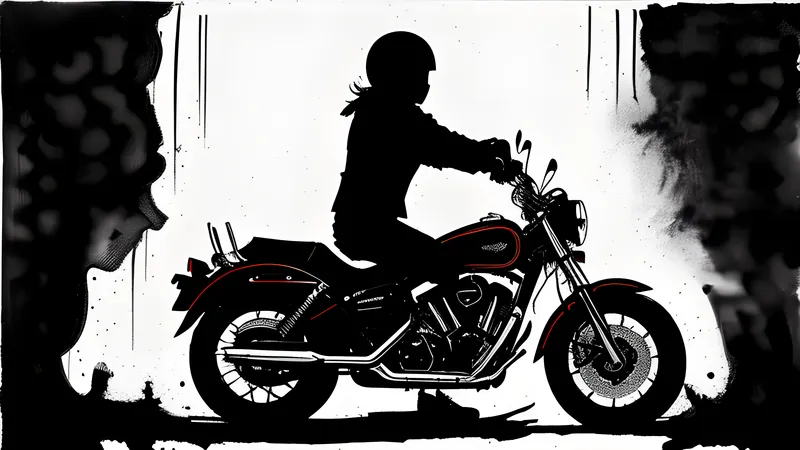
The visual code came from Rob Halford, and it changed the look of the entire genre. In the late 1970s Halford began appearing in leather and studs, riding a motorcycle on stage, projecting an image of chrome-and-black menace that the whole metal world promptly adopted as its universal costume. There is a well-documented irony threaded through this that only became public knowledge in 1998, when Halford spoke openly about being gay — the leather aesthetic he had drawn on and made the standard dress of the most macho genre in music had roots in gay subculture, and the “Metal God” who defined how a metal singer should look and sound had been carrying that truth quietly for decades. When he came out, it recontextualised the whole image, and the metal community — often lazily assumed to be hostile — largely responded with respect for a man who had shaped their world.
The Metal God at the microphone
Halford’s voice is the other half of his legend, and it is genuinely one of the great instruments in the history of the music. His range runs from a menacing low growl to a piercing, operatic falsetto scream, and he can hold and control both with a precision that singers half his age struggle to match. Songs like “Painkiller” — the title track of the ferocious 1990 album that proved a veteran band could out-heavy the younger generation snapping at its heels — demand a vocal performance that is close to athletic, and Halford has spent a career delivering it. At the Royal Arena the scream was still there, still able to cut clean over a full band at arena volume, a sound that has influenced practically every operatic metal vocalist who followed.
You can hear that lineage close to home. The theatrical, falsetto-driven strain of metal that Priest pioneered runs directly into the work of Denmark’s own King Diamond, whose extraordinary vocal range and horror-opera staging I traced in King Diamond and Mercyful Fate. Halford built the road that a singer like that could travel down — the idea that a metal frontman could be an operatic performer with a multi-octave weapon for a voice, theatrical and precise rather than merely loud. Watching Priest in Copenhagen, you are watching a source, one of the handful of bands from which so much of the genre’s vocabulary was actually derived.
The Firepower set and a moving absence
The tour that reached Copenhagen was built around Firepower, a 2018 album that was one of the band’s most warmly received in years — a lean, fast, genuinely strong late-career record produced by Tom Allom, who had worked on their classic run, alongside Andy Sneap. That the band could still write with that much conviction more than four decades in gave the tour a purpose beyond nostalgia, and the setlist balanced the new material against the canon: “Breaking the Law”, “Living After Midnight”, “You’ve Got Another Thing Coming”, “Electric Eye”, “Painkiller”, the whole armoury of songs that shaped how metal is written.
But the tour carried a real weight, and it would be dishonest to write about it without naming it. Earlier in 2018 Glenn Tipton — Priest’s guitarist for over forty years and the co-author of an enormous share of their material — had gone public with a diagnosis of Parkinson’s disease, and stepped back from full touring because the condition had made the fast, precise playing the songs demand increasingly difficult. Andy Sneap, the album’s co-producer, took the guitar chair for most of the set, and Tipton appeared for a few songs at the encore, playing the material he had helped write for as long as his body would allow. There was nothing maudlin about it; it was a band and a fanbase treating a legend’s illness with dignity, and Tipton’s appearances were met with the kind of roar that is really a form of love. It gave the Copenhagen show a poignancy that no amount of pyro could manufacture.
The twin guitars and the machine underneath
The engine room of Priest deserves its own attention, because their rhythmic attack was as influential as their look. The band pioneered a way of playing that welded two guitars into a single locked mechanism — Tipton and, for decades, K.K. Downing trading and harmonising leads over a rhythm section built for speed and precision rather than swing. When Downing retired in 2011, the young English guitarist Richie Faulkner took his place, and rather than merely impersonate the founder he brought a genuine spark that reinvigorated the band’s playing; his presence is a large part of why the Firepower material had such bite. At the Royal Arena the Faulkner-and-Sneap guitar pairing kept the machine running at full tilt, the harmonised runs snapping out clean over Scott Travis’s double-kick drumming.
That precision is the often-overlooked half of Priest’s legacy. Everyone remembers the leather and the scream, but the technical innovation — the idea that metal should be tight, fast and surgically exact rather than loose and bluesy — was just as consequential. It fed directly into thrash, into the entire speed-metal explosion, into bands who took Priest’s clean aggression and pushed it faster still. When you watch them live you are watching the birthplace of that discipline, a band who decided heavy music should be played with the precision of a well-machined part, and then spent fifty years proving they could still do it.
Why the uniform still means something
I am wary of legacy acts that coast on a costume, and metal has plenty of bands who put on the leather and go through the motions. Priest survive that scepticism because they are the source of the costume, and because they still play with intent. When Halford rides the Harley on stage during “Hell Bent for Leather”, it is not a band imitating the metal image; it is the band that created that image performing the original gesture. The leather, the studs, the motorcycle, the twin guitars, the scream — every cliché the genre has, Priest can perform as the authentic article, because they minted it. There is a difference between wearing a uniform and having designed it, and Priest are the tailors.
That authenticity is why they matter so much to a serious metal country like Denmark, which has spent decades both exporting heavy music and receiving its founders with real reverence — the pattern I mapped in Little Country, Loud Export. The Danish scene’s whole aesthetic, from the club stages of Copenhagen to the harbour fields of its festivals, is built on codes that Priest largely wrote. To have them play the Royal Arena, on a strong late album, with the band rallying around an ailing founding guitarist, was to watch a piece of the genre’s origin story stand up and prove it still had firepower.
Leaving the arena
You walk out of a Judas Priest show having watched the blueprint performed by its own architects, and it recalibrates how you hear everything the genre has done since. The harmonised leads, the operatic scream, the leather-and-chrome image, the fusion of speed and precision that separated metal from the rock it came out of — all of it was in the Royal Arena that June night, delivered by the band that assembled it in a Birmingham rehearsal room half a century ago. The Firepower tour proved they could still write and still deliver, and Tipton’s brief, brave appearances at the encore gave the whole evening a human weight that the biggest production in the world couldn’t touch.
If you want the room that hosted them, the Royal Arena guide covers the sound and the strange charm of Copenhagen’s newest big hall. And if you want to hear how far Priest’s operatic, theatrical strain of metal travelled — all the way into Denmark’s own most extraordinary voice — King Diamond and Mercyful Fate picks up the thread. Halford and his band designed the uniform the whole genre wears. In Copenhagen, they wore it themselves, exactly as it was meant to be worn.
Related Content