John Dee, Oslo: Rockefeller's Little Sister
The 500-capacity basement club under the old Oslo bathhouse, where the heavy circuit lands before it graduates upstairs
Contents
Every great mid-sized venue needs a little sister, a smaller room in the same building where bands play before they are big enough for the main hall. In Oslo that room is John Dee, the 500-capacity club tucked into the basement of the Rockefeller complex on Torggata. Same building, same owners, half the size, and for the heavy end of the Oslo scene it has done more shaping work than the hall above it. This is where a lot of Norwegian metal cut its teeth, and where touring cult acts land on the way up before they earn the bigger stage.
I have written about the parent room already — the strange grandeur of Rockefeller, Oslo’s main rock hall built inside a 1930s public bathhouse called Torggata Bad. John Dee lives downstairs in the same structure, and to understand it you first have to picture the building it shares.
One building, three rooms
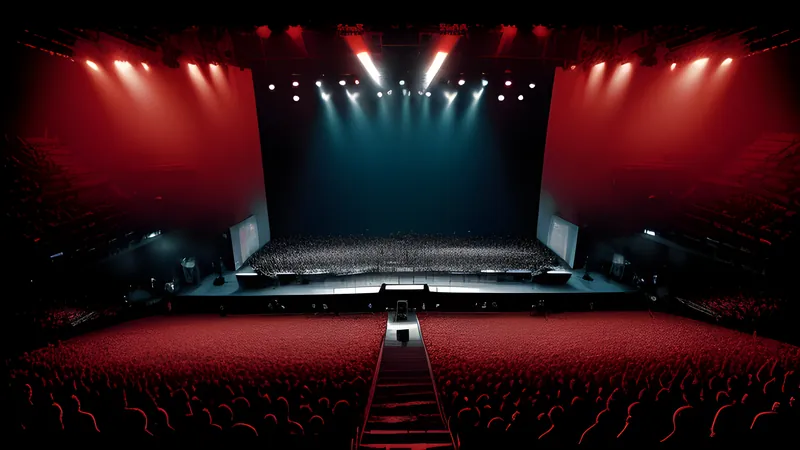
The Rockefeller operation is really a small venue empire packed into and around one address. The anchor is Torggata Bad, the interwar public baths in central Oslo that closed in 1980 and was converted into a concert venue in 1986. Upstairs is Rockefeller itself, the roughly 1,300-capacity main hall built in the old pool room. Down in the basement, opened in 1997, is John Dee, holding around 500. Across the street the same company runs Sentrum Scene, a larger room again. Three stages under one management, covering the full range of crowd sizes from club to hall.
The tiering is the point. A band can start its Oslo life at John Dee playing to a few hundred, graduate to Rockefeller when it can pull a thousand-plus, and move to Sentrum Scene or beyond when it outgrows even that — all inside the same organisation, often on the same street. For the Oslo scene that is a genuinely useful ladder, and John Dee is the bottom rung where a lot of the interesting work happens. The entrance is round on Mariboes gate, a slightly hidden basement door that suits the room’s character: you go down into it.
What the basement gives you
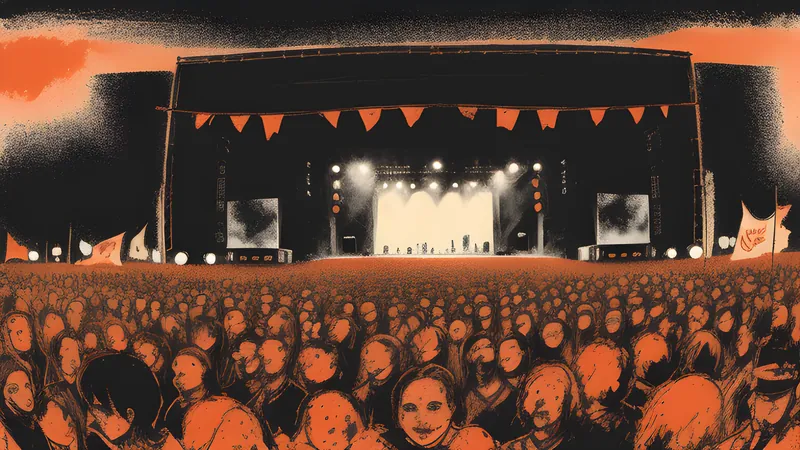
John Dee is a basement club, and it behaves like one in the best way. It is low, dark, tight and hot, a proper sweatbox where 500 people feel like considerably more and the band is right there on top of you. Where Rockefeller upstairs has the airy volume of an old pool hall, John Dee has the opposite virtue: compression. The ceiling is close, the walls are near, and the crowd and the stage share the same cramped, charged air. For heavy music that intimacy is a feature. There is no distance to hide in, no vast room swallowing the energy — everything the band throws out comes straight back off the walls and the bodies.
That density has made it one of Oslo’s most-used rooms for metal gigs, and you can hear why. Extreme metal, hardcore and the darker Norwegian strains want exactly this environment: close, dark, loud, uncomfortable in the way the music is uncomfortable. A black metal band in a low basement to 400 sweating people is closer to the music’s natural habitat than the same band on a big clean stage. John Dee gives the genre its correct setting, and Oslo — a city with a heavy claim on that genre’s history — has leaned on the room accordingly.
The sound in a space this small is a straightforward proposition. There is no acoustic subtlety to a low basement box; the PA fills the room and the room hits you, and at 500 capacity the mix reaches everyone because there is nowhere far enough away to lose it. What you sacrifice in the refined low-end articulation of a bigger tuned hall you gain in sheer immediacy. You are never more than a few metres from a stack. Bring earplugs and mean it.
There is a practical genius to the arrangement that is easy to overlook. A promoter with a band playing Oslo does not have to guess at the draw and gamble on room size, because the Rockefeller operation gives them options under one roof. A rising act goes into John Dee; if the demand is there, next tour it moves up to Rockefeller; if it keeps climbing, Sentrum Scene across the road. The same crew, the same sound engineers, the same box office handle all three, so a band can grow through the whole Oslo market without ever leaving the organisation’s care. That continuity is worth a lot to touring acts, and it means John Dee is rarely booked with filler — the room is the deliberate first step of a ladder, so what plays there tends to be either genuinely up-and-coming or the kind of cult act that belongs in a basement by choice.
The room in the Oslo scene
Oslo’s importance to heavy music is out of all proportion to the city’s size, and the venue infrastructure is a big part of how that happened. The Rockefeller complex, John Dee included, has been central to it for decades — the ladder of rooms giving bands somewhere to grow through every stage of a career. When Norway’s flagship extreme-metal weekend Inferno takes over the city each Easter, it uses the Rockefeller family of stages as part of its spine, John Dee among them, precisely because the rooms are already the scene’s home turf.
There is a lineage to think about here. The Norwegian black metal scene that made Oslo internationally notorious in the early 1990s grew up in small, dark, cramped rooms exactly like this one — the aesthetic and the environment feeding each other. That history is real and it is grim; the church-burnings and the killing at the centre of the scene are documented crimes, and I have no interest in romanticising any of it. But the music that came out the other side is a genuine Norwegian export, and rooms like John Dee are where its living, present-day version still plays to real crowds. The basement is where the scene renews itself, one 500-cap gig at a time.
Oslo is a good city for this kind of tiered circuit generally. The same instinct that built the Rockefeller ladder runs through the Nordic capitals — Stockholm reworking old industrial buildings into rooms like Slaktkyrkan, the whole region keeping its heavy scene housed in a mix of grand halls and cramped clubs. John Dee is Oslo’s cramped-club end of that spread, and one of the best examples of the type anywhere in Scandinavia.
The room’s usefulness to Inferno is worth dwelling on, because it shows what a good basement club is for. An extreme-metal festival wants a spread of room sizes: the big names go in the largest hall, the mid-tier acts fill something like Rockefeller, and the up-and-coming and the deliberately obscure play the small dark rooms where the atmosphere is thickest. John Dee is the festival’s answer to that last need, and every Easter it does the job it does the rest of the year — putting a band and a few hundred obsessives in the same low, hot, close space and letting the music do the rest. For a genre whose whole aesthetic runs on darkness and intensity, a basement that delivers both without any effort is close to the ideal home.
Going
Practical notes. John Dee sits in central Oslo with its entrance on Mariboes gate, a short walk from the main streets and easy to reach on foot or public transport once you are in the centre. It shares the Torggata Bad building with Rockefeller, so if you are checking listings, make sure you know which of the two rooms your band is actually in — the tickets and the doors are different even though the address is effectively the same.
Inside, there is not much strategy to a room this small. It is a basement box; find a spot, brace for the heat, and accept that you will be close to the stage whether you planned to be or not. The crowd compresses fast when it fills, so if you want any breathing room, arrive early and hold a position near the edges. If you want the full sweatbox experience — and for the right band in this room, you do — get in the middle and let it close around you.
A word on the Oslo trip more broadly. If you are coming from Copenhagen, as I usually am, the city is a short flight or a longer scenic haul away, and it rewards a couple of nights rather than a single gig. The Rockefeller complex alone can keep you busy — check what is on across all three rooms and you may well find two things worth seeing on the same visit. The central location means you can walk between the venues, the bars and your bed without much trouble, and Oslo’s compact centre makes the whole thing easy to work on foot. For a loud-music weekend, few Nordic cities are as concentrated or as reliably stocked with the heavy end of the bill.
That is the whole appeal. John Dee is the little sister you go to precisely because it is small: the room where you catch a band before the world does, in a dark Oslo basement that has been doing this exact job since 1997. When they move upstairs to Rockefeller, you get to say you saw them down in the cellar first.
Related Content