Iron Maiden at Royal Arena: The Circus Comes to Copenhagen
Spitfires, flamethrowers and a fighter-pilot frontman — how the Legacy of the Beast tour turned Amager into a war theatre
Contents
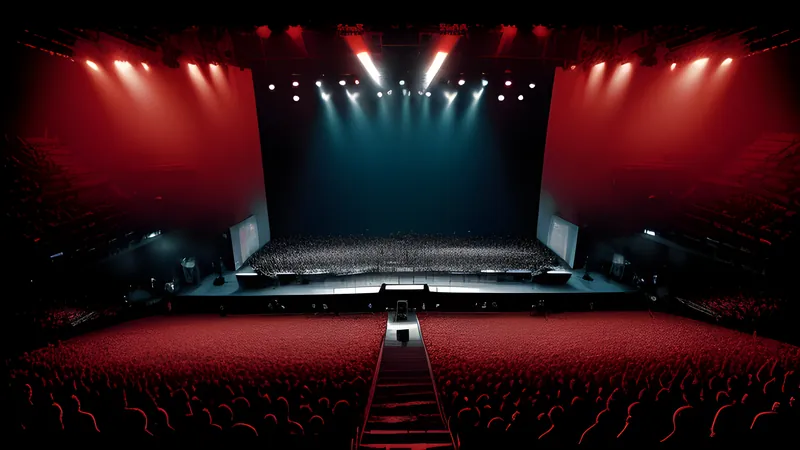
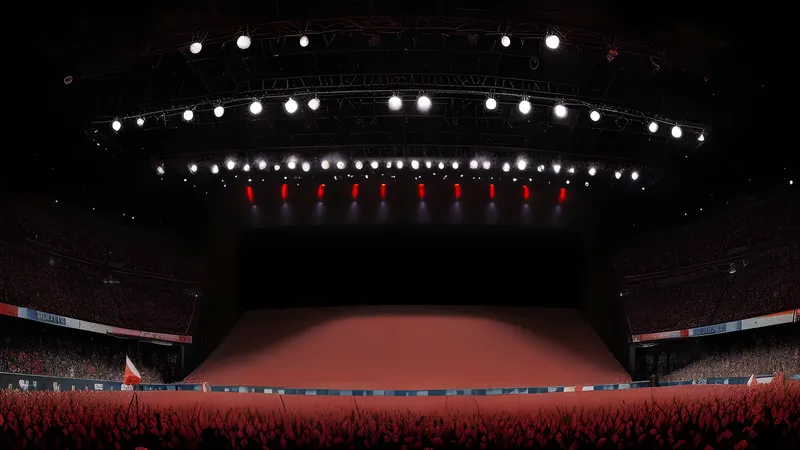
There is a moment, early in an Iron Maiden show, when a life-sized Spitfire drops out of the rigging and swings over the front rows while Bruce Dickinson bawls “Aces High”, and you understand something about this band that no amount of listening at home prepares you for: they are running a travelling theatre that happens to play heavy metal. On 5 June 2018 that theatre docked at Copenhagen’s Royal Arena, on the flat reclaimed land out at Ørestad, and for two hours the newest big room in Denmark was dressed as a hangar, a cathedral, a battlefield and hell, sometimes within the same song. This is a piece about why the most elaborate production in the genre still lands, and why Maiden, of all the veterans, earned the right to build it.
The band that refused to shrink
Start with the improbability. Iron Maiden formed in Leyton, East London, on Christmas Day 1975 — that is Steve Harris’s own dating of it, the West Ham-supporting bassist who has run the band with a benign dictator’s grip ever since. They came up through the New Wave of British Heavy Metal, the scruffy late-1970s eruption of young English bands playing fast and cheap, and by the early eighties they were its undisputed giant. Most of their NWOBHM peers folded, went pop, or dwindled to the pub circuit. Maiden did the opposite. They got bigger, and stranger, and more committed to spectacle, decade after decade, until they arrived at a point most bands their age never reach: a production so ambitious it needs a fleet of trucks and a stage crew the size of a small company.
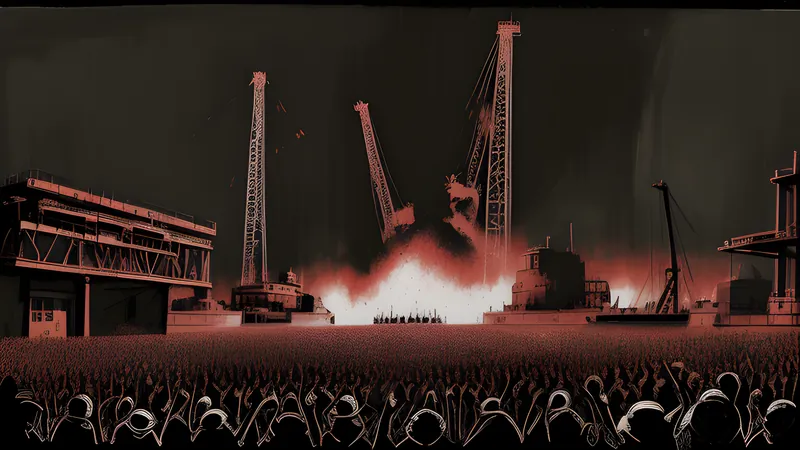
The staging exists because the songs demanded it. Maiden write long, and they write pictorial — sea battles, doomed soldiers, ancient Egypt, the trenches of the Somme, Coleridge’s albatross. Harris and the band always wrote as if they were scoring films that didn’t exist, and the Legacy of the Beast tour, which reached Copenhagen that June, finally built the films around them. It took its name and its logic from the band’s mobile game, of all things, which let the set designers cycle the stage through distinct “worlds” — a wartime bunker, a Mayan temple, an ecclesiastical nightmare — each with its own backdrop, its own props, its own resident version of Eddie, the band’s undead mascot.
The mechanics of a Maiden show
What you notice, standing on the Royal Arena floor, is how much of the show is theatre craft rather than rock convention. The Spitfire for “Aces High” is the opening gambit, and it sets the terms: this will be a production with cues and set changes and costumes, and the six musicians will move through it like actors hitting marks. Bruce Dickinson is central to all of it, and Dickinson is a genuinely singular figure — a qualified airline pilot who has flown the band’s own chartered 747, a competitive-level fencer, an author, a broadcaster, a man who beat tongue-and-throat cancer only a couple of years before this tour and came back with the same absurd operatic range intact. On the Legacy stage he is a fighter pilot, then a flamethrower-wielding demon, then a robed figure in a hooded procession, changing character as the backdrops change.
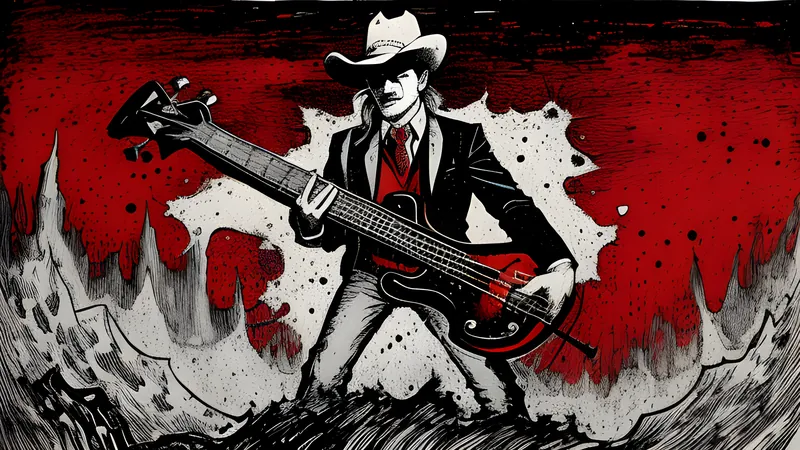
The temptation with a production this large is to assume the music becomes secondary, a soundtrack to the set-dressing. It doesn’t, and that is the whole trick. Harris’s bass still gallops with the same relentless, treble-heavy attack that has defined the band’s low end for forty years; the three-guitar front line of Dave Murray, Adrian Smith and Janick Gers still trades harmonised leads that are the actual template most melodic metal has copied ever since; Nicko McBrain, behind an enormous kit, still swings in a way heavy drummers usually don’t. The spectacle is built on top of a band that can genuinely play, and the moment the pyro and the props threaten to take over, a song like “The Trooper” or “The Number of the Beast” reasserts that these are, first, tunes people have loved for the better part of half a century.
The Copenhagen crowd knew every one of them. Maiden audiences are a particular tribe — multigenerational, patched to the elbows, loud in a communal way that has more in common with a football terrace than a rock gig, which makes sense given the band’s own East London roots. The famous “woah-oh” refrain from “Fear of the Dark” turned the Royal Arena into a single vibrating instrument, ten thousand people singing a wordless melody back at a band who stood and let it happen. That is a thing Maiden have cultivated deliberately over decades: the audience as choir, the show as participatory ritual. It is, when it lands, one of the great sensations in live music.
Why the theatre earns its keep
I have a low tolerance for spectacle used as a substitute for substance. A great deal of arena rock hides thin material behind lasers and video walls, and the honest critic’s job is to notice when the budget is doing the emotional work the songs can’t. Maiden survive that scrutiny because the theatre is an expression of the material rather than a distraction from it. The band spent decades writing vivid, narrative, deliberately over-the-top songs; the production simply makes literal what the records always implied. When Eddie lurches across the stage during “Iron Maiden” — a towering, articulated version of the character who has fronted every album sleeve since 1980 — it reads as the logical endpoint of an idea the band committed to at the very start, not a gimmick bolted on late.
There is also a generosity to it that I find genuinely moving. Maiden could tour cheaply. They are big enough to fill the Royal Arena with a backdrop and some lights and go home richer. Instead they haul a war’s worth of staging across Europe because they have decided the audience deserves the full show, and because — you sense this watching them — they still enjoy it. Dickinson between songs is a ringmaster having the time of his life, hectoring and joking and demanding more, and there is no cynicism in it. A band that could coast has instead doubled down on effort, and effort, on a stage, is never wasted. The audience can always feel it.
Maiden and the Danish appetite for loud
It is no accident that Copenhagen gets a show like this. Denmark is a serious heavy-music country for its size, a place that has exported an improbable amount of metal and imported even more with real appetite — a pattern I have traced at length in Little Country, Loud Export. Maiden have been coming here for decades, through the older venues and the festival fields, and the opening of the Royal Arena in early 2017 finally gave the city a modern indoor room big enough to host the full-scale version of a tour like this without compromise. Before that, a production of Legacy’s ambition would have struggled to find a stage in central Copenhagen at all.
The NWOBHM lineage matters here too, because that scruffy English movement is the taproot of an astonishing amount of what followed. It was Iron Maiden and their peers who lit up a Danish teenager’s record collection and, on the other side of the Atlantic, a young Lars Ulrich’s — the thread I followed in Metallica’s Danish Accent. Watching Maiden in Copenhagen, you are watching a founding document of modern metal being performed in the city that arguably took its lessons most to heart. The harmonised twin leads, the galloping bass, the literate ambition, the refusal to be embarrassed by scale — all of it started in rooms like the ones Maiden played on the way up, and all of it was in the Royal Arena that night, forty-odd years later, bigger than ever.
The verdict from the floor
You leave a Maiden show slightly hoarse and faintly ridiculous, having spent two hours cheering a Spitfire and an undead mascot and a sixty-year-old man in a leather flying jacket screaming about aerial combat, and the ridiculousness is the point. Metal at this scale is a knowingly theatrical art form, and Maiden are its most complete practitioners — the band that understood earliest that a heavy song and a piece of stagecraft could be the same gesture. The Legacy of the Beast production that came to the Royal Arena in June 2018 was the fullest statement yet of an idea they have been building since 1975, and it worked because underneath the pyrotechnics sat forty years of songs the whole room could sing without prompting.
If you want to understand why a purpose-built modern arena mattered so much to Copenhagen’s live scene, the Royal Arena guide walks through the room itself — the sightlines, the sound, the strange charm of a stadium marooned on reclaimed farmland. And if you want the deeper story of why this particular city receives the world’s loud bands with such open arms, Little Country, Loud Export is where I tried to explain it. Maiden, on that June night, gave the answer in the simplest possible form: build the biggest, most heartfelt spectacle in metal, and Copenhagen will sing every word back to you.
Related Content