Inferno: Oslo's Easter Weekend in the Dark
How a black-metal festival colonised the Easter holiday in the city that birthed the genre
Contents
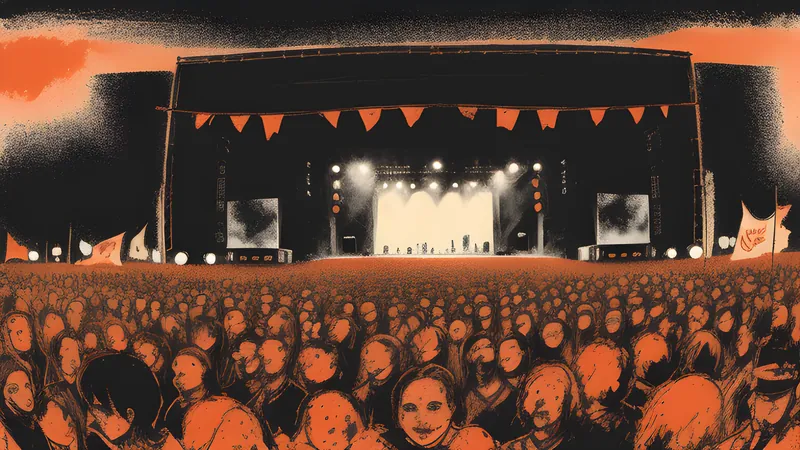
There is a specific joke in a black-metal festival landing on Easter, and everyone involved is entirely in on it. Easter is the Christian calendar’s most important weekend, the resurrection, the whole point of the thing. Inferno takes that holiday, in the country that produced the most church-hostile music scene in history, and fills Oslo’s biggest concert hall with several days of the darkest metal on earth. They call it Black Easter, and the timing is the joke and the statement at once.
I want to be straight up front, the way this desk always is: I have not been to Inferno. Easter in a Danish family is a fixed appointment, and Oslo in early April is a trip I have somehow never quite made. So this is a correspondent’s read from the record and from friends who go most years, rather than a diary of a weekend I stood through. But Inferno is one of the most durable and well-documented festivals in European metal, and its story tells you a great deal about how Oslo turned a moment of genuine notoriety into a permanent, functioning institution.
The festival that never stopped
Inferno was founded in 2001 by Jens F. Ryland, the guitarist of the progressive black-metal band Borknagar, working with Jan-Martin Jensen of Radar Booking. Borknagar themselves played that first edition. What began as a specialist gathering has now run every single Easter for over two decades, which in festival terms is close to geological permanence — the vast majority of festivals launched in 2001 are long dead, and Inferno just kept going.
It is built around Rockefeller Music Hall, the Oslo venue that opened in 1986 and became one of the busiest concert halls in Norway, together with its basement room John Dee. Two stages, one above the other, so that the moment a band finishes upstairs you can go down a flight of stairs and catch the next one starting, and the festival runs like a well-oiled machine of roughly sixty to seventy concerts across the long weekend. It is an indoor festival by design, which in Oslo in early April is simple good sense — the weather is nobody’s friend that time of year, and the point was always the music and the atmosphere rather than a field and a sunburn.
The genre remit is extreme metal in the full sense: black metal at the core, but death metal, thrash, doom and everything punishing along the edges. And the reach is remarkable for a festival of its size. Something like sixty per cent of Inferno’s tickets sell abroad, drawing crowds from over fifty countries. People fly into Oslo from all over the world specifically to spend Easter in the dark, which tells you the festival long ago stopped being a local event and became a pilgrimage.
The city that had to reckon with something
You cannot write honestly about a black-metal festival in Oslo without dealing with what happened here in the early 1990s, and I am going to deal with it plainly, because the alternative is either coyness or glorification, and both are worse. The early Norwegian black-metal scene, centred on Oslo and Bergen, produced a small number of genuinely terrible crimes. A string of historic churches were burned down, including the twelfth-century Fantoft stave church. There were killings — most notoriously the 1993 murder of Øystein “Euronymous” Aarseth of Mayhem by Varg Vikernes of Burzum. These are documented facts, they went through Norwegian courts, and they are not a marketing aesthetic. People died and irreplaceable medieval buildings were destroyed. Any writing on this scene that treats those events as edgy folklore is failing at the basic job.
What is genuinely interesting — and what Inferno embodies — is what the scene became afterwards. The music that emerged from that period, records like Mayhem’s De Mysteriis Dom Sathanas and Emperor’s In the Nightside Eclipse, turned out to be enormously influential globally, entirely separate from the crimes of a handful of people around them. Norwegian black metal grew up. Its founders got older, some went to prison and came out, most of them just made more records, and the country slowly worked out that it had produced one of its most successful cultural exports out of a very dark and violent little moment. Inferno is what that reckoning looks like once it has fully matured: the extreme scene run as a professional, ticketed, internationally attended festival, in a licensed concert hall, with panels and industry events by day. The notoriety became history, and the history became an institution.
What a weekend there actually looks like
From everyone I trust who goes, the shape of an Inferno weekend is consistent. It is an indoor festival, so it has a nocturnal, hothouse quality — you are inside Rockefeller and John Dee for hours, the crowd is dense and knowledgeable and international, and there is none of the between-stage hiking that a big outdoor festival imposes. The two-stage stacked layout means the programming is tight and you can genuinely see most of what you came for.
The booking policy is the festival’s real craft. Inferno mixes the genre’s established names — the bands people flew in from Chile or Japan to see — with a deep bench of newer and more obscure acts, so the weekend rewards the obsessive as much as the tourist. Because it is Easter and because it is Oslo, there is also a strong showing of Norwegian and Nordic bands playing close to home, which is a large part of the appeal for the foreign contingent: you are seeing this music in the city and the country that generated it, in a room down the road from where a lot of it was recorded.
By day the festival runs an industry and conference programme — panels, talks, the business of extreme metal conducted in daylight before the doors open on the loud part. That daytime layer is part of why Inferno has lasted. It made itself useful to the industry as well as the fans, a fixed annual meeting point for a global genre that otherwise has few places to gather.
Rockefeller, and why the room matters
It is worth saying more about the venue, because Inferno’s whole character flows from it. Rockefeller Music Hall occupies a former public bath-house building in central Oslo and opened as a concert venue in 1986, going on to become one of the most-used stages in the country, with hundreds of gigs a year passing through it. It is a proper mid-sized hall — big enough to hold a serious crowd, small enough to keep the sound and the sightlines tight — and the addition of the basement room John Dee gives the festival its two-tier structure. A band finishes on the main stage, you walk downstairs, and the next act is already tuning up in the smaller room below.
That stacked geometry is quietly the secret of the festival’s efficiency. There is no trudging between distant stages across a muddy site, no agonising over which of two headliners on opposite ends of a field to sacrifice. The whole festival happens inside one building, vertically, which means you can see an enormous amount of music in a weekend and spend the gaps at the bar rather than on a route march. For a genre whose fans are famously completist about seeing everything, that layout is close to perfect, and it is a big part of why the festival keeps its reputation for letting you actually catch the bands you came for.
Being indoors and in the city centre also means the festival integrates with Oslo rather than sealing itself off. You are staying in hotels, eating in the city, walking to the venue — the festival is woven into a functioning capital rather than marooned in a field, which suits its international, fly-in audience and makes the daytime conference programme practical to run.
Why it endures, and whether to go
Inferno’s longevity comes down to a few unglamorous things done well. It picked a fixed, memorable date and never moved off it. It built around a proper permanent venue with good sound and a stacked-stage layout that keeps the whole thing efficient. It kept its curation serious enough that the hardcore trusts it. And it sits in a city with an unmatched claim on the genre, which gives every foreign visitor a reason to come that no festival in a neutral location can offer.
For anyone who takes extreme metal seriously, it belongs on the list. It pairs naturally with the country’s other heavy institutions — the summer mainstream anchor at Tons of Rock on the Ekeberg plateau, and the Viking and atmospheric side of the scene done among the burial mounds at Midgardsblot in Vestfold. Over on the west coast, Beyond the Gates covers much the same extreme ground in Bergen, the scene’s other founding city, so a properly committed traveller could stitch together a whole Norwegian black-metal itinerary across the year.
My honest position is that Inferno is the one I most regret not having reached yet, precisely because of the setting. Seeing this music indoors, at Easter, in Oslo, in a hall a short walk from where the genre detonated — that is a context no other festival can fake. The scheduling has beaten me every year so far. One of these Easters the family will have to manage without me, and I will finally spend the resurrection weekend in the dark where it clearly belongs.
Related Content