Ideal Bar: The Venue Inside the Venue
VEGA's smallest room and the first rung of the Copenhagen ladder
Contents
Everyone in Copenhagen knows VEGA. Fewer people can tell you about the room on its ground floor, and that is a shame, because Ideal Bar is one of the most useful spaces in the city and one of the easiest to overlook. It is the smallest of VEGA’s three rooms — around 250 capacity, tucked into the ground floor of the great old Folkets Hus in Vesterbro — and it does a job the two famous halls upstairs cannot. It is the venue inside the venue, and learning to use it is a small mark of a serious Copenhagen gig-goer.
The context is the building. VEGA occupies the former People’s House, built in 1956 to a functionalist design by Vilhelm Lauritzen, a listed landmark of Danish modernism full of original teak and brass. Most people who go there are heading for Store Vega or Lille Vega, the mid and large halls that handle the touring acts. Ideal Bar sits underneath all that, a low-key ground-floor room that operates partly as a bar, partly as a club, and partly as the smallest concert stage in the complex. It is where the building starts, in every sense.
The room the workers built
To understand why Ideal Bar feels the way it does, it helps to know what the ground floor of a People’s House was for. When the Folkets Hus opened in 1956 it was the social heart of the Copenhagen labour movement, and a building like that was never only a grand hall for big occasions. It had the everyday spaces too — the bars, the meeting rooms, the sociable ground-floor corners where ordinary working people gathered on ordinary evenings. Ideal Bar carries a trace of that older, more intimate function. It is the human-scale room in a building designed to make working Copenhageners feel they had somewhere dignified to be, and that lineage gives it a warmth that a purpose-built support room could never manufacture.
When VEGA reopened the building as a music venue in 1996, keeping a proper small room on the ground floor was a clever piece of respect for what the building had always been. The big halls upstairs honour the People’s House as a place of grand public gathering; Ideal Bar honours it as a place of everyday sociability. That the same restored modernist detailing — the teak, the terrazzo, the period fittings — runs all the way down into the smallest room means even a tiny gig here happens inside a piece of design history, and you feel it the moment you walk in.
The first rung
Every venue ladder needs a bottom rung, and inside VEGA that rung is Ideal Bar. This is where the smallest gigs happen — new local bands, tiny touring acts, the sort of show that would be swallowed whole by the big rooms upstairs. Two hundred and fifty people is an intimate number, close and warm, and it lets VEGA book a level of act that a venue defined only by its 1,550-capacity main hall would never bother with. The result is that a band can, in principle, begin its VEGA life in Ideal Bar and climb floor by floor to the main stage, all within the same historic building.
I love this about the place. There is something quietly romantic about a room whose whole job is to catch a band at the very beginning, in the same building where, if things go right, they will one day headline the big hall three floors up. The distance from Ideal Bar to Store Vega is a few metres of staircase and, for the lucky bands, several years of hard graft. Standing in the small room watching an act nobody has heard of yet, you are watching a career at the moment before it either takes off or doesn’t, and that uncertainty is a large part of the thrill of following a scene closely.
A bar, a club, a stage
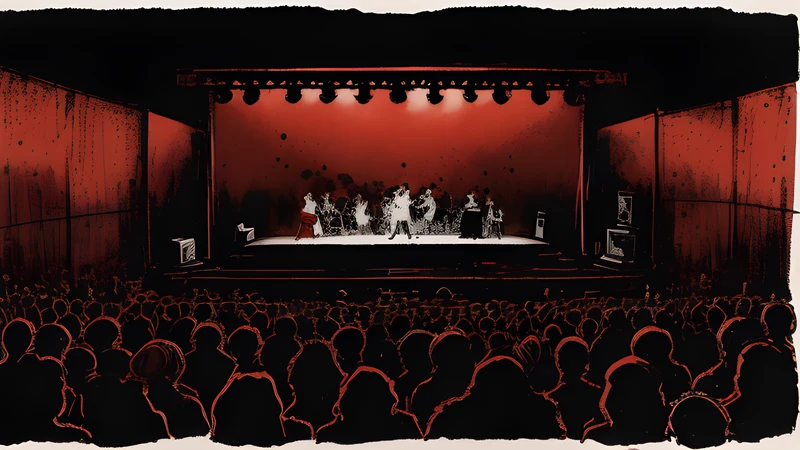
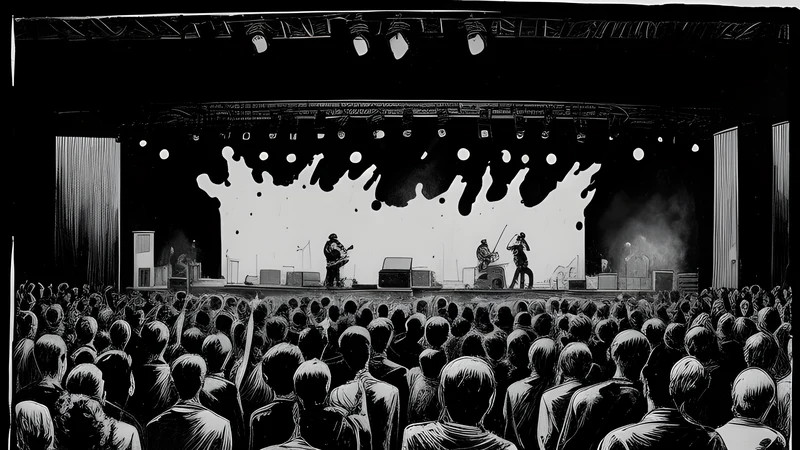
Ideal Bar’s triple identity is what gives it character. It functions as a bar in its own right, a place you can go for a drink independent of whatever is happening in the big rooms, which means it has a life beyond the concert schedule that most support-room spaces lack. It runs club nights, DJ sets and late programming that turn it into a dance floor after the gigs upstairs finish. And it hosts those small concerts, the intimate shows that need a proper little room rather than a cavernous hall.
That flexibility makes it feel less like an add-on and more like a genuine venue that happens to share an address with two bigger ones. The room has its own atmosphere, warmer and more relaxed than the halls upstairs, the kind of place where you can actually have a conversation before the band starts and then be right on top of them when they do. On a busy night at VEGA, with a big show in Store Vega and something smaller in Lille Vega, Ideal Bar hums along underneath with its own crowd and its own agenda, and the whole building feels like a self-contained music world running on three levels at once.
The name itself is a small piece of charm. “Ideal Bar” has the ring of an old Danish establishment, and it suits the ground-floor, sociable, unpretentious feel of the room. It does not try to be the main event, and that ease is exactly why regulars are so fond of it. The big halls are for the big nights. Ideal Bar is for the discovery, the low-key evening, the band you are seeing on a whim because you were in the building anyway.
Where it sits among the city’s small rooms
Copenhagen has a good spread of small venues, and each has its own texture. Loppen is the anarchic stone room in Christiania; Beta is Amager’s honest little sister to Amager Bio; Ideal Bar is the intimate ground-floor room folded inside a modernist landmark in Vesterbro. What sets Ideal Bar apart is precisely that it lives inside a bigger operation, which gives it advantages the standalone small rooms lack — professional sound, a well-run building, and the institutional backing of one of the best venues in Europe — while keeping the intimacy that makes small rooms worth attending in the first place.
That combination is genuinely rare. Most tiny rooms are tiny because they are scrappy and underfunded, and part of their charm is the roughness. Ideal Bar offers the intimacy of a 250-cap room with the professionalism of a major venue, because it borrows both from the building around it. For a young band, playing a properly run small room with a good PA and an audience that wandered down from a sold-out show upstairs is a real opportunity, a step up from the back-bar circuit without the terror of a big empty hall.
The club-night life
The concerts are only half of what Ideal Bar does, and the other half is worth understanding, because it shapes the room’s whole personality. The late programming — the DJ sets, the club nights, the after-hours dancing when the gigs upstairs have finished — gives the room a second gear that pure concert spaces lack. On the right night the small room downstairs becomes the place the crowd migrates to when Store Vega empties out, the party that continues after the main event, and that flow of people gives Ideal Bar an energy borrowed from the whole building.
This is the great advantage of the venue-inside-a-venue arrangement. A standalone 250-cap room lives or dies on its own single booking each night; Ideal Bar feeds on everything happening above it. A big sold-out show upstairs sends a wave of people down into the little room afterwards, so even a modest Ideal Bar booking can find itself hosting a buzzing late crowd it did nothing to earn. That symbiosis makes the room feel alive on nights when a comparable independent venue would be quiet, and it is a large part of why the space has stayed vital rather than becoming a neglected afterthought. The building works as a single organism, and Ideal Bar is the part of it that keeps beating latest into the night.
Practical business
Everything I would say about getting to VEGA applies here, because it is the same building: Ideal Bar is in Vesterbro on Enghavevej, an easy walk from the central stations and the Meatpacking District, surrounded by food and drink. The ground-floor location makes it the most accessible of the three rooms, and you can slip in for a drink or a small gig without committing to a big night out.
Inside, the room is small enough that there is no bad spot, but the intimacy cuts both ways: when it is full, it is properly full, and getting to the bar becomes a project. Arrive early for the small gigs, because 250 capacity disappears fast when word gets round about a hyped new act. Take a moment, too, to appreciate that you are standing on the ground floor of a genuine piece of Danish modernist architecture — the same teak-and-brass world that makes the whole VEGA complex special runs right down through Ideal Bar.
The best way to use the room is to treat it as a discovery engine. Check the VEGA listings for the Ideal Bar shows specifically, the small print below the big headliners, and gamble on the names you do not recognise. That is where the room earns its keep, catching bands before anyone else does, in the intimate ground-floor space of a building most people only ever visit for the big shows. There is a broader point here about how a city keeps its scene healthy. The expensive, glossy end of nightlife takes care of itself; what needs protecting is the cheap, intimate, low-stakes room where a new band can play its fourth-ever show to a curious crowd and a good sound engineer. VEGA could have run purely as a prestige operation of two big halls. Keeping Ideal Bar means keeping a door open at the bottom of the ladder, and that decision quietly benefits the whole ecosystem, feeding bands up into the rooms above. The famous halls upstairs get the glory. The room that finds the future is the little one by the door, and the punters who know to look for it are the ones who get to say they were there first.
Related Content