Iceland Airwaves: Reykjavík's Winter Sprawl
A whole capital turned into a venue map, in the darkest week of the Icelandic year
Contents
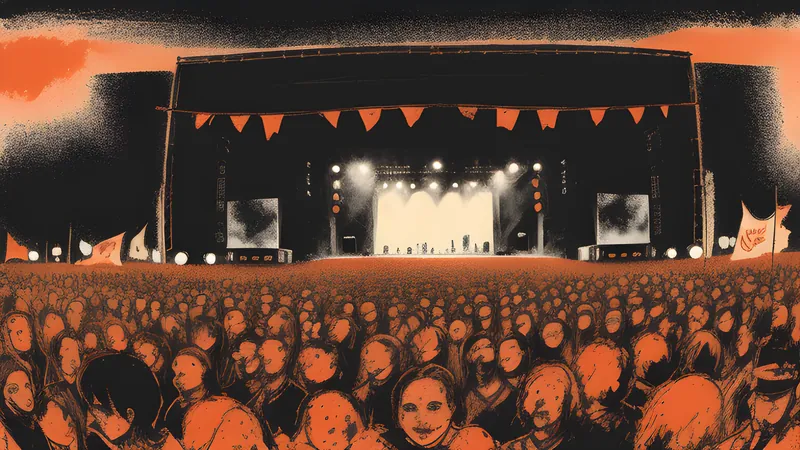
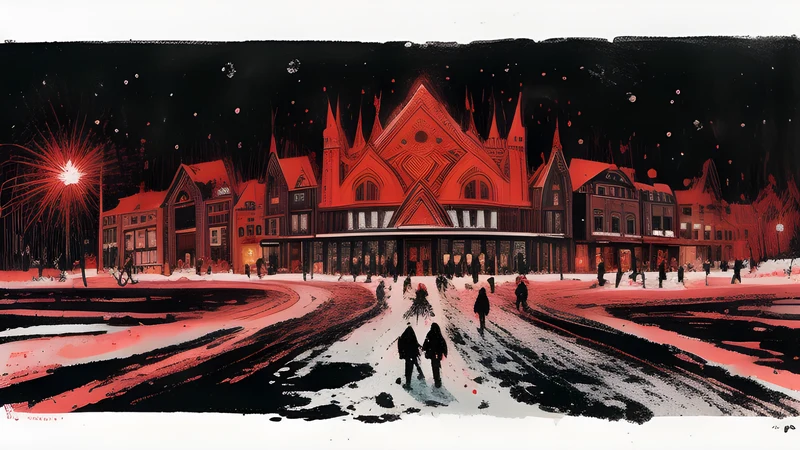
Most festivals answer the question “where do we put the crowd” by building a field. Iceland Airwaves answers it by handing you the whole of downtown Reykjavík and a wristband and telling you to walk. There is no main gate, no arena, no wall of Portaloos on a hill. There is a postcode — 101 Reykjavík, the compact old centre — and inside it a couple of dozen rooms lit up against the November dark, and a few thousand people threading between them on foot with cold hands and a running total of the sets they still want to catch. It is the least loud thing I write about, and one of the smartest festivals in Europe, and those two facts are related.
This is a cultural read from the record rather than a dispatch from the floor — Airwaves falls in early November, and my one foreign festival trip a year lands squarely in the metal calendar of spring and summer. But you cannot understand how a scene of a few hundred thousand people became a permanent fixture on the international discovery circuit without understanding this festival, so it earns its place here.
An aircraft hangar and a clever name
Airwaves started in 1999, and the origin is baked into the name. The first edition was staged in an aircraft hangar at Reykjavík’s domestic airport, bankrolled early on by the national carrier as a way of selling autumn flights to a country most people only pictured in summer. “Airwaves” is the pun doing double duty — radio and aviation — and the strategy worked. Fill a hangar with buzz, get the international music press on a plane, let them file breathless copy about the strange bright talent coming off a volcanic rock in the North Atlantic, and watch the tourism follow.
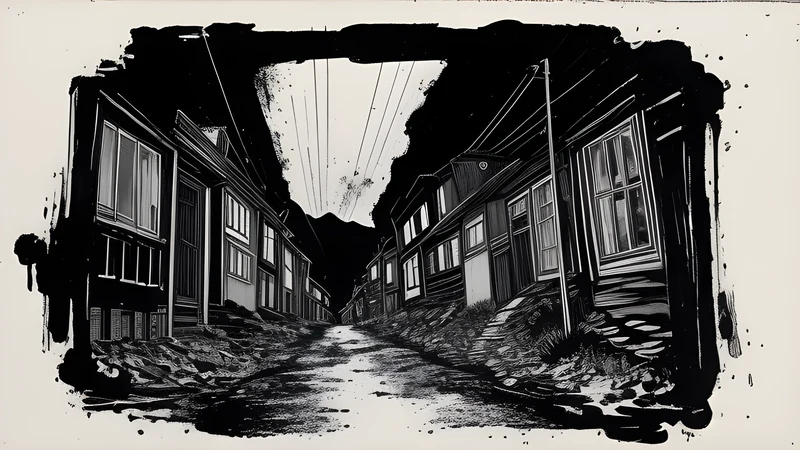
By the early 2000s it had moved into the city proper, and that was the making of it. The hangar was a gimmick; downtown Reykjavík is the actual product. The 101 district is walkable end to end in twenty minutes, which means a festival can use the existing furniture of a city — cinemas, theatres, churches, bars, a concert hall — as its stages, and the audience becomes the thing that moves rather than the acts. You are not queuing at a barrier. You are pub-crawling with a schedule.
The venue map is the festival
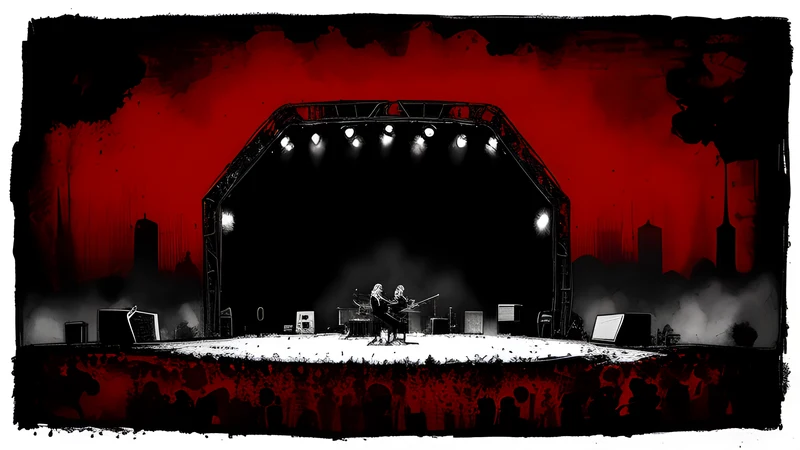
The room list is half the pleasure. Gamla Bíó is a beautiful old cinema turned live room. Iðnó is a wooden theatre sitting right on the edge of the Tjörnin, the city-centre pond, so you file out of an intense set into the freezing dark with ducks somewhere in the black water beside you. Fríkirkjan is a working church that hosts the quiet, devastating sets — a hushed room with a congregation’s acoustics, exactly wrong for a metal band and exactly right for a single voice and a piano. Then Harpa, the glass-fronted concert hall on the harbour that opened in 2011, gives the festival a genuine big room without abandoning the small ones.
The masterstroke is the split between “on-venue” and “off-venue”. Your wristband gets you into the official programme, but running alongside it is a sprawling free schedule in record shops, cafés, bars and hotel lobbies — sets you can wander into without paying a krona. The legendary record shop 12 Tónar packing bodies in among the vinyl racks; a band playing to thirty people at a hostel bar; a solo act in a bookshop window. It means a broke local or a curious tourist can experience most of the festival’s texture for the price of a coffee, and it means the whole city feels switched on rather than a ticketed enclosure walled off from everyone who did not buy in. Compare that ethos to the way Roskilde folds its non-profit values into a giant field, and you see two very different Nordic answers to the same instinct — a festival as civic good rather than pure extraction.
Five hours of daylight and a lot of coats
The scheduling is deliberately masochistic and it is the point. Early November in Reykjavík gives you around five hours of proper daylight, temperatures hovering near freezing, and weather that can turn from still to horizontal in the length of a support set. You spend the festival moving between warm bright rooms through cold dark streets, and the contrast does something to the experience — every venue you step into feels like sanctuary, every set a little more precious for the walk it cost you.
It also filters the crowd. Nobody comes to Airwaves for the tan or the field-party hedonism. The people who fly in are there for the music and the discovery, industry scouts and committed fans and a lot of curious travellers using the festival as an excuse to finally see the island. That makes for an attentive room. Reykjavík audiences listen, and a listening crowd changes what a band can attempt on stage — the quiet acts thrive here in a way they never could between two beer tents at a summer mega-festival.
The export machine
Airwaves matters because it turned a tiny domestic scene into a global talent pipeline. Iceland has always produced far more music per head than the numbers have any right to allow — Björk and Sigur Rós taught the wider world that “Icelandic” could be its own mood, and the festival became the shop window for whoever came next. Acts broke internationally off the back of Airwaves sets: the folk-pop that filled arenas a few years later, the bluesy rock that crossed over to American radio, the experimental and electronic artists who found European labels in the crowd. A good twenty-minute set in a packed Reykjavík cinema, watched by the right forty people, has launched more than one career.
It is worth being honest that Airwaves is a mostly-not-loud festival, and my beat lives at the heavier end. But the heavier end of Iceland is real and it shows up here — the country that produced Sólstafír and a genuinely respected black metal underground does not leave that talent off the bill. Airwaves has always had room for the darker, weightier Icelandic acts among the pop and the electronica, and the fjord-bound metal festival Eistnaflug out east is the loud cousin to Airwaves’ downtown sprawl. Between the two, the island covers most of the spectrum.
How it has changed
No festival survives a quarter-century unaltered, and Airwaves has been through the full cycle of growth, wobble and reinvention. Through the 2000s it rode the wave of the wider Icelandic music boom, and the arrival of Harpa in 2011 gave it a flagship room that let the bills get bigger without abandoning the small-venue crawl that made its name. The 2010s were arguably the peak of its international profile, the years when a slot could break a band across Europe and the American press treated the trip as an annual pilgrimage.
Then came the harder stretch. Iceland’s brutal post-2008 currency swings made the whole country expensive for visitors almost overnight; some editions felt thinner, some venues came and went, and the festival had to work to keep its discovery reputation from calcifying into nostalgia. The pandemic knocked a hole in it as it did every gathering on earth — the 2020 and 2021 seasons were the lost years across the entire European circuit — and Airwaves came back leaner and more deliberately curated, leaning harder into the intimate, off-venue character that always distinguished it from the mega-festivals.
The tension every showcase festival eventually faces is the one Airwaves now lives with: the moment it becomes an industry conference with a soundtrack, it loses the thing that made scouts want to come in the first place. So far it has held the line by keeping the free off-venue programme central and the rooms small, refusing the obvious move of chasing a stadium headliner it could never afford anyway. The corporate creep that hollows out bigger festivals has less purchase here precisely because there is no giant field to fill with sponsor activations — the city itself sets the terms.
A festival built for walking
The physical experience of Airwaves deserves its own note, because it shapes everything else. Your evening is a route rather than a seat: you plot a path between rooms, factor in the walk and the queue, accept that catching one set means missing another a street away, and let serendipity fill the gaps. That constant motion is why the festival feels less like a ticketed event and more like a temporary state the whole city enters. You bump into people you met at a set two nights ago; you get talked into a band you had never heard of by a stranger in a bar queue; you duck into a record shop to warm up and stay for an hour because whoever is playing turns out to be extraordinary.
It also means the festival rewards curiosity over planning. The punter who rigidly schedules every slot will have a fine time; the one who leaves room to drift, following tips and hunches through the cold streets, will have the real Airwaves experience. Discovery is baked into the format, because the format makes it almost impossible to see only what you came for. That is a rare and deliberate design, and it is why people who go once tend to keep going back.
What it gets right
The genius of Airwaves is that it never tried to compete on scale, because it could not. There was never going to be an Icelandic Wacken — the population is too small and the logistics too brutal. So the festival did the opposite and made its constraints into its identity: small rooms, short sets, a walkable city, a discovery-first ethos, the darkest week of the year as a feature rather than a bug. It sells the specific strangeness of the place instead of hiding it.
For anyone who thinks a festival needs a headliner the size of a stadium and a field the size of a town, Airwaves is the standing rebuke. A few thousand people, a couple of dozen ordinary rooms, five hours of daylight, and a scene that keeps producing talent out of all proportion to its size. You do not go to be overwhelmed. You go to walk the cold streets, duck into a warm cinema, and catch the next thing before anyone else has heard of it. In a festival landscape drifting ever bigger and ever more corporate, that remains a genuinely rare offer — and worth the plane ticket for the people whose calendars are not already spoken for.
Related Content