Huset-KBH: The Building That Books Everything
Copenhagen's oldest culture house, floor by floor
Contents
Find Rådhusstræde 13 on a map and you would never guess how much building sits behind the door. Huset-KBH occupies most of a block in the medieval core of Copenhagen, a few cobbles off Strøget and a stone’s throw from the canals of Gammel Strand, and it has been the city’s stubborn all-purpose culture house since 1970. That is more than fifty years of the municipality owning a chunk of the oldest streets in town and handing them to whoever wanted to put something on. The result is a warren. You go in for a film and leave three hours later having watched a stranger lose at a board game and caught the back half of a support set you had never heard of.
The stack
The thing to understand about Huset is that it is vertical. Most Copenhagen venues are one room with a bar bolted to the side. This is a five-storey pile with a different appetite on every floor, connected by staircases that were plainly designed for a townhouse rather than a thousand people a night. That friction is the charm. You share a landing with the cinema queue, the comedy crowd and a table of people arguing over a co-op game, and the building never pretends the streams should be kept apart.
Husets Biograf, the cinema, runs cult and repertory programming — the sort of place that will screen a restored print of something obscure on a Tuesday and fill the seats. Bastard Café was one of the first dedicated board-game cafés in the world when it opened here in 2014, a wall of a few thousand boxes you can borrow for the price of a drink, and it did more to normalise that format across Europe than any glossier import that followed. There is a theatre space, rehearsal rooms, a stand-up strand that runs English-language comedy for the city’s large international crowd, and a bar that acts as the whole building’s living room. None of it is fancy. All of it works because the rent is subsidised and the brief is deliberately broad.
The genius of the layout is that it forces the audiences to bump into each other. A privately run venue segments its customers by the hour and the ticket, keeps the film people away from the gig people so nobody feels short-changed. Huset does the opposite and is better for it. The comedy crowd spills down past the music room, the board-gamers colonise the bar, and by the end of the night the place feels like one organism doing six things. I have wandered in for one floor and stayed for three more times than I can count.
Musikcaféen
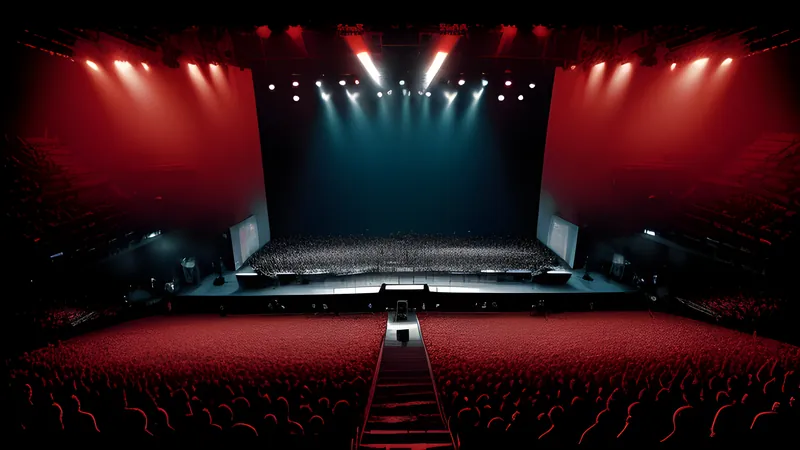
The music happens in Musikcaféen, and it is exactly the kind of room I keep coming back for: small, low-ceilinged, no distance between the band and the front three rows. Capacity is a couple of hundred at most, which puts it in the same weight class as Stengade up in Nørrebro or the little room at Loppen over in Christiania. Rooms this size are where you find out whether a band is any good, because there is nowhere to hide — no barrier, no pit of security between you and the front, no lighting rig big enough to do the emoting on the singer’s behalf.
Huset’s booking here has always been catholic in the small-r sense. Singer-songwriters, hip-hop, noise, post-punk, the occasional heavier show that fits the fire limit. The venue leans hard into new and local acts, which is the whole point of a municipal house — it can afford to book the band that will draw forty people because the building is not living or dying on the bar take that night. Half the Danish acts who later filled the mid-size rooms cut their teeth playing to a sparse Tuesday crowd somewhere like this. If you want to see who is coming up before the rest of the city catches on, the small municipal room is where you look, and Copenhagen has been lucky to keep one right in the geographic centre of town rather than banished to an industrial edge.
The sound is honest for the size. It is a converted heritage space, so the acoustics were never engineered for amplified music the way VEGA was; you get some slap off the hard surfaces and the low end can turn boxy when the room is full and sweating. Nobody comes here for hi-fi. They come because the person on stage is six feet away, the eye contact is unavoidable, and the beer costs less than in the flashier rooms across town. A good band in a room this honest is a genuinely different experience from the same band on a big stage — you see the fingers move, you hear the mistakes, you feel whether the sweat is real.
Why it survived
Huset is a survivor of a very specific Danish idea: that a city should own cultural space and rent it cheaply to keep the weird stuff alive. The house was born out of the early-1970s municipal energy that also gave Copenhagen its wider youth-house tradition, and it has outlasted almost everything from that era by being too useful to close. When commercial pressure squeezed the city — and central Copenhagen real estate is now some of the most valuable in the Nordics — a privately run version of this building would have become flats or a boutique hotel a decade ago. Because the municipality holds the keys, the cinema and the board games and the tiny stage keep going in a postcode where every square metre screams to be monetised.
That model is worth defending out loud. The loud-music ecosystem I care about runs on a food chain, and the small rooms sit at the bottom of it. A band plays Musikcaféen, or Bremen Teater’s smaller nights, or Beta out on Amager; it builds a following; it graduates to Pumpehuset; and maybe one day it fills a proper concert hall. Starve the bottom rung and the whole ladder eventually goes hungry. Huset keeps a rung alive in the most expensive part of the country, which is a small municipal miracle almost nobody talks about because it is quiet and it is boring and it just carries on.
Fifty years of turnover
Longevity in a music venue is a stranger thing than it looks. Rooms do not usually die because the bands stop coming; they die because the lease turns over, or the neighbours win a noise complaint, or a developer offers the landlord a number too big to refuse. Huset has dodged all three for half a century by being a public asset with a mandate rather than a business chasing a margin. The building has cycled through countless bookers, house managers and floor concepts in that time — the board-game café is a 2010s addition, the comedy strand grew with the city’s international population, and the cinema has reinvented its programming more than once — but the bones stay put.
That churn is the point. A culture house is supposed to be a platform other people fill, and the ones that ossify into a single fixed identity tend to fossilise and empty out. Huset keeps mutating because each generation of Copenhageners who run it are handed a cheap central building and told, in effect, to make it useful again. The 1970s version was a raw youth house; the current version is a slick, multi-strand operation with a proper café and a decent website. The continuity is the address and the principle, and everything on top of that is negotiable. For a punter that means you can walk in after a five-year gap and find the place both completely familiar and entirely re-shuffled.
It also means Huset has quietly hosted an enormous slice of Danish cultural first-nights without ever branding itself as the room where careers began. There is no wall of framed photos claiming credit. The house does the unglamorous work of giving new acts a stage, a PA and a couple of hundred capacity, and then lets them move on to bigger rooms and take the glory elsewhere. That modesty is baked into the municipal brief, and it is exactly why the place is easy to overlook and worth writing down.
The practical bit
Getting there is easy — you are in the dead centre of the city, five minutes from Kongens Nytorv metro or Gammel Strand, and you can walk from anywhere in the medieval quarter. That central location cuts both ways. The streets around Magstræde are cobbled, narrow and residential-adjacent, so the building has always had to be a considerate neighbour, which caps how loud and how late the music room can run. Do not expect a 3am doom show shaking seventeenth-century timbers. This is a venue that closes at a civilised hour and lets the old street get some sleep, and that constraint shapes the booking as much as the budget does.
The bar prices are gentler than the tourist traps two streets over, the crowd is a genuine cross-section — students, the film people, board-gamers, the odd tourist who wandered in and never left — and the programme turns over so fast that the only sane way to use the place is to check the listings and show up for something you have never heard of. That is the correct way to use Huset anyway. It was built to be stumbled into, and it rewards the punter who treats it as a lucky dip.
Where it sits
If you are ticking off Copenhagen rooms, Huset is the one you keep in your back pocket for a free evening in the centre rather than the one you fly in for, the building that always has something on across its floors when everywhere else is dark or sold out. For a local it is a fixture, the place that has quietly booked everything for half a century and never made a fuss about it. Start a night here with an early set in Musikcaféen, then walk ten minutes north to Nørrebro for a louder one at Stengade if the mood turns heavy.
Denmark’s music scene is small enough that everyone eventually plays everywhere, and the buildings that make that possible deserve their own guides. Huset-KBH is the one that does the most jobs at once — cinema, board-game café, comedy club, rehearsal space and a proper little stage — from behind an unremarkable door on one of the oldest streets in the city. Learn to read its listings and you will never be short of a Tuesday.
Related Content