Hotel Cecil: The Copenhagen Club That Time Swallowed
One funkis building in the old town that has been a hotel, a theatre stage, and the city's great jazz house in turn
Contents
There’s a building on Niels Hemmingsens Gade, a short walk from the Round Tower in the old heart of Copenhagen, that has spent nearly ninety years quietly refusing to settle on what it is. It has been a hotel, a stage for the Royal Danish Theatre, and — for a quarter of a century — the great jazz house of the city. Each identity flourished, drew its crowd, and was in turn swallowed by the next. If you want a lesson in how a music room lives and dies and comes back wearing a different name, this address on the corner of the medieval town is as good a teacher as Copenhagen has.
I find the place genuinely haunting, in the flat, factual way old rooms are haunting. Stand in it and you’re standing in a palimpsest — layer over layer of Copenhagen nightlife, each one written on top of the last. Most venues have a history. This one has an archaeology.
A funkis shell from 1936
Start with the building itself, because the shell outlasts everyone who’s used it. It went up in 1936–37, a modern funkis design — Nordic functionalism, the clean interwar style that was sweeping Danish architecture — by Ragna Grubbe, one of the era’s Danish architects. Funkis buildings were statements of the new century: flat surfaces, honest materials, a rejection of nineteenth-century clutter. Dropped into the twisting medieval street plan of the old town, this one would have looked startlingly modern when it opened, and the bones of that design still shape every room inside it.
Its first life gave it its enduring name. The building opened as the Hotel Cecil, a proper hotel on Niels Hemmingsens Gade, and for the generation that knew it then, that’s what the address meant — a place to stay in the middle of the city. The hotel is long gone, but the name proved sticky in the way good names do, outliving the function that earned it and waiting to be picked up again decades later.
From theatre annexe to the city’s jazz house
The building’s usefulness was never in doubt; only its purpose kept changing. Over the following decades it served, among other things, as a venue for the Royal Danish Theatre — a stage annexe for the national theatre, another chapter, another crowd, another identity absorbed and moved past. Copenhagen buildings of real quality tend to get reused rather than demolished, and this one kept finding new work.
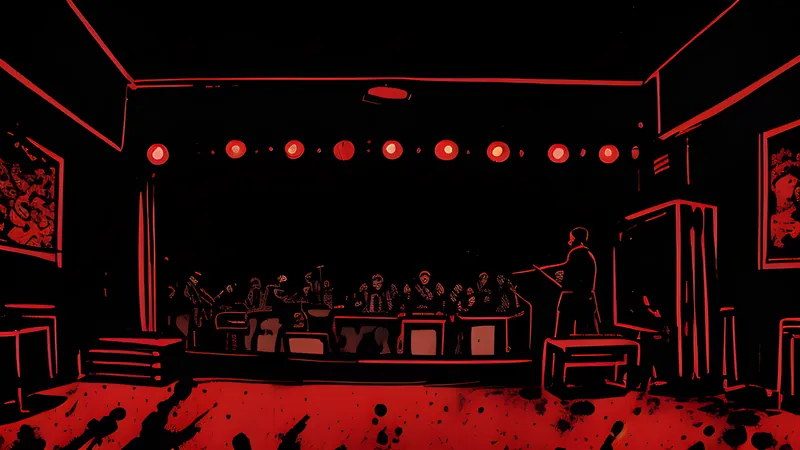
Its most important life began in 1991, when the address became the home of Copenhagen JazzHouse. For the next twenty-six years this was the serious jazz room of the city — the place that anchored the Copenhagen Jazz Festival’s programme, hosted Danish players and international touring names, and gave the city a proper year-round home for the music. If you cared about jazz in Copenhagen at any point between the early nineties and the mid-2010s, you cared about this room. It was the centre of gravity for a whole scene.
Copenhagen’s jazz history is deeper than most people outside Denmark realise, and rooms like this are why. The city became an unlikely capital of the music from the 1960s onward, when American players — some of them dodging the racism and the industry politics back home — settled here and found a Danish audience that took the art form seriously. That legacy needed institutions to carry it into the following century, and for twenty-six years the address on Niels Hemmingsens Gade was one of the main ones. It was where visiting greats played to a room that knew the repertoire, where local musicians measured themselves, and where the annual jazz festival that fills the whole city each July had a permanent flagship. Losing a room like that isn’t a scheduling inconvenience. It’s the closure of a chapter in a national musical tradition.
And then, in 2017, it closed. The JazzHouse operation left the building, and one of Copenhagen’s great music rooms went dark. That’s the swallowing the title means: a venue that had defined a genre in a capital city for a quarter of a century, gone, the way rooms go — a lease, a decision, a shift in the economics of live music, and suddenly a place that felt permanent is a memory. Anyone who’s watched a beloved room close knows the particular grief of it. The gig you saw there becomes a story about a place that no longer exists.
What the building teaches about how rooms die
The lesson of Niels Hemmingsens Gade 10 is that music venues are far more fragile than the scenes they serve. The music survives. The rooms don’t. Copenhagen has a healthy live circuit precisely because it’s built on a spread of venues — the tuned splendour of VEGA in Vesterbro, the industrial brick of Pumpehuset, the feral little rooms like Loppen out in Christiania — and any one of them could go the way the JazzHouse went. A city’s live culture looks solid right up until a room you assumed was eternal quietly stops existing.
There’s a reason the same real estate has hosted a hotel, a theatre stage and a jazz house rather than one durable institution. Central Copenhagen is expensive, the old town is dense and contested, and a room that hosts music is always competing with more profitable uses of the same square metres. What kept this building in cultural life across ninety years is that people kept fighting to reuse it for culture rather than let it become offices or retail. That fight is invisible when you’re standing in a full room on a good night, and it’s the only reason the room is full at all.
I think about this whenever a venue closure hits the news and everyone acts surprised. The surprise is the tell. We treat the rooms we love as fixtures of the landscape, and they’re nothing of the sort — they’re businesses in buildings that developers can always find a better use for, kept alive by stubborn people and thin margins. The address on Niels Hemmingsens Gade has swallowed identity after identity because that’s what central-city venues do. They’re temporary by nature, and we only notice when the swallowing catches something we cared about.
The name that wouldn’t die
Here’s the twist that makes the address more than a graveyard. When the JazzHouse left in 2017, the building didn’t stay dark for long. In February 2018 it reopened as a music venue once more, and the people behind it reached back past the jazz years and picked up the building’s oldest name: Hotel Cecil. The old hotel that opened in 1937 lent its identity forward across eighty years to the new room — a 350-capacity venue in the same funkis shell, booking a broad music programme of Danish and international acts. The name that had outlived its first function was there, waiting, and someone was smart enough to use it.
That reincarnation is the whole story in miniature. A building outlives its uses; a name outlives its building’s uses; and a music city keeps finding ways to put a stage back into rooms that the market would rather turn into something duller. The hotel was swallowed by the theatre annexe, the annexe by the jazz house, the jazz house by time — and then the oldest ghost of the lot, the Hotel Cecil name from 1937, rose back up to christen whatever came next.
I’d argue there’s something healthy in that churn, once you get past mourning the lost jazz room. A venue that reinvents itself is a venue still fighting to stay in the culture rather than surrendering to the highest bidder. Every time this address could have become something with no music in it — offices, flats, a chain hotel with a lobby playlist — someone chose instead to put a stage back in the room. The identities keep changing because the alternative to change here was death, and the building kept choosing life in whatever form the moment allowed. That’s a more honest model of how live venues actually persist than the comforting fiction of the eternal institution. They don’t survive by staying the same. They survive by being willing to become the next thing.
If you go looking for this address, go knowing what you’re standing in. It isn’t just a room where you’ll hear music tonight. It’s a stack of Copenhagen nightlife going back to before the war — hotel guests, theatregoers, jazz obsessives, all of them long gone, all of them having stood roughly where you’re standing. The funkis walls that Ragna Grubbe drew in the mid-1930s have watched the whole parade and outlasted every single act in it. That’s the thing about the rooms we build for music: the music moves on, the crowds disperse, the names change over the door. The building just keeps swallowing, patient and unhurried, and waiting for the next thing to come along and fill it.
Related Content