Hotel Cecil: The Room Nobody Talks About
Faded grandeur, deep history, and one of central Copenhagen's best-kept rooms
Contents
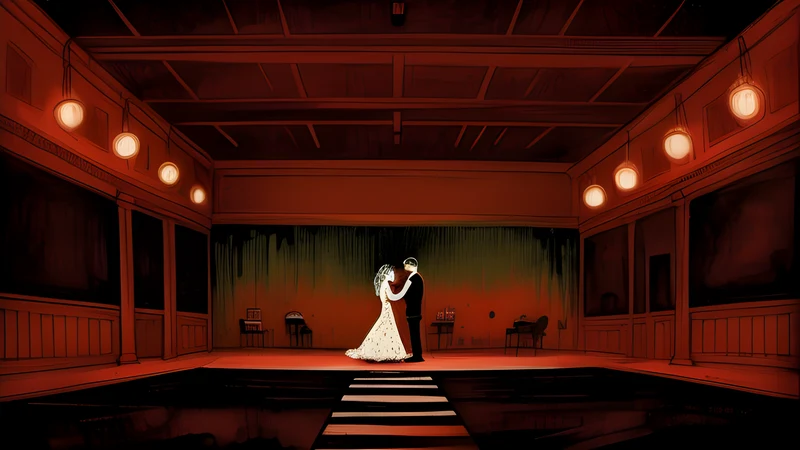
Some venues shout. Hotel Cecil murmurs, and that is exactly why people keep forgetting it is there. It sits in the medieval centre of Copenhagen, a couple of streets from Gråbrødre Torv, in a building most passers-by have no idea contains a concert hall at all. Behind an unassuming central-city façade is a roughly 350-capacity room of dark green walls, brass lamps and genuine art-deco character, one of the most atmospheric spaces in the city and one of the least talked about. Correcting that oversight is the whole reason for this piece.
The name is the first clue that there is history here. Hotel Cecil is called that because there really was a hotel of that name in the building once, and the venue’s founders kept the ghost of it when they opened the room in February 2018. The people behind it were the same team that runs Bremen Teater, the larger central venue a short walk away, and they took over a space with one of the richest back-stories of any room in Copenhagen — a lineage most of the punters filing in for a gig have no idea they are walking into.
A building with three past lives
Peel back the layers and Hotel Cecil is really a palimpsest of twentieth-century Copenhagen cultural life. The building it occupies is Kvindernes Bygning, the Women’s Building, erected in 1936 as a centre for the Danish women’s movement — a piece of purpose-built social architecture from the same idealistic interwar moment that produced grand civic buildings across the city. That origin gives the place its bones: the proportions, the deco detailing, the sense of a room built with intent rather than thrown together.
The performance space inside has worn several hats since. For a stretch it served as the Royal Theatre’s Gråbrødrescenen, a stage for the national theatre in the heart of the old town. Then, from 1991 to 2017, it became the home of Copenhagen Jazzhouse, one of the most important jazz venues in northern Europe, a room where a generation of Danish and international jazz musicians played some of their defining Copenhagen shows. When Jazzhouse moved on in 2017, the space could have gone dark. Instead the Bremen Teater team stepped in, renamed it Hotel Cecil, and reopened it in 2018 as a broad-church music and culture venue.
That Jazzhouse heritage matters, because it connects Hotel Cecil to a wider story. The old Copenhagen Jazzhouse operation ultimately fed into the creation of Alice up in Nørrebro, the left-field listening room that emerged from the merger of Jazzhouse and the world-music venue Global. So the spirit of Copenhagen Jazzhouse effectively split into two rooms after 2017 — the physical building became Hotel Cecil, and the programming ethos migrated across the lakes to Alice. Knowing that lineage makes both venues richer to visit. You are standing in a piece of the city’s jazz history either way.
The weight of the Jazzhouse years
It is worth sitting with the Jazzhouse era for a moment, because it is the single most important thing that happened in this room. Between 1991 and 2017, Copenhagen Jazzhouse was one of the anchor venues of the European jazz circuit, the kind of room that international touring musicians built their Scandinavian dates around. Denmark has a deep jazz history — Copenhagen was a haven for American players through the second half of the twentieth century, a city where expatriate musicians found work and respect — and for its final quarter-century that tradition ran straight through this address. The walls have heard an extraordinary amount of serious music.
You cannot see that history, exactly, but you can feel it, and it changes how a gig lands. When a band plays Hotel Cecil now, they are playing a room that carries a specific cultural weight, a stage that meant something to generations of Copenhagen listeners before the current name went up. Rooms accumulate a kind of memory, and the best of them wear it lightly while still letting you sense it. Hotel Cecil is thick with that accumulated memory, and it is part of why an evening here feels more resonant than the booking alone would explain. The Bremen Teater team could have gutted the character out and started fresh. They kept it, and the room is immeasurably better for the decision.
The room itself
Physically, Hotel Cecil is a two-floor space, and the character is all in the details. The signature dark green walls, the brass lamps, the art-deco lines — it adds up to an atmosphere of faded grandeur that no modern venue can fake and few older ones have preserved so intact. This is a room that feels like it has hosted a century of Copenhagen evenings, because it more or less has. Walking in, you get the sense of stepping slightly out of time, into a space with the moody, low-lit elegance of an old dance hall rather than the black-box functionality of a standard gig room.
At around 350 capacity it sits in a lovely intimate band, big enough to draw a proper touring act, small enough that the room’s atmosphere wraps around you. The programming is genuinely broad — the venue hosts music across many genres alongside film screenings, talks, comedy and live podcasts, which suits a space this characterful. It is not a dedicated loud-rock room in the way of the metal sweatboxes I usually haunt, and it does not try to be. Its strength is versatility and mood, a room that can host a hushed songwriter, a jazz set, a comedy night or a mid-size band and make each of them feel like an occasion because of where they are happening.
I have a real soft spot for rooms like this, the ones that trade on character rather than capacity. A gig at Hotel Cecil is coloured by the building in a way that a show in a neutral modern hall never is. The art-deco surroundings, the sense of history in the walls, the knowledge that Jazzhouse legends played this exact space — it all feeds into the experience and makes an ordinary evening feel slightly heightened. That is a rare and valuable quality, and it is exactly why the room deserves more attention than it gets.
Why nobody talks about it
So why is it overlooked? Partly geography and disguise. The building does not announce itself; you could walk past it a hundred times without knowing there is a concert hall inside. Partly it is the shadow of the bigger, louder venues — VEGA, Pumpehuset, the festival sites — that dominate the conversation about Copenhagen live music. And partly it is the newness of the current incarnation: Hotel Cecil has only existed under that name since 2018, so it has not yet had time to build the multi-generational loyalty that older institutions enjoy.
There is also the genre question. Copenhagen’s loud-music scene, the world I mostly write from, has its fixed circuit of rooms, and Hotel Cecil sits slightly outside it, programming a broader and often gentler diet. That means the metal-and-hardcore crowd does not automatically think of it, and the more mainstream crowd has not fully clocked it either. It falls into a gap in the city’s mental map of venues, and rooms that fall into gaps get talked about less than they deserve. The whole point of writing it up is to nudge it back onto people’s radar, because a room this atmospheric being underused is a small civic waste.
The case for the character venue
There is a wider argument buried in all this, about what venues are for. The industry logic pushes relentlessly toward the neutral, efficient, flexible black box — a room designed to host anything and therefore to be nothing in particular, easy to run and easy to forget. Hotel Cecil is the opposite proposition. It is a room with an overwhelming specific identity, a place that stamps its own character onto everything that happens inside it, and that is a harder thing to run and a rarer thing to find. The green walls and the brass lamps are a statement in themselves, insisting that the setting is part of the show.
I will always take the character venue over the efficient one. A gig is the whole experience of the evening, the room and the light and the sense of where you are, and a place like Hotel Cecil understands that in its bones. The faded grandeur is doing real work, framing the music, lending the night a weight that a warehouse conversion never could. In a city and an era that keep sanding rooms down to featureless functionality, a space that insists on being intensely itself is worth cherishing, and worth choosing, even when you are not sure about the band. The room will meet you halfway.
Practical business
Location is a genuine asset. Hotel Cecil is in the medieval core of Copenhagen near Gråbrødre Torv, so you are surrounded by the old town’s restaurants and bars, and it is walkable from the central stations and every major transit line. This is the easiest kind of venue to fold into a proper night out, with dinner in the old streets before and a drink somewhere characterful after.
Inside, the two-floor layout and the intimate scale mean sightlines are generally good, but the room’s charm comes with the quirks of an old building, so arrive early enough to find a spot you like. Take a moment to actually look at the place — the green walls, the brass, the deco lines — because most people walk straight past a century of history to get to the bar. And do not be put off if the act is outside your usual lane; the whole argument for Hotel Cecil is that the room elevates whatever it hosts. A comedy night, a jazz set, a songwriter, a mid-size band — the building lends each of them a grandeur that a neutral space could not.
Copenhagen has plenty of famous rooms, and they earn their fame. Hotel Cecil is the counter-case, the beautiful, historically loaded, slightly hidden room that most people never quite get around to. Go once, for anything, and you will understand why the people who know about it are quietly protective of it. The rooms nobody talks about are often the ones most worth finding.
Related Content