Horsens Medieval Festival: When a Danish City Time-Travels 600 Years
A former state prison becomes a castle, and a whole Jutland town centre falls back into the late Middle Ages for a weekend
Contents
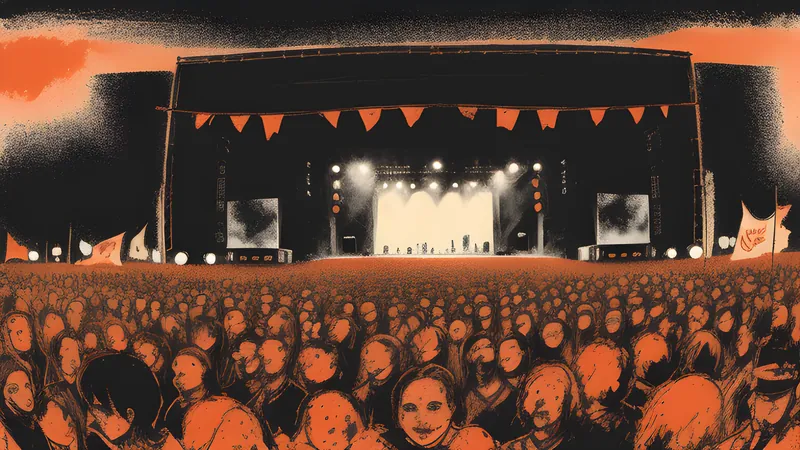
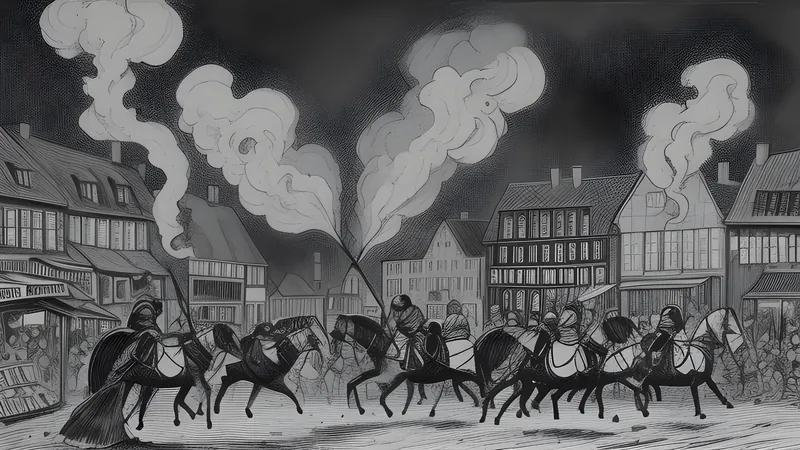
For one weekend at the tail end of August, the Jutland town of Horsens does something that ought to be impossible for a place with traffic lights and a railway station: it stops being a modern Danish town and becomes a late-medieval one. The knights are real, the horses are real, the smell of woodsmoke and roasting meat and unwashed wool is emphatically real, and the backdrop — this is the detail that makes Horsens unlike any other festival of its kind — is a genuine former state penitentiary standing in for a castle, its high grey walls doing the work of six centuries of stone. This is the Horsens Middelalderfestival, one of the largest medieval festivals in Northern Europe, and it is the best argument I know that Denmark’s appetite for full-commitment spectacle did not die with the Vikings.
I have wandered through it as an ordinary punter, which is the correct way to experience it, because the festival is built for immersion rather than for stages and headliners. There is no main act. The event itself is the act — a whole town centre remade, thousands of costumed re-enactors living the period for a weekend, and a paying public of tens of thousands wandering through the middle of it as though they had fallen through a hole in time. The scale is what surprises first-timers. This is not a few tents and a man selling mead. It is closer to a functioning small city that happens to be running about 600 years behind schedule.
From a town-centre experiment to a European giant
The festival began in 1995, and by the standards of these things that makes it young — younger than plenty of the people who now attend it in costume every year. The idea was straightforward and, at the time, unproven: take the actual streets of Horsens, close them to cars, and stage a European medieval market and festival right through the living heart of the town rather than out on some field. It worked immediately. The first edition drew thousands, and the thing has grown more or less continuously since, until it became one of Europe’s largest events of its type and, by common local reckoning, Northern Europe’s biggest free medieval market.
The single most consequential decision in its history came in 2012, when Horsens town council voted to move the festival to the grounds of FÆNGSLET — the imposing former Horsens State Prison, a real nineteenth-century penitentiary that had closed its cells not long before. From the first festival held there in 2013, which pulled in something like 60,000 guests, the relocation transformed the whole illusion. Suddenly the market had a fortress. FÆNGSLET’s massive walls and grim institutional bulk read, from the right angle and in the right light, exactly like a castle keep, and the entire re-enactment now had a monumental stone backdrop that no amount of scaffolding and painted plywood could ever have faked. It is a wonderful piece of Danish pragmatism: the country decommissions a prison and, rather than knock it down, casts it as a medieval stronghold.
What actually happens inside the walls
The festival plants its flag firmly in a specific window of history — Danish life roughly between 1350 and 1536, the late Middle Ages running up to the Reformation — and it takes the authenticity of that window seriously. Hundreds of re-enactors populate the grounds in period costume, and the organisers are unusually strict about the quality of the reconstruction. These are not people in generic fancy-dress tunics. Craftspeople work real trades — the smith at a working forge, the leatherworker, the woodturner, the dyers, the cooks — using period tools and period methods, and much of what they make is for sale, so the market is also a genuine economy of hand-made goods rather than a row of imported plastic swords.
The pivot of the whole weekend, the moment the crowds funnel toward, is the knights’ tournament. Professional jousters — and there is a serious international circuit of these people — ride at each other with real lances at real speed, and the sound a lance makes when it shatters against a shield is one of those noises that reorganises your understanding of what the past was actually like. The tournaments run as the festival’s headline spectacle, and around them the grounds fill with knights on foot and on horseback, mock combat, archery, jugglers, musicians, and the general controlled chaos of a period fair.
Then there is the population of the camps. Farmers, clergy, merchants, soldiers and townsfolk all set up living encampments across the FÆNGSLET grounds, sleeping in period tents, cooking over open fires, and staying more or less in character for the duration. Walking through the camps at dusk, when the day-visitors have thinned out and the woodsmoke hangs low and someone is playing a hurdy-gurdy badly by a fire, is when the whole thing stops feeling like a festival and starts feeling like time travel with a small gap in the fence.
The food is a genuine attraction in its own right, and worth arriving hungry for. Whole animals turn on spits, bread comes out of clay ovens built for the weekend, and the mead and dark ale flow with a period-appropriate generosity. There is a real effort to cook the era rather than merely sell burgers in a tunic, and the smell of the place — smoke, roasting fat, tallow, tar, damp wool, horse — does as much to transport you as anything you can see. Smell is the sense that modern life sands smoothest, and a festival that gets the smell right is halfway to convincing you before you have looked at a single knight. Horsens gets the smell right.
For the children who come — and thousands do — the festival doubles as the most vivid history lesson they will ever get, the Middle Ages rendered as a place you can walk into, smell, and buy a wooden sword in. There is a serious educational spine under the spectacle, and the organisers know it, which is part of why the authenticity standards stay high year after year.
The Danish talent for a communal illusion
What Horsens shares with the country’s other great spectacles is a specific kind of collective willingness. A festival like this only works if enough people agree, simultaneously and without irony, to pretend very hard — and Denmark turns out to be unexpectedly good at that. It is the same instinct that lets an entire nation gather on beaches to burn a straw witch at midsummer, the same appetite for a shared story that the Danish Viking markets tap when re-enactors rebuild the Iron Age on the beaches at Aarhus and Ribe every summer. The country reaches for these historical full-immersion events the way other cultures reach for religious festivals, and it commits to them with a thoroughness that is almost startling in a people so allergic to public display the rest of the year.
There is a lesson in the FÆNGSLET backdrop, too, about why some illusions land harder than others. The festival is at its most convincing precisely where the real world does the heavy lifting — the genuine prison walls, the genuine forge fire, the genuine hand-stitched wool. The more of the experience that is physically real, the deeper the crowd sinks into the fiction. Anyone who has spent a weekend inside a good Nordic LARP knows this principle by its Danish name: the 360-degree illusion, the ambition to build a world where everything you can see and touch is really there. Horsens is a 360-degree illusion staged for a hundred thousand casual visitors instead of a hundred committed players, and the trick is fundamentally the same.
Why it belongs on your late-August calendar
The Horsens Medieval Festival lands right at the end of August, which in the Danish calendar is a poignant slot — the last warm weekend before the light starts going and the country folds back in on itself for autumn. It is a fitting time for a festival about the deep past, a final open-air blowout before the dark. And it is, crucially, largely free to walk into, which keeps it democratic and keeps the crowds enormous; the ticketed elements are the tournaments and certain shows, but the market and the streets are open to anyone who wanders in.
Go for the jousting, which is genuinely thrilling and which no amount of screen violence prepares you for at close range. Stay for the camps, the forge fire, the smell, and the strange sensation — sharpest around dusk, when the tourists thin and the re-enactors keep going out of what looks like real love for it — of a modern town that has volunteered, one weekend a year, to remember exactly how old it is. Set alongside the imported samba riot of Aalborg Karneval an hour to the north, Horsens completes a picture of Jutland as Denmark’s under-rated engine of large-scale public spectacle: two towns, two wildly different centuries, one shared and slightly surprising talent for throwing the whole community into a story and meaning it.
Related Content