The Hobbyhorse Championships: Finland's Most Earnest Sport
Stick horses, real athleticism, and a subculture built on nerve
Contents
At a Finnish sports hall you will find a full showjumping arena — poles, rails, a proper course, a judging table, an anxious hush before each round — and the horses are made of fabric and a stick. This is the Finnish Hobbyhorse Championships, and if your first instinct is to laugh, hold that thought, because the athleticism on display will stop you doing it twice.
I cover loud rooms and physical crowds for a living, and I came to hobbyhorsing the way most outsiders do — through a viral clip, ready to smirk. What I found instead was one of the most quietly impressive subcultures in the Nordic region, a homegrown Finnish phenomenon run largely by and for teenage girls, built on real craft, real fitness, and a startling amount of nerve. It deserves to be written about with the same respect I would give any scene that means something to the people inside it.
What it actually is
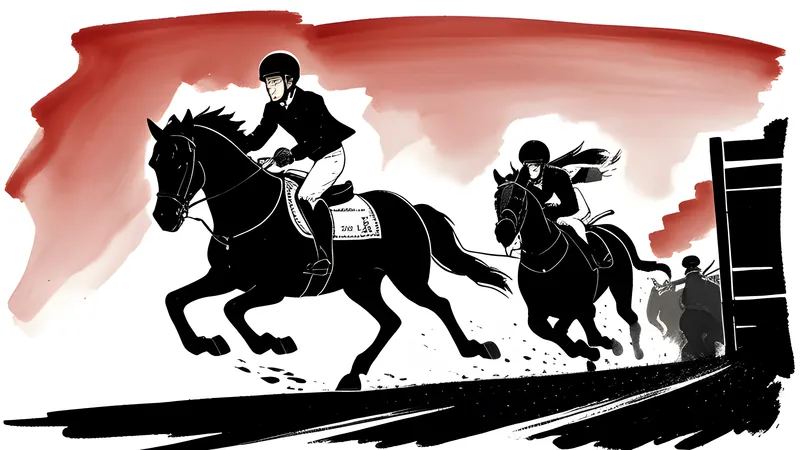
A hobbyhorse — keppihevonen in Finnish — is the child’s toy grown up: a stuffed horse head, often beautifully hand-sewn, mounted on a wooden pole. In competition, riders “ride” these horses through the disciplines of real equestrian sport. There is dressage, judged on precision and grace, and there is showjumping, where the rider clears a genuine course of jumps — real rails at real heights — by leaping them personally, horse in hand.
That last part is where the laughter dies. The jumps are not decorative. Top riders clear bars well over a metre, some pushing toward heights that would trouble a club-level track athlete, and they do it while holding a stick horse and maintaining the form and rhythm the judges reward. It demands leg power, core control, coordination and timing. Riders train for it, get injured doing it, and improve at it the way athletes in any sport improve. The horse may be fabric. The sport is not.
The competition runs across many divisions — different horse types, dressage and jumping, age and skill groupings — and it is organised with the full apparatus of a real equestrian meet: entry classes, judges, scoring, rosettes. The seriousness of the framework is the whole point. These riders are not playing at sport. They are doing sport, with an unusual horse.
The craft side deserves its own mention, because the horses themselves are works of real skill. Many riders sew their own — a stuffed head with an embroidered face, a mane of yarn or fabric, tack and bridle detailed to match a breed they have in mind, all mounted on a pole cut and balanced to the rider’s height. Good hobbyhorses are traded, commissioned and displayed with genuine pride, and a well-made one can carry real value within the community. Before a single jump is cleared, there is a whole cottage economy of handiwork underneath the sport, and it rewards patience and an eye for detail in the same way the riding rewards fitness.
From bedroom hobby to national championship
The modern hobbyhorse movement is Finnish and comparatively young. The Finnish Hobbyhorse Association traces its roots to the early 2000s and was formally registered in 2016, and the championship event has been running since around 2010, growing year on year. Riders now come from far beyond Finland — recent championships have drawn competitors from a couple of dozen countries — and the scale has become genuinely startling. A 2022 mass event in Seinäjoki gathered some 2,000 participants, a Guinness-recognised record for the largest hobbyhorse championship.
Much of that growth was fuelled online. The community grew up on YouTube and social media, where riders shared training clips, showed off hand-sewn horses, and found each other. One of the movement’s most visible early figures, Alisa Aarniomäki, became something of a public face for the phenomenon through her videos and parades. The wider world caught up in 2017, when Selma Vilhunen’s documentary Hobbyhorse Revolution (Keppihevosten vallankumous) followed three teenagers through the sport and their own adolescence, won two prizes at the Tampere Film Festival, and premiered internationally soon after. Suddenly the international press had a story, and the smirking began.
Take the riders seriously — they’ve earned it
Here is where I want to plant a flag, because it is the whole reason this piece exists. The easy write-up of hobbyhorsing is the mocking one: look at the silly girls with their toy horses. That write-up is lazy, and it misses everything that makes the scene worth your time.
The riders are, in large part, teenage girls, and the community they have built is one of the more genuinely healthy subcultures I have come across. The participants who spoke to the documentary and the press describe it plainly: hobbyhorsing gave them a place to belong. Aarniomäki has been open about being bullied at school and about the sport carrying her through hard stretches, including her parents’ divorce. For a lot of these young people the hobbyhorse community was a refuge and a source of confidence — a space where a group of teenagers could parade through Helsinki holding stick horses and refuse, flatly, to be embarrassed.
That refusal is the most impressive thing about the whole scene. Adolescence runs on the fear of looking uncool, and here is a subculture whose entire premise invites ridicule — and the riders do it anyway, in public, with total commitment and visible joy. There is more nerve in that than in most things I watch grown adults do at festivals. To ride a stick horse through a jumping course in front of judges and cameras, knowing exactly how it looks to outsiders, and to care only about clearing the bar cleanly — that is a kind of courage, and it is worth naming as one.
It is worth remembering, too, that a lot of these riders come to hobbyhorsing for the same reasons anyone comes to horses. Real riding is expensive, tied to stables and lessons and the cost of an actual animal, and it is out of reach for plenty of families. A hobbyhorse costs a bolt of fabric and a stick, and it delivers the dressage, the jumping, the shows and rosettes and the community, minus the four-figure bills. There is something genuinely democratic about that. A teenager in a small Finnish town who will never own a horse can still train, compete, win, and belong. The sport grew where it did partly because it opened a door that real equestrianism keeps locked, and the riders who walked through it built something entirely their own on the other side.
The community has also matured with its riders. What started as a scattering of teenagers filming themselves in back gardens is now a properly organised movement with a national association, a championship calendar, international entrants and, at its biggest gatherings, thousands of participants in a single arena. Some of the early riders are adults now, coaching and judging and running events, and the sport they defended against years of mockery has outlasted the ridicule. That is its own kind of vindication, quietly earned.
A very Nordic kind of seriousness
Hobbyhorsing belongs to a family of Finnish spectacles that share one defining trait: absolute sincerity in service of something the rest of the world finds absurd. This is the country of the Wife Carrying World Championships, the Air Guitar World Championships, and the Swamp Football World Championships — a nation with a gift for taking a strange premise and building a real institution around it, complete with rules and rankings and a straight-faced judging panel.
Hobbyhorsing fits that pattern, and it also stands slightly apart from it, because the stakes are more human. The air-guitar and wife-carrying events are gleeful comedies that everyone is in on. Hobbyhorsing is something its riders defend, because it means a great deal to them and because the world has spent years laughing at it. That gives the sport an emotional weight the funnier spectacles do not carry. Underneath the fabric horses is a story about belonging, about a mostly young and mostly female community that carved out its own space and dared anyone to mock it.
Why I’d cover it, and why you should watch it properly
I have never stood at the edge of a hobbyhorse arena in Finland, and I would go in a heartbeat, because I suspect it is one of the few sporting events that would genuinely rearrange your assumptions in the first ten minutes. You would arrive expecting a novelty and leave having watched a young athlete clear a bar at head height while holding a horse she sewed herself, to a hush from a crowd that knows exactly how hard it is.
The best spectacles reward you for meeting them halfway. Show up ready to laugh at hobbyhorsing and you will get a cheap chuckle and miss the point entirely. Show up willing to actually watch — the training, the athleticism, the community, the flat refusal to be embarrassed — and you will find one of the most quietly moving subcultures Finland has produced. For a scene born from toy horses and teenage nerve, that is a remarkable thing to have built, and it has earned the same respect I would give any crowd that turned an unlikely obsession into something real.
Related Content