Heartland: The Festival for People Who Read the Programme
Music, art, gastronomy and high-minded talks in the grounds of a Renaissance castle
Contents
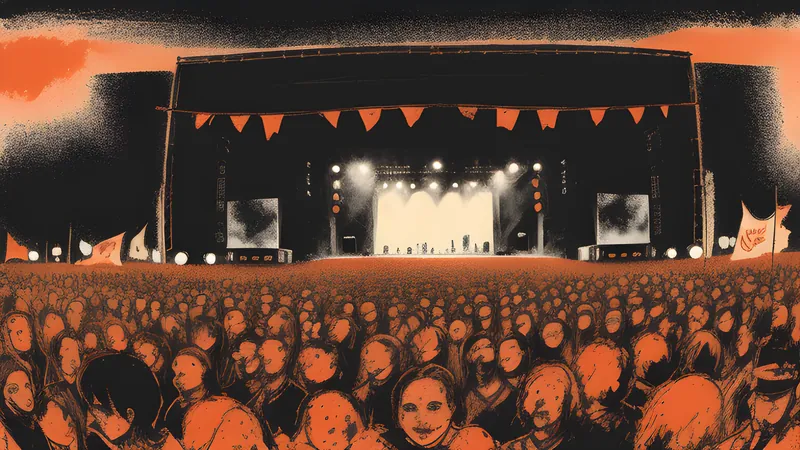
There is a festival on the Danish island of Funen where you can watch a decent band, eat food cooked by an actual named chef, wander through a contemporary-art pavilion, and then sit down for an hour to hear a philosopher and a former minister argue about democracy — all inside the moated grounds of a 16th-century castle. That festival is Heartland, and it is the most genteel, most bourgeois, most unashamedly grown-up event in the Danish summer. As a man whose natural habitat is a harbourside metal festival, I approached it as a curious foreigner. I came away impressed, and only slightly itchy.
Heartland is a young festival with an old setting, and the tension between those two things is the whole story. It is held at Egeskov Slot, one of Europe’s best-preserved Renaissance moated castles, and everything about the event — the programme, the pricing, the crowd, the tone — flows from the decision to hold a festival in a place like that. This is Denmark’s answer to the arts-and-ideas festival, and it is worth understanding even if you would rather chew glass than attend a panel discussion.
A castle with a festival in the garden
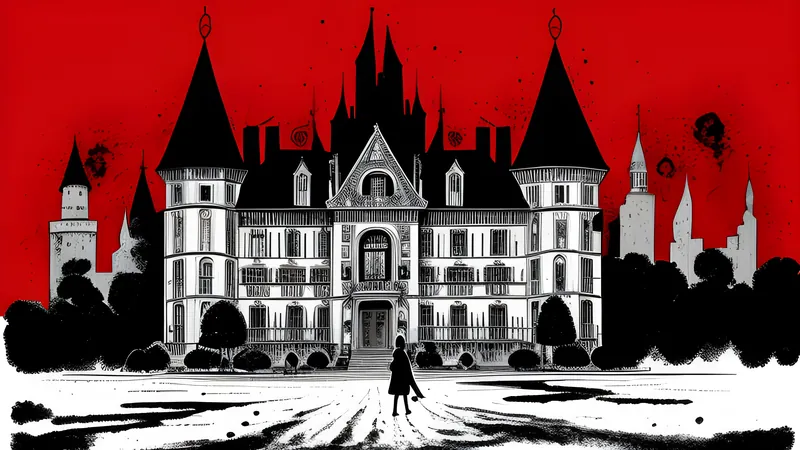
Egeskov sits in the south of Funen, and it is a genuinely spectacular building — a moated Renaissance castle from the 1550s, one of the finest of its kind in Europe, still the seat of the Ahlefeldt-Laurvig-Bille family that owns and lives in it. The estate is already a major visitor attraction, with its gardens and grounds open to the public, so it comes with the infrastructure and the aesthetic ambition to host something upmarket. Heartland launched there in 2016, built by the estate and its partners as a deliberately different kind of festival, and it has run in the castle grounds ever since. Rooting it in the estate matters: the festival is genuinely embedded in the local community around Egeskov and the wider island, and it draws on the castle’s existing gardens, buildings and staff rather than importing a temporary city onto a rented field. That gives it a permanence and a polish from the first day that most festivals take a decade to earn.
The setting does an enormous amount of the work. Where most festivals happen on rented flat ground or in a wood, Heartland happens in a designed landscape — formal gardens, avenues of old trees, lawns rolling down towards the water, the castle itself reflected in its moat as a permanent backdrop. It is beautiful in a way that is impossible to fake, and it sets a tone of refinement that the festival then leans into hard. You do not arrive at Heartland expecting mud and chaos. You arrive expecting a very well-appointed garden party that happens to have several thousand other guests and a couple of stages.
That immediately marks it out from the rest of the Danish calendar. Roskilde and Smukfest are mass gatherings built on camping, volunteers and a certain amount of glorious squalor. Heartland is a day-out festival for a different demographic entirely — one that would like the culture without the tent, thank you, and can pay for the privilege. The castle is the statement of intent, and the whole event is organised around living up to it.
The four pillars
Heartland is built, by its own account, on four pillars: music, contemporary art, talks and gastronomy. That structure is the key to the place, because it tells you that music is only ever one quarter of the point. This is a festival where the food and the ideas carry equal billing with the bands, and where a lot of the audience have come at least as much for the panel programme as for anything on a stage.
The talks are the genuinely distinctive part, and the one I least expected to respect. Heartland has built one of the most serious live-talks platforms in Northern Europe — proper conversations with authors, scientists, politicians, philosophers and public figures, in front of real audiences, covered by national press. This is intellectual content presented as entertainment, and it is done at a level that puts most festival “talks tents” to shame. You can spend a Heartland afternoon moving between a string quartet, a debate about artificial intelligence and a plate of something excellent, and never feel that the brainy bits were an afterthought bolted on to sell tickets.
The art pillar is equally deliberate. The festival commissions and curates contemporary work across the grounds, anchored by Artium, a purpose-made art pavilion designed by the Danish artist duo AVPD, and the pieces are chosen to provoke rather than decorate. The gastronomy is exactly what you would expect from a festival pitched at this crowd — named chefs, quality over volume, the food treated as a headline act rather than fuel. Only after all of that do you get to the music, which is broad, tasteful and mid-sized: singer-songwriters, established rock and pop names, classical and jazz, the kind of bill designed for listening while seated on a lawn.
The crowd, and the honesty about it
I promised an honest read, so here it is. Heartland is a bourgeois festival, and I mean that as a description before I mean it as a criticism. The crowd is older, wealthier and more polished than any other festival crowd in Denmark. There are a lot of good linen shirts, a lot of expensive picnics, a lot of people who have read the programme carefully and highlighted the talks they want to catch. It is the festival for the cultural middle class at leisure, and it knows exactly who it is for.
The prices reflect that. Heartland is expensive, and it is expensive on purpose — this is a premium cultural product for an affluent audience, and it does not pretend otherwise or apologise for it. If Roskilde is the festival as a democratic gathering of Danish youth, and Tinderbox is the festival as a slick commercial product, Heartland is the festival as a high-end cultural weekend for grown-ups with money and curiosity. There is a whiff of exclusivity about it that will put some people off entirely, and I understand why.
Here is where I have to check my own prejudice, though. It would be very easy for a loud-music writer to dismiss all this as champagne-and-panels nonsense for people who find real festivals frightening, and the sneer is right there waiting to be used. But I sat in on the talks, I ate the food, I walked the art in the castle gardens, and the quality was real. The ideas were genuinely interesting, the curation was genuinely thoughtful, and the whole thing was executed with a care that I respect wherever I find it. Snobbery about other people’s snobbery is still snobbery, and Heartland earns its refinement rather than merely charging for it.
What it is actually for
Once you stop expecting a music festival and start seeing Heartland as a festival of ideas that also has music, it makes complete sense. It exists to give thoughtful, well-off, culturally engaged adults a weekend where the mind gets fed alongside the body — where you can hear a serious argument, see challenging art, eat superbly and catch some music, all in surroundings designed to make the whole thing feel like a privilege. That is a coherent and rather admirable ambition, and very few festivals anywhere attempt it.
It also fills a real gap. The Danish festival calendar is dominated by mass youth culture and by commercial mega-events, and there was room for something aimed squarely at the older, more cerebral end of the audience — the people who aged out of the camping festivals but still want live culture done well. Heartland found that audience and built a genuine institution around it in under a decade, which is no small feat. In a landscape where so many festivals are starting to feel interchangeable, a festival that stakes its identity on ideas and gastronomy in a Renaissance garden is at least unmistakably itself.
Would I go back?
For pleasure, probably not often — my temperature runs about forty degrees hotter than Heartland’s, and I will always choose a room full of distortion over a lawn full of linen. This is not my festival, and I would be a fraud to claim it was. But I am very glad it exists, and I would send the right person there without hesitation: anyone who wants their culture rich, their food excellent and their surroundings beautiful, and who reads the programme cover to cover before they go.
Heartland is the festival for people who read the programme, in the most literal sense. It rewards attention, curiosity and a full wallet, and it delivers a genuinely high-end cultural weekend that nowhere else in Denmark is even trying to match. I can respect a thing completely while knowing it is not for me, and Heartland is exactly that — a refined, serious, beautifully executed festival that I admire from a slightly baffled distance, holding a warm beer, wishing quietly for a wall of guitars.
Related Content