Heartland: The Manor-House Festival
Music, art, food and ideas on a Renaissance castle's lawns — Denmark's most deliberately upmarket festival
Contents
Denmark’s festival scene has a shape you can draw. At one end stands the grand non-profit machine of Roskilde, giving its money away; in the middle sit the polished commercial city festivals and the beloved forest gatherings; at the friendly bottom roll the charity singalong events that reach the whole country. And then, off to one side, deliberately apart from all of it, there is Heartland — the manor-house festival, the boutique event, the one held on the lawns of a five-hundred-year-old water castle where music is only one of the things on the menu. It is the most consciously upmarket festival in the country, it knows exactly what it is, and it makes no apology for it. A critic has to take it on those terms.
A castle called Egeskov
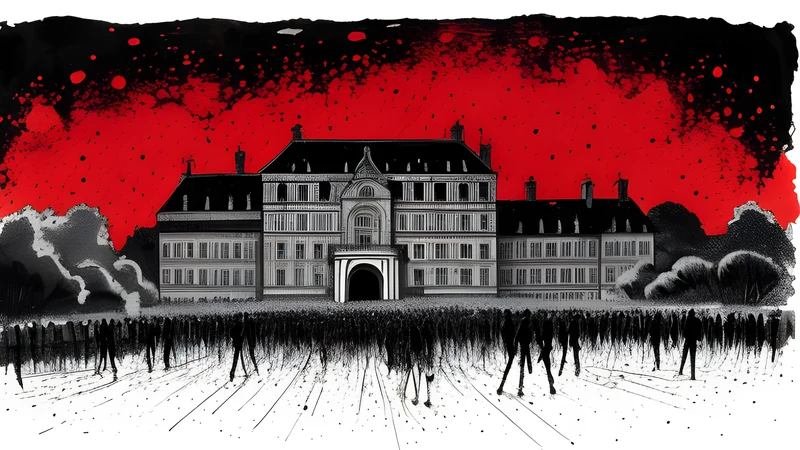
The setting is the whole proposition, so start there. Heartland takes place at Egeskov Slot on the island of Funen, and Egeskov is one of the best-preserved Renaissance water castles in Europe, a moated masterpiece raised in the 1550s on a foundation of oak pilings driven into a lake, surrounded by celebrated gardens, hedge mazes and grounds. As a piece of architecture and landscape it is genuinely world-class, the kind of place people travel to see in its own right, festival or no festival.
Staging a music-and-ideas festival on those lawns gives Heartland something no field or harbour site can buy: instant, effortless grandeur. The stages sit among centuries-old gardens; the art installations use the grounds as a gallery; the whole event is wrapped in a setting that would be the highlight of any other festival and is merely the backdrop here. Egeskov turns Heartland from a good festival into a spectacle of place, and the organisers built the entire concept around that advantage. The castle is the headliner that plays every set.
Not only music — the four-part menu
Heartland’s defining choice is that music shares the bill with three other things, and understanding that is the key to understanding the festival. This is an event built on four pillars — music, art, food and ideas — and each gets real weight rather than a token nod. There is a serious gastronomy programme, drawing on the strength of the modern Danish food scene; there is contemporary art sited through the grounds; and there is a genuine programme of talks, debates and big-thinking sessions, the “ideas” strand that brings speakers and thinkers into the mix alongside the bands.
That blend is the boutique festival’s signature, and Heartland does it with real conviction. The pitch is a cultural weekend for the curious adult — you can watch a band, eat extraordinarily well, wander a castle garden full of art, and sit in on a debate about something that matters, all in the same day, in one of the loveliest settings in Denmark. It is festival-going for people who want more than a mud field and a wall of guitars, and it is aimed squarely at a grown-up, affluent, culturally engaged audience that the loud festivals do not chase.
I have to be honest that this is not my natural habitat. I am a harbour-site-and-guitars man; my festival is the one where the crowd smells of sweat and the ground shakes. But it would be lazy and wrong to sneer at Heartland for being something different. A festival that takes food, art and ideas as seriously as music, and stages the lot in a Renaissance castle, is doing something genuinely distinctive, and the Danish scene is richer for having one event pitched at that register. Range is health, and Heartland extends the range.
The music, and the register it plays in
The lineup at Heartland matches the setting and the audience: tasteful, cross-generational, quality-over-volume. The booking leans toward the internationally respected, the critically admired, the acts that a cultured adult audience will appreciate — a spread of pop, rock, and the more sophisticated end of the mainstream, with the occasional heavier or stranger name for texture. This is a festival built on the pleasure of seeing a well-chosen act in a beautiful place, comfortably, as part of a broader cultural day.
Set against the programming risk of a non-profit like Roskilde, where the booking genuinely gambles because the mission demands it, Heartland’s lineup is safe by design — curated to please a discerning but comfortable crowd rather than to challenge it. That is the trade the boutique format makes: it swaps edge for elegance, discovery for quality, the wager for the sure thing. Whether that is a virtue or a limitation depends entirely on what you want from a festival, and Heartland is admirably clear about which kind of festival it is choosing to be.
The money question
You cannot review Heartland honestly without addressing the price, because the price is part of the identity. This is a premium festival, and it costs what a premium festival costs. The ticket, the food, the whole positioning place it at the expensive end of the Danish market, well above the charity roadshows and the family fields, in the bracket aimed at the affluent culture consumer. That is a deliberate choice, and it produces a deliberate result: a smaller, wealthier, more homogeneous crowd than the big democratic festivals draw.
I have complicated feelings about this, and I am going to keep them complicated rather than resolve them into a cheap verdict. On one hand, exclusivity by price is the opposite of the democratic instinct that makes the best of Danish festival culture so admirable — the charity events that bring music to everyone, the non-profits that give their surplus away. Heartland is a luxury product, and luxury products, by definition, are not for everyone. On the other hand, the festival delivers genuine quality for the money — the setting, the food, the art, the ideas, the production are all real and all excellent — and there is a legitimate audience of grown-ups who want exactly this and can pay for it. A scene with room for a boutique castle festival is a broad scene, and breadth is not a sin. I land on respecting what Heartland does while noting clearly who it leaves out.
Where it sits, and who it is for
Heartland arrived in 2016, part of the same wave of ambitious Danish festival-building that gave the country its polished city events, and it staked out a piece of ground that nobody else in Denmark occupies: the high-culture, high-comfort, high-price boutique weekend. It shares a certain commercial polish with the city festivals like Northside, but where those chase a broad pop crowd into a green field, Heartland chases a smaller, richer, more culturally omnivorous crowd onto a castle lawn and feeds them ideas and art alongside the music. It is a different animal serving a different appetite, and it serves it with real skill.
Who is it for? The culturally engaged adult with money and curiosity, the person who wants a weekend that flatters the mind and the palate as much as the ears, the couple who find the big festivals too loud and too muddy and want their music wrapped in gardens and gastronomy. If that is you, Heartland is close to unbeatable in Denmark; nobody else does this, and the setting alone justifies the trip. If you are me — if your idea of a festival involves a harbour, a wall of sound and a crowd that has stopped caring how it looks — then Heartland will feel like a beautiful, tasteful, slightly bloodless afternoon in someone else’s very nice garden.
The gardens do half the work
It is worth dwelling on the grounds, because they are doing more of the festival’s emotional work than any single act on the bill. Egeskov’s gardens are among the most celebrated in Northern Europe — formal Renaissance parterres, one of the world’s oldest surviving hedge mazes, orchards, water features and specimen planting maintained to a standard that draws garden tourists in their own right. Dropping a festival into that landscape means the audience spends the day moving through beauty rather than across a trampled field, and that changes the entire register of the experience.
A conventional festival has to manufacture its atmosphere with production — lights, staging, scale. Heartland inherits its atmosphere from five centuries of landscaping and a moated castle reflected in its own lake. The art programme understands this and plays to it, siting installations so they converse with the gardens rather than competing with them, using the grounds as a gallery with better bones than any building could offer. The result is a festival where the walk between stages is part of the point, where a quiet corner of the garden is a destination rather than dead space, and where the setting flatters everything staged within it. Few festivals anywhere can say the venue is the best thing on the programme and mean it as praise; Heartland can.
Funen, and the logistics of the good life
Heartland sits in the middle of Funen, Denmark’s garden island, roughly between Odense and the southern coast, reachable by the rail-and-road spine that threads the country together. The location is part of the pitch — close enough to be accessible from Copenhagen and Jutland alike, rural enough to feel like a genuine escape into the countryside rather than a city-edge field. Many attendees turn the weekend into a small holiday, pairing the festival with the wider pleasures of Funen, which is exactly the kind of trip the boutique format is designed to encourage.
That geography reinforces the whole proposition. This is a festival you travel to as a destination, settle into, and savour slowly, rather than one you endure for the headliner and survive till morning. The comfort is engineered end to end — the setting, the food, the pacing, the register of the crowd all point toward a civilised couple of days rather than a test of stamina. For the audience it is built for, that seamless ease is the luxury being sold, and Heartland delivers it with the quiet competence of an operation that has thought hard about what its people actually want from a weekend away.
The verdict a critic can give
Heartland is the most deliberately refined festival in Denmark, and it achieves what it sets out to achieve with genuine class. The castle is extraordinary, the four-part blend of music, art, food and ideas is executed with real conviction, and the whole thing offers a kind of cultural weekend that no other Danish festival attempts. It is also expensive, exclusive and safe by design, a luxury product for an affluent audience, and it would be dishonest to dress that up as anything else.
My honest position is admiration held at arm’s length. I am glad Heartland exists, because a festival culture needs its full range and this is the far elegant end of that range. I respect the craft, the ambition and the quality. And I will keep spending my own festival money on the loud, cheap, democratic end of the scale, where the ground shakes and the ticket does not cost a week’s wages. Heartland is a magnificent garden party with excellent taste and a Renaissance castle. Go if that is your appetite; you will be very well looked after. Just know going in that it is choosing elegance over edge, and that the choice is the entire point.
Related Content