Haven, Copenhagen: The Refshaleøen Boutique Weekend
The National, Claus Meyer and Mikkeller build a two-day festival for the senses on the same harbour island as Copenhell
Contents
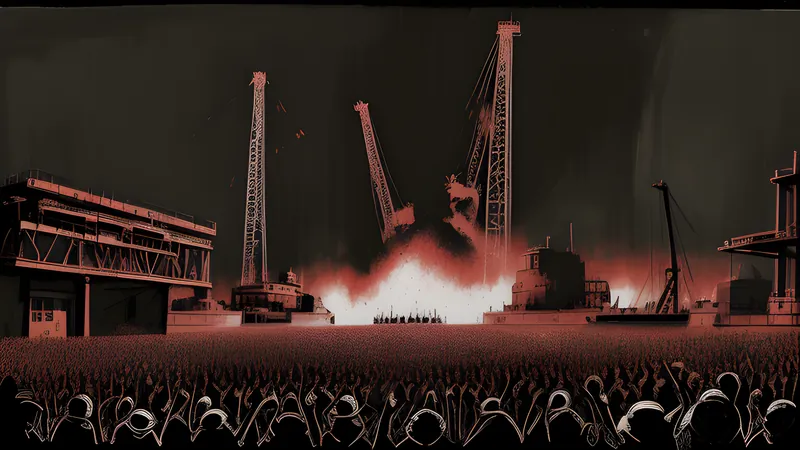
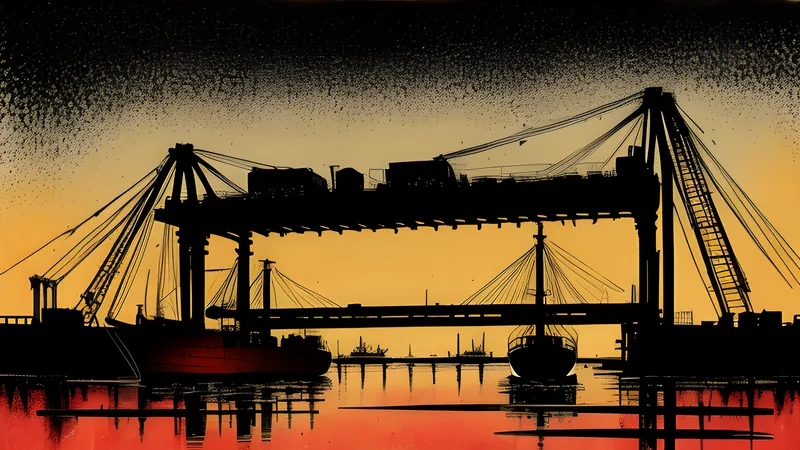
There is a stretch of Refshaleøen — the reclaimed industrial island in Copenhagen harbour where the old B&W shipyard used to build the world’s tankers — that spends most of the year as a flat expanse of cracked concrete, rusting cranes and warehouses slowly being colonised by street-food halls and climbing gyms. For one weekend every August a slice of it becomes Haven, and the transformation is one of the stranger sights in Danish festival life. Where Copenhell turns the same island into a smoking cathedral of volume every June, Haven turns it into something quieter, greener and more deliberate: a two-day festival built around music, food and beer in roughly equal measure, curated with a care that most large festivals abandoned years ago. The 2023 edition ran across a mid-August weekend on that same harbour ground, and it remains the clearest argument in Copenhagen for the boutique model over the field.
Who built it, and why that matters
Haven is not a promoter’s cash exercise. It grew out of a collaboration between three sets of hands, and knowing whose hands they are explains everything about the weekend’s texture. Aaron and Bryce Dessner — the guitar-playing brothers from The National — supplied the musical taste and the address book. Claus Meyer, the chef who co-founded Noma and effectively launched the New Nordic food movement, supplied the kitchen ambition. And Mikkel Borg Bjergsø, the man behind Mikkeller, the brewery that dragged Danish beer culture into the global craft conversation, supplied the bar.
That founding trio is the whole thesis. Most festivals treat food and drink as a concession problem — a row of overpriced burger vans to be endured between bands. Haven treats them as a third of the programme, with guest chefs brought in the way headliners are brought in, and a beer selection curated to the same standard as the bill. When you build a festival out of the people who reshaped Copenhagen’s restaurants and its breweries and hand them a decommissioned shipyard to play on, you get a weekend where the meal you eat and the beer you drink carry the same intention as the set you watch. That is rare, and on Refshaleøen it works.
The Dessners run it the way a band curates a mixtape rather than the way a booking agency fills a grid. Haven leans indie, art-rock, folk-adjacent and eclectic, the sound of The National’s own extended musical family and the acts that orbit it. The festival launched in 2017, ran again in 2018, went dark through the pandemic like everything else, and came back for its 2022 and 2023 editions — the same reclaimed island, the same music-food-beer triangle, the same curated calm.
The National as the house band
Every festival with a personality has an act that embodies it, and at Haven that act is The National, unavoidably, because two of them own the thing. Their appearances here have a quality you rarely get from a band at a festival they do not run: they treat the stage as home turf, and they treat their collaborators as guests to be pulled up rather than rivals to be out-billed. The Dessners’ great gift, across their whole career, has been collaboration — the Big Red Machine project, the production work, the way their circle keeps widening to fold in singers and writers from wildly different corners — and Haven is that instinct scaled up to a festival.
In practice it means a National headline set at Haven tends to become a slowly expanding thing, with people from across the weekend’s bill wandering on to sing a verse or trade a line. It is unhurried, generous, faintly communal, and it fits the island’s mood better than a pyrotechnic stadium show ever could. Matt Berninger’s baritone carrying across the harbour water as the light goes long over the cranes is one of the genuinely lovely sights in Copenhagen’s summer, and it is the exact opposite of the experience the same ground offers under the Copenhell banner two months earlier.
If you want the fuller portrait of what Refshaleøen becomes when the loud tribe takes it over — the shipyard cranes as stage dressing, the harbour bathing between bands, the industrial rust as aesthetic — I have written that island up at length in the Copenhell building-hell piece. Haven and Copenhell are the two poles of what one patch of reclaimed harbour can hold, and standing on it in August after standing on it in June is the best way in Denmark to understand how much a festival’s identity is made by its programming rather than its postcode.
Boutique versus the field
The interesting thing about Haven is what it deliberately refuses to be. It is small by design — a two-day, single-weekend event with a capacity that would embarrass Roskilde’s smallest stage — and the smallness is the product. You are not walking forty minutes between sets across a temporary city of 130,000 people. You are not queuing an hour for a warm lager. The scale is human, the food is served by people who cook for a living, and the whole thing is engineered so that a Copenhagener can come after work, eat properly, drink well and watch a couple of genuinely good bands without surrendering a week of their life and their savings.
That model has a cost, and it is worth naming honestly. Boutique festivals are expensive per hour in a way the big fields are not — you pay for the curation, the kitchens, the deliberate lack of crush — and Haven is not a cheap ticket for what it is. It is also, by its nature, a narrower musical proposition than a Roskilde or a Copenhell. If you want your festival to drag you violently out of your genre comfort zone, Haven’s tasteful indie-and-art-rock lane will feel gentle. Its pleasures are refinement and comfort and the sense of a thing made by people who care about every element, and those pleasures are real, but they are a different appetite from the one a big field feeds.
Set it beside the city’s other summer options and the contrast sharpens. Distortion, the vast free street party that takes over Copenhagen’s neighbourhoods every June, is chaos as a civic event — a whole city turned into a moving crowd. Copenhell is volume and darkness on the harbour. Haven is the curated, seated-if-you-like, eat-well counter-programme to both, and the fact that Copenhagen sustains all three inside a couple of summer months tells you how deep the city’s appetite for live music actually runs.
Refshaleøen as the real headliner
Come to Haven and the setting does at least half the work. Refshaleøen is one of the great accidental festival sites in Northern Europe — a decommissioned shipyard on an artificial island, all cracked concrete and gantry cranes and harbour water on three sides, the Copenhagen skyline sitting low across the channel. In the June heat under Copenhell it reads as post-industrial and menacing, exactly right for the music. In the softer August light under Haven it reads as almost pastoral, the same rust gone golden, the same water suddenly swimmable, the same cranes turned from threat to sculpture.
Getting there is simple in the Copenhagen way: a harbour bus across the water, a bike over the bridges, or the number 2A that dumps you at the island’s edge. The food halls of Reffen sit next door for the days the festival is not on. And the ground itself carries a century of the city’s industrial history, which lends the whole weekend a weight that a purpose-built festival park never manages. You are drinking a Mikkeller beer and eating something a Noma alumnus dreamed up, watching an art-rock band, standing on the exact spot where Copenhagen once built the ships that carried its trade around the planet. That layering is the point.
Who Haven is for
Haven 2023 was for the Copenhagener who wants a festival that respects their time, their palate and their ears in equal measure — the person who loves live music but has aged out of the seventy-two-hour mud endurance test, or never wanted it in the first place. It is a weekend for people who read the food billing as carefully as the music one, who will happily pay for curation, and who find something restorative in a festival small enough to feel like a very large, very well-run garden party thrown by a band with excellent taste.
If that is you, Haven is the best of its kind in Denmark. If you want the same island at its loudest and most feral, take Copenhell instead and let the shipyard show you its other face. Refshaleøen holds both, which remains the most Copenhagen thing about the whole arrangement — one battered harbour island, two entirely different festivals, and a city with the appetite to fill them both.
Related Content