Große Freiheit 36, Hamburg: Loud on the Reeperbahn
An ornate old ballroom on the sleaziest street in Germany, still shaking
Contents
The train from Copenhagen to Hamburg is about five hours if the Danish and German railways are feeling cooperative, which is roughly never, so call it six. You come up out of Reeperbahn station into a smell — fried onions, spilled Astra, weed, the sweetish chemical fug of a hundred discount perfumes leaking out of the sex shops — and you understand within about eight seconds exactly what kind of street you are on. This is St. Pauli. The Reeperbahn is the main artery, a neon canyon of casinos and clubs and stag parties in matching T-shirts. And running north off it, a short pedestrian side-street, is the Große Freiheit: “the Great Freedom”, a name earned back when it was outside the old city walls and therefore beyond the reach of Hamburg’s guild rules and moral policing. It has been a place to do things you couldn’t do elsewhere for about four hundred years. At number 36, past the doorways where women sit in windows and men in bad leather try to sell you the worst night of your life, there is a rock club.
The street with all the ghosts
You cannot write about Große Freiheit 36 without writing about the Beatles, because the venue leans on that history hard and because it is genuinely, walk-past-it-yourself true. Between 1960 and 1962 the Beatles served their apprenticeship in Hamburg, playing marathon sets — four, five, six hours a night — in the clubs of exactly this district. Two of the rooms they worked stood on this same little street. The Kaiserkeller, where they played in 1960, is on the Große Freiheit. So was the Star-Club, the room where they became a proper band, which opened in 1962 and burned into legend before it closed and, later, literally burned down. A plaque near the top of the street marks where the Star-Club stood. Paul McCartney has called Hamburg, not Liverpool, the place where the group was really made — thousands of hours on stage, learning to hold a drunk sailors’ room by playing louder and longer and dirtier than anyone else.
That is the water this venue swims in. The Kaiserkeller still exists as the smaller club downstairs in the same building complex as GF36 — a low, dark, sweaty basement room that trades on the name and does perfectly good club and smaller-band nights. It is worth knowing the geography: upstairs is the big hall (Große Freiheit 36, ~1,400 capacity); downstairs is the Kaiserkeller, the little one. Punters mix them up constantly, buy tickets for the wrong room, and turn up at the wrong door. Check which room your band is in before you leave the hostel.
I am wary, generally, of venues that sell you a dead man’s history instead of tonight’s show. But GF36 gets a pass, because the Beatles thing here is not a marketing overlay bolted onto a soulless box. The building itself is old and strange and full of character, and the street outside is doing exactly what it was doing sixty years ago, just with worse haircuts.
An old ballroom, and it shows
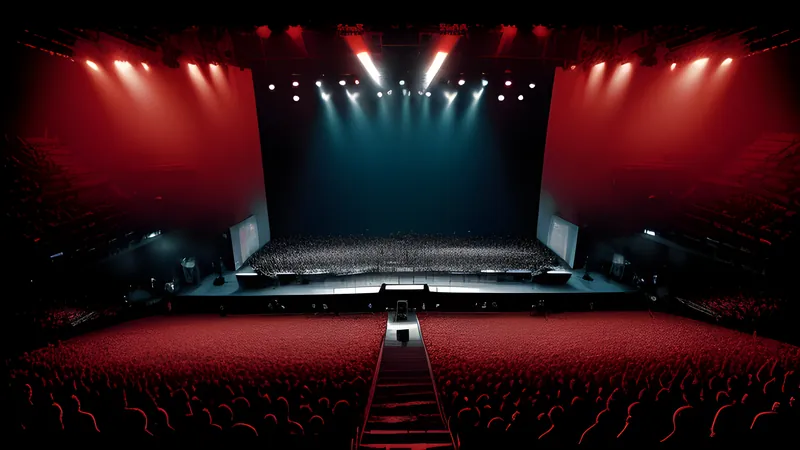
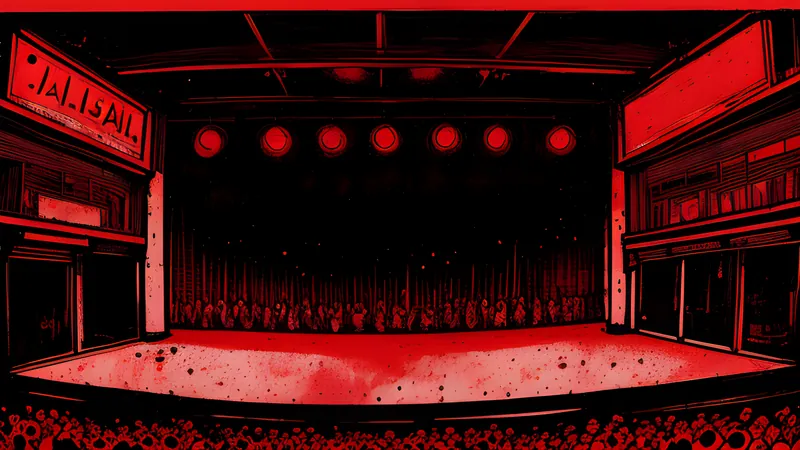
Walk in and look up. That is the whole trick of this place. Große Freiheit 36 is a converted Tanzsaal — an old dance-hall — and it has kept the bones of one: an ornate main hall with a proper stage at one end and, crucially, galleries and balconies running around and above the floor. Most rooms of this size in Europe are flat black boxes, function over romance, a shed with a PA. This one has ornamentation, tiers, a sense that it was built for people to be seen in as much as to watch a band. It gives the room a vertical drama that a floor-only club never has. When a good crowd fills both the floor and the balconies and the band hits, the whole vessel feels like it’s leaning in.
Capacity sits around 1,400, which is a genuinely lovely size — big enough to pull touring bands mid-ascent, small enough that nobody up in the galleries feels posted to Siberia. It is the German cousin of the rooms I keep coming back to elsewhere: the sort of upper-mid hall that carries a scene. If you know Berlin’s Columbia Theater / Huxleys axis, or Hamburg’s own Docks & Markthalle pairing, GF36 slots in right alongside — a step up from the club circuit, a step below the arena, which is the band-size where live music is at its best and the ticket still costs something like a sane amount of money.
The flip side of an old building is that an old building has quirks. Sightlines on the flat floor are the usual mid-size problem: get behind a tall crowd and the low stage disappears. There are pillars. The place can run brutally hot — a packed GF36 in summer with the bodies in and the Reeperbahn heat coming through the doors is a sauna with a backline, and you will leave with your shirt transparent. None of that is a complaint, exactly. Rock clubs are supposed to sweat. But go in knowing the room runs warm and doesn’t apologise for it.
Where to stand
Here is the actual, useful part, the thing I wish someone had told me the first time.
The balconies are the secret. Because this was a ballroom, the upper galleries are proper elevated tiers with a clean line down onto the stage, and they are the single best answer to GF36’s flat-floor sightline problem. If you are here for a band you want to watch — a technical act, a frontperson who works the stage, anything where you’d rather see than be crushed — get up to the balcony early and take a spot on the rail. You get the full geometry of the room, the crowd below moving as one animal, the lights, and you can actually breathe. For a lot of shows I’d take the balcony rail over the floor every time, and I say that as someone who spends most of his life in pits.
The floor, down the front, is where the heat and the actual event live. If the band is loud and physical — hardcore, metal, big riff-rock, anything with a pit — the front third of the floor is the reason you paid for the ticket. It is hot, it is tight, it is loud, and the low stage means that when you’re near the front you are essentially at the band’s feet. Just accept that once you’re wedged in, you’re committed; getting from the front to the bar and back through a full GF36 is a genuine expedition.
The bars are along the sides and back and, mercifully, there’s provision on more than one level so you’re not always fighting the whole room for a beer. Standard German venue economics: Astra and Holsten and the like, cash still smooths everything, and it’s the Reeperbahn, so nothing is cheap and nobody pretends otherwise.
Getting there and out is the easy bit and one of the real arguments for a Hamburg trip. Reeperbahn station (S-Bahn) is a two-minute walk; St. Pauli U-Bahn not much further. You are dropped basically at the mouth of the street. The complication is never the transport — it’s the street itself, because the Große Freiheit and the Reeperbahn do not stop when the gig does, and a post-show walk back to the station takes you straight through the full circus at full volume.
The circus at the door
And that circus is the thing that makes GF36 different from every other 1,400-cap room I’ve stood in. You do not filter out of a nice concert hall into a quiet plaza. You come out sweat-drenched and ears ringing into the loudest, gaudiest, most relentlessly on street in Germany. Neon everywhere. Doormen for the strip clubs working the crowd. Stag and hen parties in formation, already destroyed at nine in the evening. Tourists gawping, locals ignoring all of it, the smell of the food stands, the bass leaking out of six other doorways. The gig you just saw becomes one loud thing in a street that is nothing but loud things.
I find this either brilliant or exhausting depending entirely on my mood and how many hours I’ve been awake. On a good night it’s the perfect chaser — you’re already lit up from the band, and the Reeperbahn just keeps the amplitude high all the way to the train. On a flat night, when the gig didn’t land, the street can feel like a bad party you can’t leave, hustling you the whole walk home. St. Pauli does not do gentle comedowns.
It is worth saying plainly, because the neon makes it easy to forget: this is a working red-light district, and the people who live and work here are not set-dressing for your night out. St. Pauli has a fierce local identity — the football club, the leftist and squatter history, the harbour-town bloody-mindedness — that sits right underneath the tourist sleaze and is far more interesting than it. The stag parties treat the whole quarter as a theme park. Try not to be them.
Why it’s worth the train
So: is Große Freiheit 36 worth crossing a border for? On its own, for a random Tuesday support slot, probably not — it’s a very good room that rewards a proper visit more than a detour. But Hamburg makes an outstanding two- or three-night music trip from Copenhagen, and GF36 is the crown of it. Build a weekend: something loud here on the Reeperbahn, a night at the larger Docks & Markthalle rooms round the corner, and if you’re the sort who likes to chase the lineage, a comparison against Berlin’s Columbia Theater / Huxleys or the punk cathedral of SO36 on the same swing south. Germany’s mid-size circuit is the best in Europe, and this is one of its most characterful rooms.
What you’re really buying is the collision. A gorgeous, balconied old ballroom, sweating like a boiler room, on a four-hundred-year-old street of ill repute where the Beatles learned to be the Beatles, in the loudest district of a great harbour city. Get up on the balcony rail for the bands you want to see, get down the front for the ones you want to feel, drink the Astra, and give yourself a slow, wide-eyed walk back to Reeperbahn station through all that neon. The great freedom of the name is still, mostly, the freedom to be as loud as you like. GF36 uses it well.
Related Content