Grøn: The Touring Danish Summer Package
One lineup, eight cities, forty years of charity — the roadshow that brings the festival to the whole country
Contents
Most festivals are a place you go. Grøn is a thing that comes to you. Every summer for more than four decades, one Danish pop-and-rock lineup has been loaded onto a fleet of trucks and driven around the country, setting up in a park in one city, playing a single day, tearing down overnight and rolling on to the next town to do it all again. Eight cities or so, one bill, a couple of weeks in high summer, and a charity at the centre of the whole enterprise. It is the least glamorous and most quietly impressive model in the entire Danish festival calendar, and it deserves to be understood on its own terms.
The roadshow model
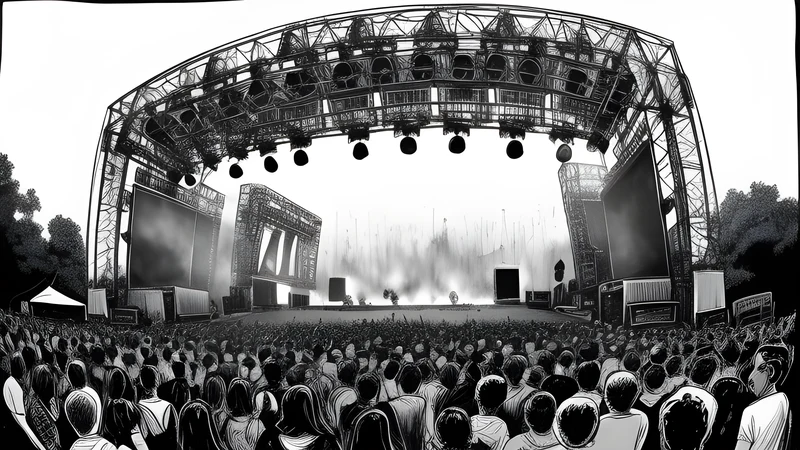
The idea behind Grøn Koncert — the Green Concert — is genuinely clever, and it solves a problem that fixed festivals cannot. A festival in a field asks the whole country to come to one place. A touring package inverts that: instead of moving the audience, you move the show. The same stage, the same acts, the same production travels from city to city, which means the pop fan in a smaller town gets the identical bill that lands in Copenhagen, without anyone having to drive across Denmark or camp in a field to see it.
This is festival-going as a public utility, spread deliberately across the map. Roskilde is a destination; Smukfest is a pilgrimage; Grøn is a delivery service. It rolls into a city park, gives that city its one big summer music day, and moves on, so that over the course of a fortnight a huge swathe of the country gets served the same crowd-pleasing lineup close to home. The logistics of that — striking a full production every night and rebuilding it in a new city the next day, over and over for two weeks — are a genuine feat, the sort of unshowy operational grind that the audience never sees and never thinks about. The show just appears, plays, and vanishes, and the machinery that makes that happen is one of the quiet wonders of the Danish summer.
The green heart
The reason Grøn exists, and the reason it has lasted over forty years, is charity. The festival is run by Muskelsvindfonden, the Danish Muscular Dystrophy Foundation, and the whole roadshow is a fundraising engine for people living with muscular dystrophy and related conditions. The green in the name is the foundation’s colour, and it carries the entire point of the enterprise. Grøn is a charity that happens to be one of the country’s most-attended music events, rather than a music event that bolts on a charitable veneer.
That origin shapes everything about how the festival feels. It is affordable by design, because the goal is broad participation rather than premium margins; it is family-friendly, because it wants everyone; it is spread across the whole country, because charity works best at scale. The foundation has used the festival for decades both to raise money and to raise the visibility of disability in Danish public life, putting people with muscular dystrophy at the centre of one of the country’s biggest summer traditions. It is one of the more admirable things in the Danish live scene, and it runs on the same civic-good instinct that makes Roskilde give its surplus away — expressed here as a fleet of trucks and a foundation’s colour rather than a permanent site.
The music, honestly assessed
Here is where a loud-music critic has to be straight, and staying straight is the whole value of a critic. Grøn is a mainstream Danish pop-and-rock package, and the lineup is built to please the widest possible crowd across the widest possible spread of cities. This is comfort programming — the beloved Danish names, the summer singalong acts, the reliable crowd-pleasers, the sort of bill designed so that a family in any town in the country will find several acts they already love. Novelty, edge and discovery are not part of the brief, and Grøn has never pretended they were.
I am not going to be snobbish about that, because the model demands exactly this kind of booking and does it well. A touring package that has to draw a broad family crowd in eight different cities cannot gamble on the obscure; it has to book the songs the whole country already knows, and it does. The result is a genuinely enjoyable summer day out for the mainstream Danish music fan — a park, a picnic, a bill of familiar favourites, a charitable cause, all close to home and easy on the wallet. It shares its comfort-and-singalong DNA with the fixed family festivals like Jelling, but where Jelling has one historic home, Grøn has the whole country and no home at all. The trade-off is baked into the format, and Grøn made its peace with it decades ago.
What Grøn does not do is take the sort of programming risk that makes a festival exciting to someone like me. There is no room in a touring family package for the band that fifty people have heard of, no space for the loud and the strange, no wager on the future of anyone’s career. That is the honest limit of the form, and it is worth naming plainly rather than pretending the festival is something it is not. Grøn is a machine for delivering the familiar, efficiently and charitably, to the whole nation. Judged as that, it is close to perfect. Judged as a place to discover your next favourite band, it is the wrong festival, and that is fine.
The democratic case
The thing I keep coming back to with Grøn is its democracy. The Danish festival scene has a lot of premium at the top — the expensive city festivals, the destination events, the boutique manor-house weekends where the ticket costs a small fortune. Grøn is the counterweight, the festival built on the principle that live music should reach everyone, everywhere, cheaply, for a good cause. It brings a real production and a real lineup to cities that would otherwise get nothing on that scale, and it does it at a price a family can actually afford.
That accessibility is a genuine social good, and it is easy to undervalue if you spend your summers at the loud destination festivals. For a lot of Danes, Grøn is the festival — the one they can afford, the one that comes to their town, the one the whole family goes to every year as a fixed summer ritual. It is the on-ramp and the mainstay for an enormous audience that the boutique end of the scene never touches, and it funds a serious charity while doing it. A festival culture that only served the people who can afford Copenhagen prices would be a poorer, narrower thing. Grøn makes sure that is not the culture Denmark has.
Forty years on the road
Grøn started in 1983, which makes it older than most of the fixed festivals it shares a summer with, and its longevity is a story worth telling because it is not obvious that the model should have survived at all. A touring package is fragile in ways a fixed festival is not: every city is a fresh negotiation with a local council, a fresh build, a fresh gamble on the weather and the local crowd, and the whole thing has to work eight times over rather than once. That it has kept rolling for four decades, through changing musical fashions and a transformed festival market, says something about how deeply the format has embedded itself in the Danish summer.
The endurance comes down to the charity anchor. A commercial roadshow would have been picked apart by economics long ago; a foundation’s fundraising engine has a reason to exist beyond the margin, and that reason has carried it through the lean years and the wet summers. Generations of Danes have grown up with Grøn as a fixed point of the calendar — the concert that came to their town every July, the one their parents took them to, the one they now take their own children to. That kind of inherited ritual is the hardest thing in live music to build and the most valuable thing to have, and Grøn built it the slow way, one summer at a time.
A day in the park
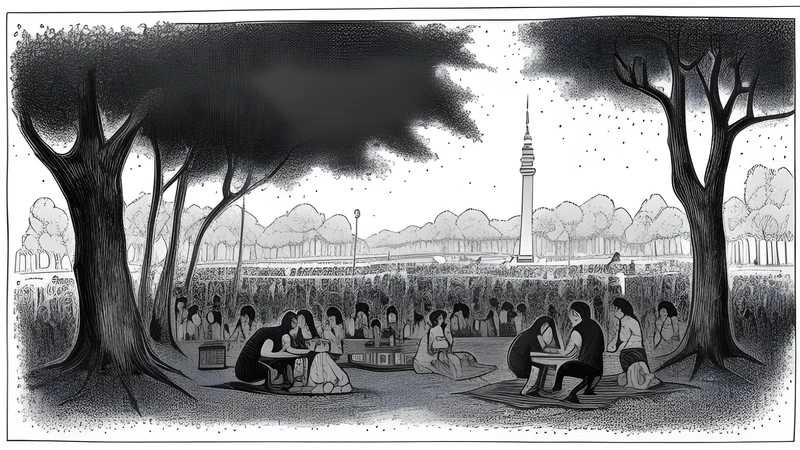
The texture of a Grøn day is the texture of a city park turned briefly into a festival, and it is a specific and pleasant thing. There is no camping, no multi-day endurance, no temporary city to live inside — you arrive in the afternoon, you spread out on the grass, you watch a run of familiar acts as the summer evening comes down, and you go home to your own bed. It is festival-going stripped to its friendliest essentials, pitched at families and casual fans rather than at the hardcore.
That single-day, come-as-you-are format is the secret of its reach. A four-day camping festival asks for commitment, planning and money; a day in the local park asks for an afternoon. The barrier to entry is low enough that people who would never dream of doing Roskilde or Copenhell will happily do Grøn, which is exactly the point — it is the festival for everyone who finds the big events too much, too expensive, or too far. The Danish scene needs that gentle, accessible entry point as much as it needs its harder festivals, and Grøn has owned that ground for forty years by keeping the day simple, the price low and the cause front and centre.
What the roadshow is for
Grøn Koncert is a paradox that works: a festival with no fixed home that has become a permanent fixture, a charity that outdraws most commercial events, a mainstream package that a music snob can still respect once he understands what it is actually doing. It will never book the band I am evangelising for this month, and it will never give anyone the thrill of discovery. What it gives instead is reach, affordability, familiarity and a genuine social purpose, delivered to the whole country every summer with a logistical competence that borders on the heroic.
Go to Grøn for what it is: a warm, cheap, family summer day in a city park, a bill of Danish favourites you can sing along to, and the knowledge that your ticket is funding a foundation that has spent forty years fighting for people with muscular dystrophy. Do not go for the edge, the risk or the future — those live at other festivals, in fields and forests and harbour sites elsewhere in the Danish summer. The roadshow aims elsewhere: to bring music to everyone, everywhere, for a good cause, and after four decades on the road it remains the clearest proof that a Danish festival can be a form of public generosity as much as a form of entertainment.
Related Content