Gojira: The French Band That Made Metal Care About Whales
How four musicians from the Basque coast turned ecological grief into the most physically overwhelming metal on earth — then played the Olympics
Contents
There is a Gojira riff that sounds like the ocean breathing — a scraped, pulsing harmonic that the whole band locks onto until the room seems to inhale and exhale with it. That sound belongs to a band from the French Basque coast who spent twenty-five years writing about whales, extinction and the weight of the living planet, and somehow turned all of it into the most physically overwhelming heavy metal going.
Two brothers from Bayonne
Gojira come from Bayonne and Ondres, on the Atlantic coast of southwest France near the Spanish border — Basque country, a long way from any metal capital. The band is built around two brothers: Joe Duplantier on guitar and vocals, and Mario Duplantier on drums. They’re joined by guitarist Christian Andreu and bassist Jean-Michel Labadie, and the four of them have held that line-up together since the late 1990s with the kind of stability most bands only dream about.
They started in 1996 under the name Godzilla, then renamed themselves Gojira in 2001 — the original Japanese name of the same monster — partly to avoid legal trouble and partly because it suited them: something vast, oceanic and slow-moving, surfacing from the deep. The early albums Terra Incognita (2001) and The Link (2003) built the vocabulary, but the record that announced them to the world was From Mars to Sirius in 2005.
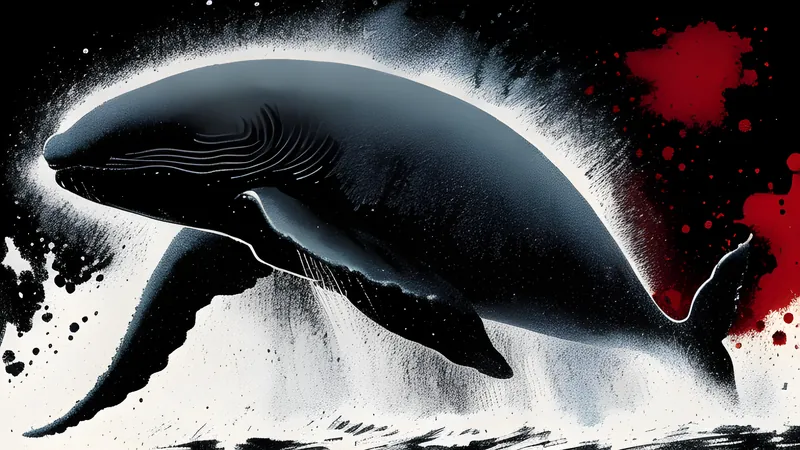
From Mars to Sirius is a concept album steeped in the sea and the sky, and it contains “Flying Whales”, the song that became their calling card — a slow, colossal thing about whales rising through the water, built on that breathing-ocean guitar sound. It’s where Gojira’s two signatures fused: crushing, precise, rhythmic metal, and a genuine ecological ache running underneath it. This was heavy music about the death of the natural world, written by people who plainly meant it.
The sound nobody else has
Technically, Gojira are one of a kind, and it comes down mostly to Joe Duplantier’s right hand. He built a whole style around pick scrapes and pinch harmonics — dragging the pick down the string to make that scraping, whale-song squeal — and around brutally tight, syncopated rhythm playing locked to his brother’s drumming. Mario Duplantier, for his part, is one of the most admired drummers in modern metal, precise and powerful and endlessly musical.
The result is a band that hits like a machine but never sounds mechanical. Gojira grooves. Their heaviness is rhythmic and rolling, more like a heavy swell in the sea than a straight punch, and it’s completely their own — you can identify a Gojira song in about four seconds, which is a rarer achievement in metal than it should be. Plenty of bands are heavy. Almost none of them are instantly recognisable from the texture of a single guitar.
They kept refining it across The Way of All Flesh (2008) and L’Enfant Sauvage (2012), the albums that turned them from a respected cult act into a genuine international headliner. Then, in 2016, came Magma, their most personal record — written in the aftermath of the death of the Duplantier brothers’ mother, it pulled the sound back to something more spacious and grief-stricken, and earned the band its first serious Grammy attention. Fortitude followed in 2021, carrying the ecological thread forward with “Amazonia”, a single tied to a fundraiser for organisations protecting the Amazon rainforest.
The conscience is the point
A lot of bands wave a cause around for a press cycle. Gojira built their entire identity on one and never let go of it. Joe Duplantier is a committed environmental activist, and the band has spent its whole career on ocean conservation, extinction and the human relationship to the planet — they’ve worked with the Sea Shepherd marine conservation movement, and the themes run through every album rather than getting bolted on for a single.
What makes it work, artistically, is that they never turned into a lecture. The environmentalism lives in the imagery and the mood — the whales, the water, the sense of something enormous and dying — rather than in finger-wagging slogans. You can listen to Gojira purely for the physical thrill of the riffs and absorb the grief for the natural world almost by osmosis, the way the best protest art works. The message rides inside the music instead of sitting on top of it.
That instinct puts them in specific company. The most obvious kindred spirits are Mastodon, the Atlanta band who share Gojira’s exact temperament — heavy music with a brain and a conscience, ambitious without being humourless — and the two have toured together as one of the strongest co-headline packages the modern metal world has fielded. And the ethos finds a natural home at a festival like Roskilde in Denmark, a non-profit event that gives its entire surplus to charity and humanitarian causes; a band that has spent a career singing about the planet fits that stage in a way that goes deeper than the booking.
The Olympics, and a genuinely historic moment
On 26 July 2024, Gojira did something no metal band had ever done: they performed at the opening ceremony of the Olympic Games. At the Paris 2024 ceremony, the band played from the windows and turrets of the Conciergerie — the medieval Paris building that once held Marie Antoinette before her execution — in a deliberately blood-soaked, French Revolution-themed spectacle, alongside the mezzo-soprano Marina Viotti and a small army of classical musicians.
The song was “Mea Culpa (Ah! Ça ira!)”, built on the melody of an actual French Revolutionary anthem, with Viotti’s operatic voice set against Joe Duplantier’s growl. It was broadcast to a global audience in the hundreds of millions — for most of whom it was the first heavy metal they had ever knowingly watched — and it was, by any measure, an extraordinary bit of cultural smuggling: extreme music, revolutionary politics and pyrotechnic opera on the most respectable stage on the planet. The performance later won Gojira the Grammy for Best Metal Performance, the first Grammy the band had ever taken home, awarded for a piece of music commissioned by the Olympic Games.
Sit with how strange that is. A band from a small town on the Basque coast, who made their name writing about dying whales, ended up representing France to the entire watching world with a metal reworking of a Revolutionary song, performed from the windows of a former royal prison. That is not a career arc anyone could have predicted from a 2001 debut about lost continents.
The live band, and the discipline underneath
On record Gojira are formidable. On a stage they’re one of the tightest live acts in all of heavy music, and it comes from the same source as the sound itself: total rhythmic discipline. Because so much of what they do is built on precise, syncopated interplay between the two guitars, the bass and Mario Duplantier’s drums, the whole band has to lock together with almost mechanical accuracy, and the reward when they do is a groove so heavy it’s physical. A Gojira crowd doesn’t so much mosh as move in a single mass, rocked back and forth by that oceanic swell.
They’ve earned that reputation the hard way, grinding through the European club and festival circuit for years before the big rooms opened up — an unglamorous apprenticeship of vans and support slots that shows in how ferociously drilled the band is. There’s no coasting on a light show or a backing track; the spectacle is four people playing extremely difficult music perfectly, night after night, and letting the sheer force of it do the work. It’s a very French kind of virtuosity, in a way — rigorous, unshowy, all in service of the whole rather than any individual flash.
The stage presentation leans into their themes without gimmickry: cold blues and whites, imagery of water and sky and the natural world, projections that keep the ecological grief present without a word of preaching. Joe Duplantier fronts the band with a kind of intense, undemonstrative seriousness that suits the material — he doesn’t clown, doesn’t beg for a reaction, just delivers the weight and trusts it to land. For a band whose subject is the death of the living planet, that gravity feels exactly right. The show is heavy in every sense of the word.
Why Gojira matter
The lesson of Gojira is that conviction scales. They never softened the music to reach a bigger room, never traded the whales and the grief for something more marketable, and the world came to them anyway — all the way to the Olympic cauldron. They proved that heavy music can carry real weight, moral as well as sonic, without turning into a sermon or losing an ounce of its power to level a room.
Two brothers from Bayonne spent a quarter of a century making the case that the heaviest thing you can write about is the death of the living world, and that you can do it with enough craft and enough force that people who hate metal will stop and watch. When that scraped, breathing riff kicks in and the whole band locks onto the swell, the ocean really does seem to be in the room. That’s the product, and there is nobody else who makes it.