Gojira: The Metal Band With a Conscience
How four Frenchmen from Bayonne carried the ocean into arena metal
Contents
In July 2024 a heavy metal band played the opening ceremony of the Olympic Games. Gojira stood in the windows of the Conciergerie in Paris, the old prison where Marie Antoinette awaited the guillotine, flames pouring from the building, a soprano singing beside them, and hammered out a metal arrangement of a French Revolutionary song to a global audience of hundreds of millions. It was the first time metal had ever appeared at an Olympics, and the fact that the band chosen for the honour were four unassuming men from Bayonne who write songs about whales and dying oceans tells you almost everything about how far Gojira have travelled.
From Bayonne, by way of Godzilla
The band formed in 1996 in Ondres, near Bayonne in the French Basque Country, originally under the name Godzilla before a change to Gojira in 2001 to avoid the obvious legal problem. The line-up has been fixed for the whole of their serious career: brothers Joe and Mario Duplantier on guitar-vocals and drums respectively, Christian Andreu on guitar, and Jean-Michel Labadie on bass. That fraternal core matters, because the Duplantier brothers are the creative engine, and the near-telepathic lock between Joe’s riffs and Mario’s drumming is the foundation everything else is built on.
Their early records established the template. Terra Incognita in 2001 and especially The Link in 2003 introduced the trademarks: heavy, precise, groove-laden riffing built around Joe Duplantier’s distinctive pick-scrape technique, a sound like a whale-song filtered through a factory. Then came 2005’s From Mars to Sirius, the record that made them internationally, a sprawling concept album drenched in imagery of the sea, extinction and cosmic scale. It remains the definitive early Gojira statement and one of the great metal albums of its decade.
The sound of the ocean, mechanised
What separates Gojira from the enormous field of technically excellent metal bands is atmosphere. Plenty of groups can play fast and tight; Gojira make music that feels vast and elemental, full of space and dread and a strange oceanic melancholy. Joe Duplantier’s habit of dragging his pick down the strings became a signature texture, an ugly-beautiful scrape that stands in for whale-song and grinding ice. The riffs favour weight and groove over speed, so that even at their heaviest the songs breathe, rolling in and out like tides rather than machine-gunning at you.
The lyrics gave that atmosphere a spine. The Duplantiers grew up on the Atlantic coast and are lifelong environmentalists, and the band’s obsession with the sea, ecological collapse and human responsibility has been constant from the start. They have worked openly with the marine conservation group Sea Shepherd, and 2021’s Fortitude included “Amazonia”, released with a campaign raising money for organisations defending the Amazon and its indigenous peoples. This is a metal band whose politics are woven into the music rather than bolted on for interviews, and the sincerity reads clearly in the songs.
The turn toward grief
The pivotal record is 2016’s Magma, and the story behind it is central to why Gojira matter as more than a great riff machine. The Duplantier brothers made it in the aftermath of their mother’s death, and grief reshaped the band’s sound. Magma is shorter, more restrained and more melodic than anything they had done, trading some of the density for open, aching space, with Joe singing more than screaming. It could have been a disaster and instead became their breakthrough, earning Grammy nominations and pulling in a far larger audience without betraying what the band were. Turning the worst year of your life into your most accessible work is a rare and difficult thing to pull off.
That balance of heaviness and emotional weight is what places Gojira alongside the other bands who dragged extreme metal somewhere more sophisticated. Their precision invites comparison with Sweden’s Meshuggah, though Gojira chose melody and atmosphere where Meshuggah chose rhythmic mathematics. Their sense of scale and dynamics puts them in conversation with the post-metal world of bands like Cult of Luna. Gojira occupy the ground where technical metal, environmental seriousness and genuine feeling overlap, and almost nobody else stands there with them.
Live, and enormous
On stage Gojira are a controlled storm. Mario Duplantier is one of the most watchable drummers in modern metal, playing with a dancer’s fluidity and a percussionist’s compositional mind, and the band build their sets around long dynamic swells rather than relentless battering. The live show has grown steadily in ambition, with striking visual design and a genuine sense of ritual, and it scaled cleanly from clubs to festival main stages to arenas without losing its intensity. They are a regular and reliable presence on the European circuit, the kind of headliner a festival books to anchor a night knowing the crowd will get something serious.
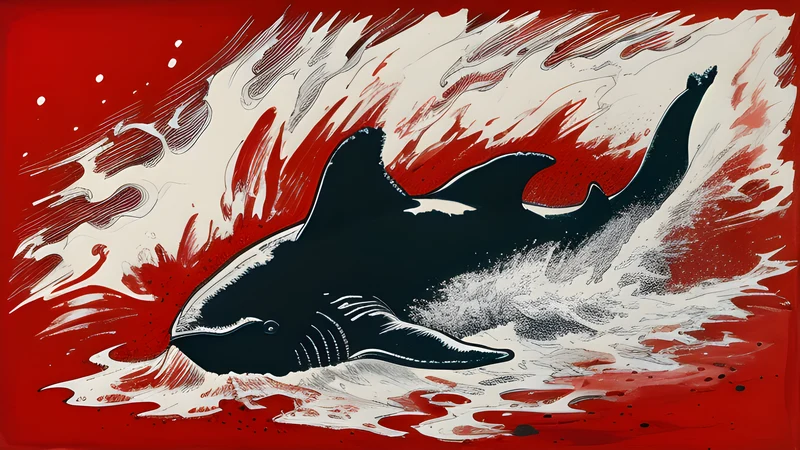
The Olympics moment crowned a long, patient climb. In early 2025 the band won the Grammy for Best Metal Performance for “Mea Culpa (Ah! Ça ira)”, the Revolutionary-song arrangement from that Paris ceremony, becoming the first French band ever to win in the category. A metal band with a whale on the cover and a marine-conservation charity in the liner notes standing on the Olympic and Grammy stages is an outcome nobody in 2001 would have predicted.
The Duplantier universe
Gojira is the centre of a wider web of activity that speaks to how seriously the brothers take their craft. Joe Duplantier built and runs Silver Cord Studio in New York, where the band record and where he produces other artists, giving Gojira the rare luxury of total control over their own sound with no label engineer looking at the clock. He has form as a hired hand too, having played bass in Cavalera Conspiracy alongside the Brazilian metal legends Max and Iggor Cavalera, and he treats production and collaboration as extensions of the same obsessive musicianship that drives the band. Mario Duplantier, meanwhile, has developed a parallel identity as a visual artist and a drummer whose solo showcases have become events in their own right, watched and studied by drummers worldwide.
That self-sufficiency matters because it explains how Gojira preserved their identity while growing enormous. Bands often lose their distinctiveness on the climb to the arenas, sanded down by producers and labels chasing radio play. Gojira never handed over that control, and so the band who filled arenas in the 2020s sound recognisably like the band who recorded From Mars to Sirius, only bigger and more assured. The pick-scrape is still there, the oceanic atmosphere is still there, the ecological seriousness is still there, all of it scaled up rather than smoothed out.
The arena leap
The commercial breakthrough that Magma began, 2021’s Fortitude completed. The album became the band’s highest-charting record by a wide margin, topping hard-rock charts and confirming that a French metal band with an environmentalist streak had become a genuine mainstream force. Its lead single “Amazonia” arrived tied to a fundraising campaign for organisations defending the Amazon rainforest and its indigenous communities, a characteristic fusion of art and activism that raised real money rather than merely gesturing at a cause. The band backed it up on the road, touring arenas across Europe and North America and taking support slots with the biggest names in metal, and the crowds kept growing.
By the time of the Paris Olympics, Gojira had spent the better part of a decade proving that their combination of technical heaviness, atmospheric grandeur and moral seriousness could scale to any size of room without compromise. The band who once seemed like a cult concern for connoisseurs of precise, thoughtful metal had become a headline act capable of representing an entire nation on the world’s largest stage. That trajectory — cult band to arena headliner to Olympic performer, with the music intact at every step — is almost without precedent in a genre where mainstream success and artistic credibility are usually assumed to be at odds.
On stage that combination of precision and scale has made Gojira one of the most reliable live draws in modern metal. The band play with a machine-tight discipline that never tips into coldness, because Mario Duplantier’s drumming keeps the whole thing swinging and human even at its heaviest, and the long dynamic builds give the songs room to breathe in a way that translates powerfully to a big room. Watching a Gojira crowd move as one to those rolling, mid-tempo riffs is a lesson in how groove and weight can matter more than sheer speed, and it explains how the band held audiences across the jump from clubs to arenas without ever needing to simplify their material.
Why the conscience matters
It would be easy to treat Gojira’s environmentalism as marketing, the way plenty of bands adopt a cause for a press cycle. What makes it credible is that it has been there since the beginning, threaded through every record, backed by actual money and actual partnerships, and voiced by people who plainly mean it. The music would be excellent without the message; the message would be hollow without the music. Gojira are the rare band who deliver both at full strength, and their rise proves that seriousness of purpose can be an asset in metal rather than a liability.
Four men from a coastal town in the Basque Country built one of the most distinctive sounds in modern heavy music, spent twenty-five years refusing to compromise it, and ended up representing France to the world on the biggest stage there is. The whale on the cover made it all the way to the Olympic flame, and it got there without ever having to pretend to be anything other than exactly what it was.
Related Content